Flooring
Tile vs LVP in Florida: Which Floor Belongs in Which Room
Your Florida home may not need one floor everywhere. Tile earns its place where water lands, vinyl plank feels better where you sit and sleep, and going from old tile to plank on a slab takes a few steps worth knowing before you choose.
Tile or LVP in a Florida Home: The Short Answer
Tile vs LVP in Florida is a room question, not a whole-home one. Put tile where water lands on the floor and stays there: the bathroom, the laundry room and the back entry from the pool. Put luxury vinyl plank, or LVP, in the rooms where you sit, sleep and walk barefoot, because it is softer, quieter and warmer to the touch. Many homes can use both, and that is often the right call.
If you have old tile on a slab, you have probably wondered whether to keep the tile look or move to plank. We are a family-owned company based in Bradenton, and we put down both. Our pages on tile floor installation and luxury vinyl plank installation show how each job runs. This post is about choosing.
| Room | What we usually suggest | Why |
|---|---|---|
| Full bathroom | Tile | Water from the tub or shower ends up on the floor every day. |
| Laundry room | Tile | A slow leak behind the washer can sit unseen, and the machines are heavy. |
| Entry from the pool or yard | Tile | Wet feet, beach sand and grass clippings come in here first. |
| Kitchen | Either | Tile for spills and heavy use; plank for long hours on your feet or one floor into the living room. |
| Living room, bedrooms, office | LVP | Softer to stand on, quieter to walk on, with a wood look. |
| Halls and closets | Usually LVP | Plank lets one floor carry from room to room. |
For a wider look that also covers laminate and hardwood, read our guide to flooring that suits Florida homes.
Water and Humidity: Bathrooms, Laundry Rooms and Entries Off the Pool
The air here is wet for much of the year. The Florida Climate Center (opens in a new tab) notes that summer dew points stay high in every part of the state, and coastal areas run a little more humid than inland ones. Inside a cooled home, both floors live with that air. What separates them is water that sits on the floor.
Porcelain tile vs LVP when the floor gets wet
Porcelain is a ceramic tile made to soak up almost no water, and the mortar under it leaves no open space for water to collect. Many vinyl planks are waterproof through the plank itself, but a click floor floats over the slab with seams between the planks and a gap at the walls. Water that finds its way under it can sit on the concrete with nowhere to go.
FEMA's bulletin on flood damage-resistant materials (opens in a new tab) rates ceramic and porcelain tile set in mortar as acceptable. Vinyl earns that rating only when glued down with a chemical-set adhesive, which the bulletin does not recommend where floods bring salt water, and a floating click plank does not earn it. The ratings cover the parts of a home below the flood elevation, but if your home sits low near the bay or the Gulf, read them before you pick the floor for the lowest rooms.
Tile vs LVP in the bathroom
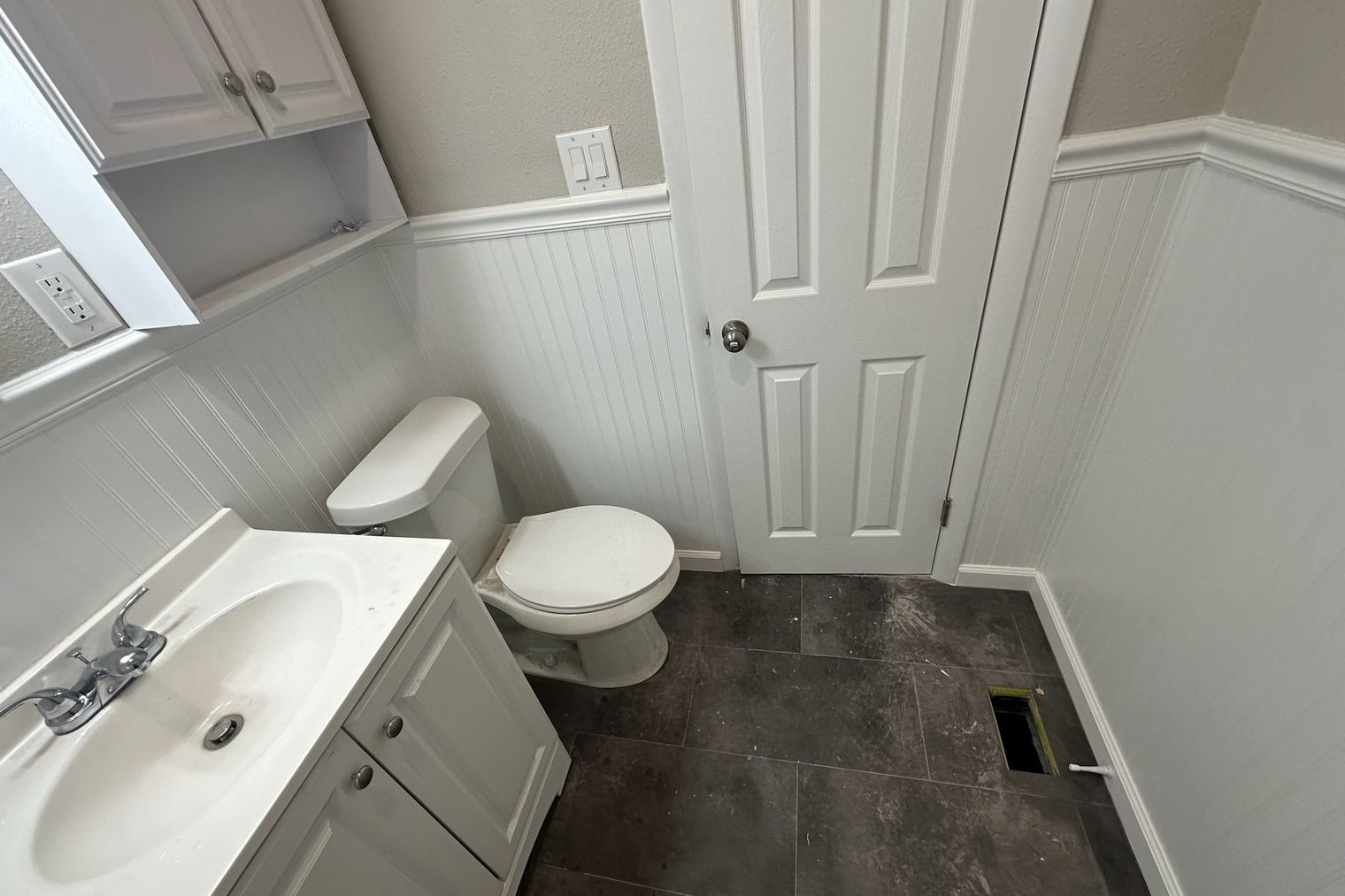
In a full bath, we lean toward tile. Splashes at the tub, drips around the toilet and wet towels all end up on the floor. In the bathroom at the top of this post, a bungalow got a large dark tile with few grout lines, while plank went into the rest of the home. A half bath with no shower is different: a plank rated for it can work there.
When the floor is part of a bigger change, our bathroom remodeling work sets the new tile floor along with the shower walls, the vanity and the trim.
Laundry rooms and the entry from the pool
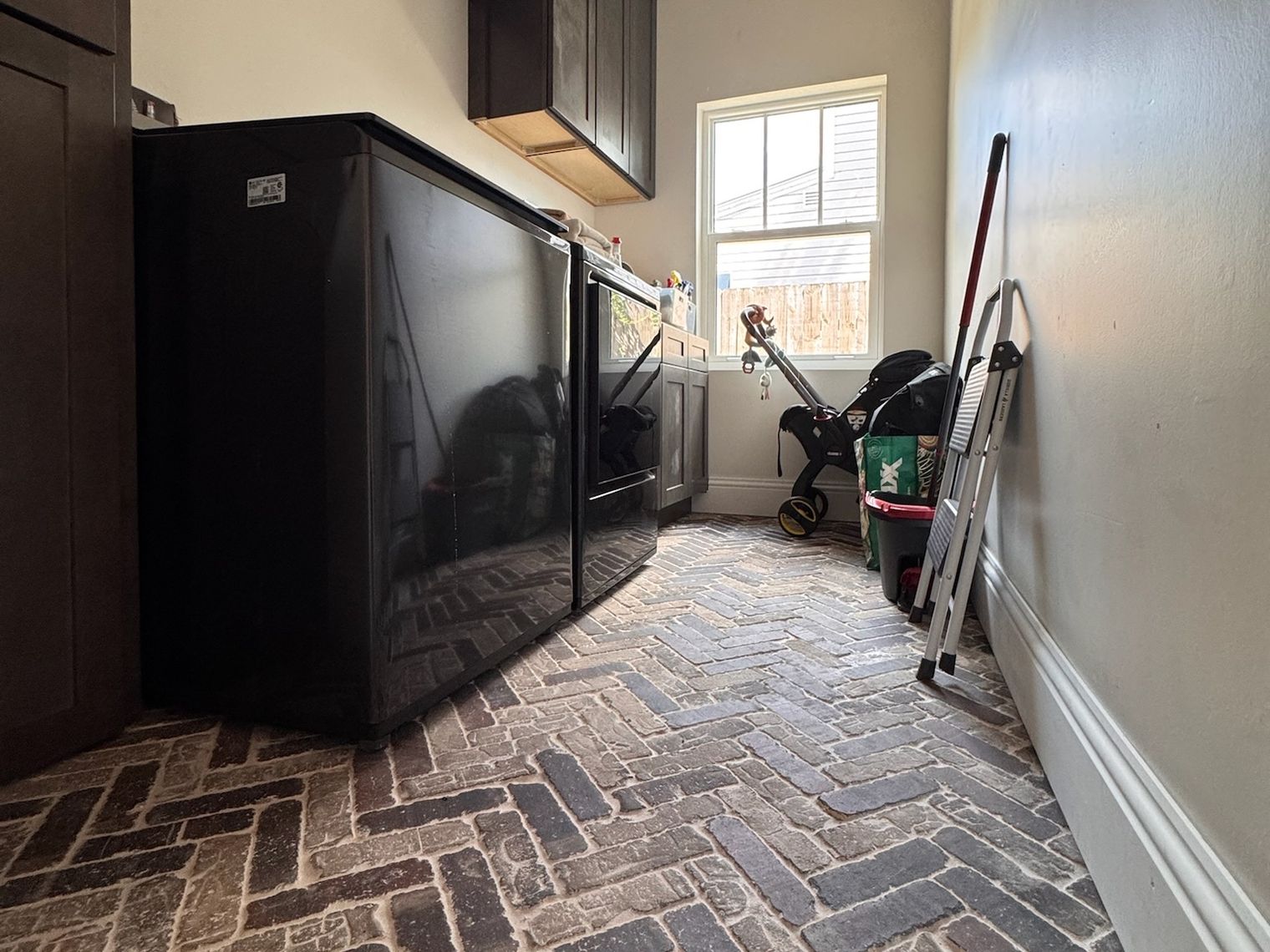
A washer hose can drip behind the machine for a long time before anyone looks. Wet feet off the pool, sand from the beach and grass from the yard all come in through the back entry. Tile takes all of it and mops clean. Sand is harder on vinyl: grit under a shoe can scratch its top layer, and plank makers ask for mats at the entrances.
Good to know
Vinyl plank is an indoor floor. Plank makers rule out lanais and seasonal porches, so the floor stops at the sliders.
Comfort, Sound and a Cool Floor Underfoot
Tile feels cool to bare feet. It isn't colder than the room. It pulls heat out of your skin more readily than a rug or a plank does, so your feet read it as cold. On a hot afternoon, that can feel good.
Plank is kinder to stand on and quieter to walk on. A hard tile floor bounces sound around an open room: chair legs, heels, a dropped pan. Vinyl plank over an underlayment softens that, which is why bedrooms, offices and living rooms tend to go plank. If you are weighing plank products too, our post on LVP vs laminate for Florida homes compares the two.
Wood-look tile vs LVP
If it is the wood look you want, tile comes in long wood-look planks too. You get the look with the water resistance of porcelain. The floor is still hard and cool underfoot, though, and it takes the same slab prep, membrane and mortar as any other tile.
Tile vs LVP in the kitchen
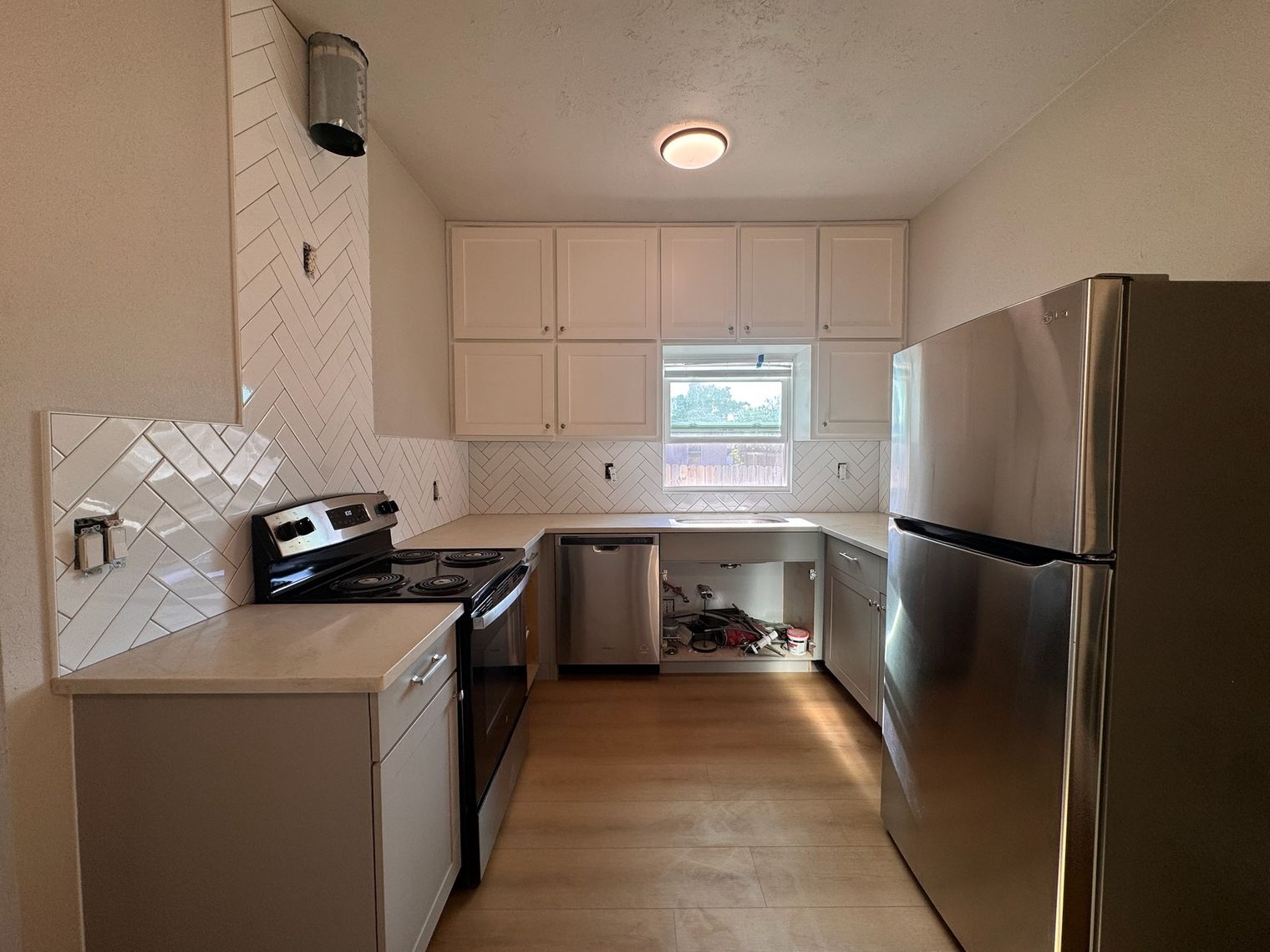
The kitchen can go either way. Tile shrugs off a spilled pot of water and a dropped bag of ice. Plank is easier on your feet when you stand at the counter, and a glass that slips is less likely to shatter. In the bungalow kitchen below, tile went on the wall as a white herringbone backsplash, and the floor is the same plank as the rest of the home. Our kitchen remodeling work plans the backsplash and the floor together.
Heat, sun and a home that sits empty
Tile does not care about heat. Vinyl plank does. Plank makers warn that long hours of direct sun can fade, discolor or buckle a vinyl floor, and they suggest blinds or tinted glass on a wall of west windows. Many also call for a home that stays temperature-controlled. If you leave for part of the year and turn the air off, tell us, and check the range the maker sets for the plank you like.
Condos add one more question. Florida condo associations often let owners put in a hard floor only with approval and proof of a sound layer underneath. Ask the association for its rule in writing before you choose tile or plank, and see our post on condo flooring rules and underlayment.
What Each Floor Needs From the Slab
Both floors go over concrete well, but they ask different things of it. That matters in cities like North Port, where many homes are one-story block homes on a slab. Our page on tile floors for North Port homes covers what we look for there.
Tile: clean, flat and a membrane on top
For tile, the old floor comes up and the slab gets scraped clean and flat. Then a membrane goes over the concrete. Slabs can move and crack over the years, and that layer takes up the movement, so a hairline crack below is less likely to show up as a crack in your tile. The layout and the mortar come after that.
LVP: flat, dry and room to move
A click plank floor floats. It locks together over an underlayment and is never fastened to the slab, so it needs a small gap at every wall, hidden by the baseboards, to grow and shrink. It is less forgiving of dips, since a low spot lets a plank flex at the joint. Low spots get filled first. Plank makers also call for moisture tests on the slab, near the outside walls and in the middle of the room. Our post on LVP over a concrete slab goes through that prep in order.
Good to know
Before you choose, walk your floors. A crack running through the old tile, a dip by the sliders or tile that sounds hollow when you tap it: point each one out at the walkthrough so the prep goes on the written estimate.
Tile vs LVP Cost: What Changes the Price
No honest number exists without seeing your rooms, but we can tell you what moves the price of each one.
- The prep. Old tile coming up and mortar scraped off the slab is often the biggest line, whichever floor goes down next.
- What goes under the new floor. Tile needs the membrane and the mortar; plank needs an underlayment.
- The size and the pattern. Herringbone and brick patterns take more layout and more cuts than a straight lay.
- The product. Porcelain, thin brick, stone and vinyl plank each come in a wide range.
- The edges. The transition at each doorway, the baseboards, and how the floor meets a hearth or a step.
Labor is where the two usually split. Tile goes down one piece at a time in mortar and then gets grouted, while plank clicks together row after row. So a tile floor generally takes more labor than the same room in plank, before you count the material.
Your estimate spells out both sides: what comes out, what gets prepped, the exact tile or plank by name, and the full price, in writing, before any work starts. If you are torn, say so at the walkthrough and we will go room by room with you.
Using Both: Where Tile Meets Plank at a Doorway
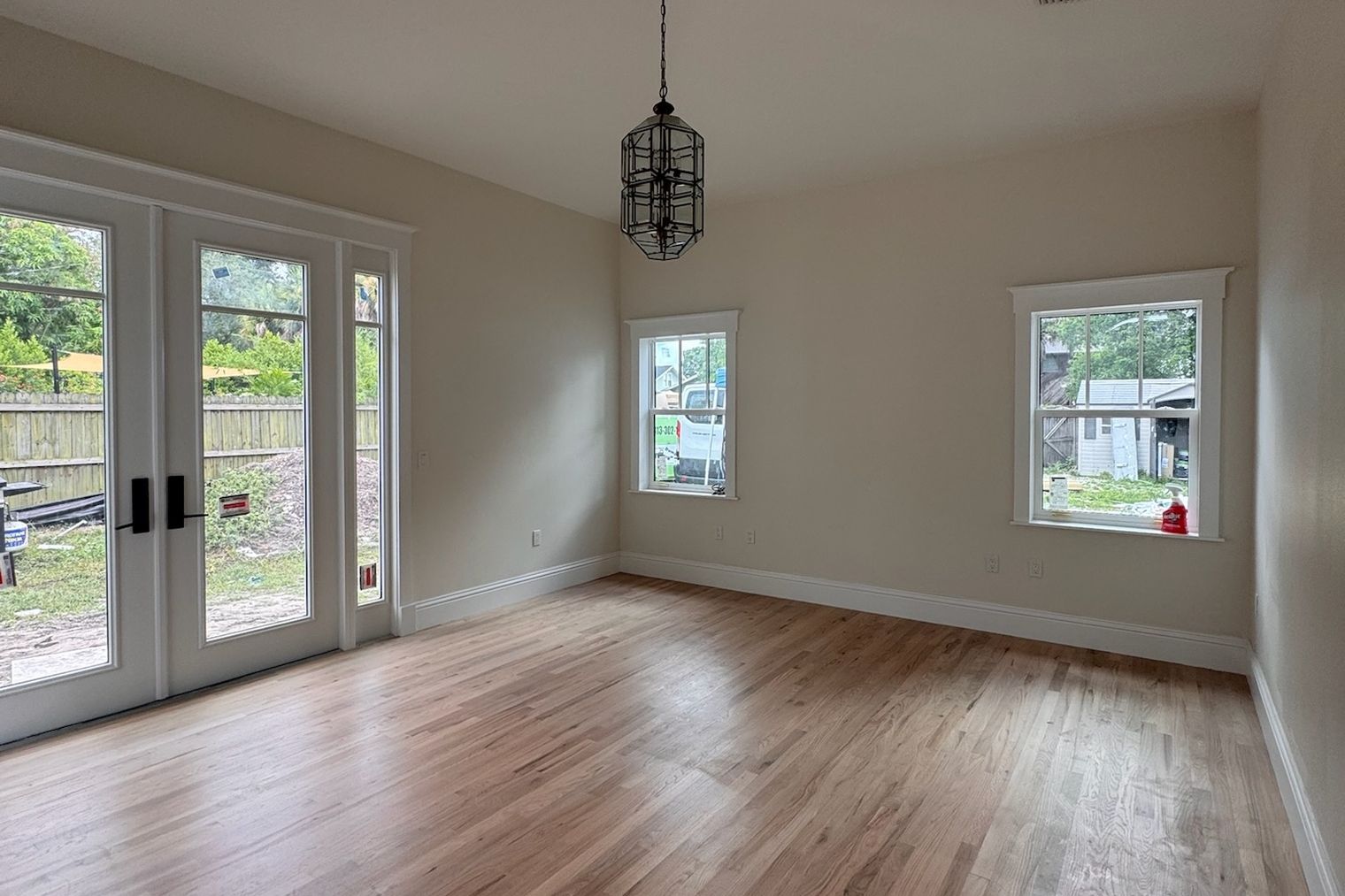
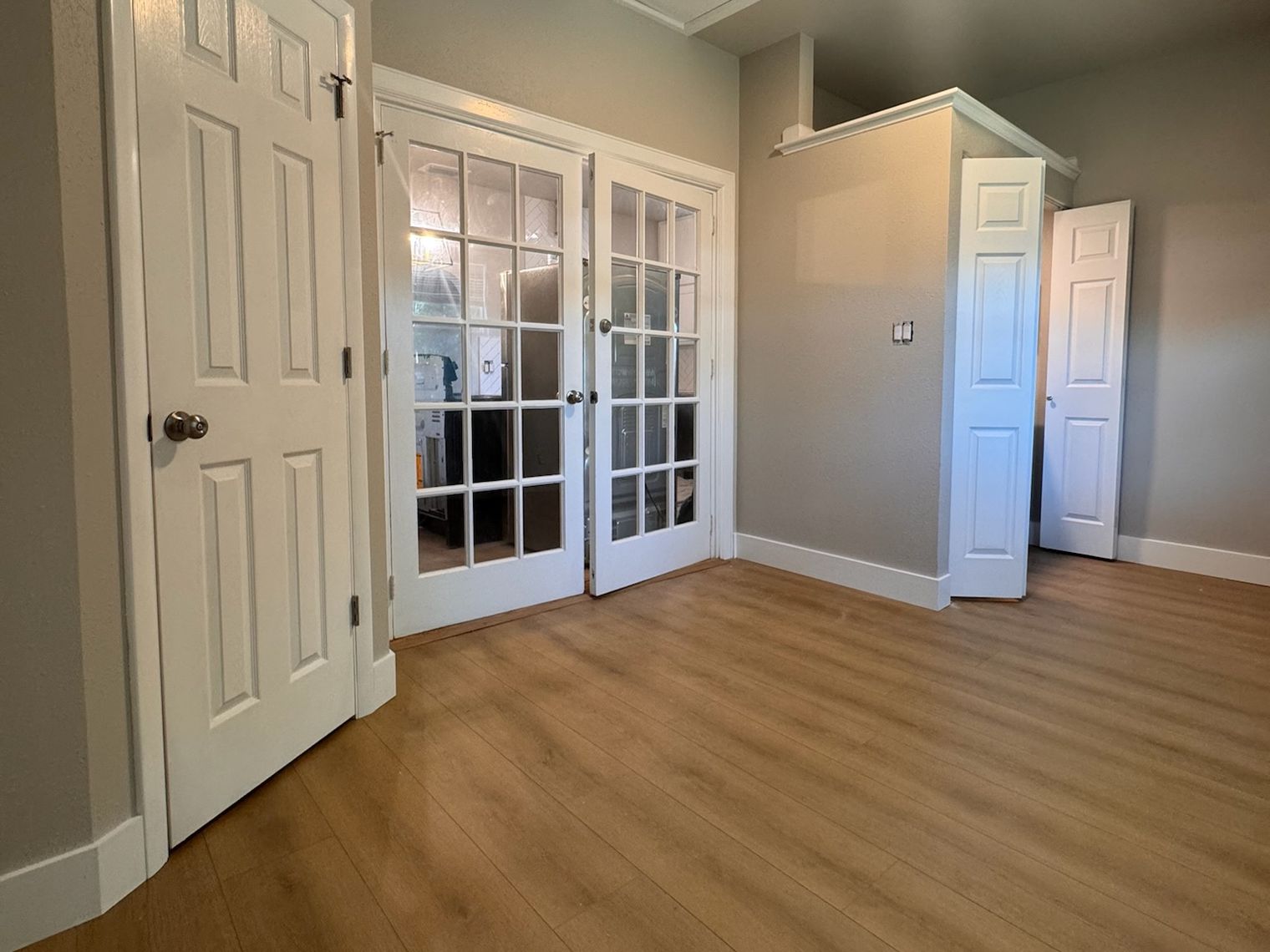
Plenty of homes don't pick one. A home with four different floors shows how it works: thin brick in a herringbone in the laundry, a wood floor through the main rooms, herringbone vinyl plank in a closet and marble tile in the primary bath. Each room got the floor that suited it.
The laundry brick was laid out dry over a gray membrane to find where the pattern would start. Then each brick was set in mortar, row by row, and checked against a laser line. At the doorway, the brick stops and meets the wood floor in one straight line, at the same height.
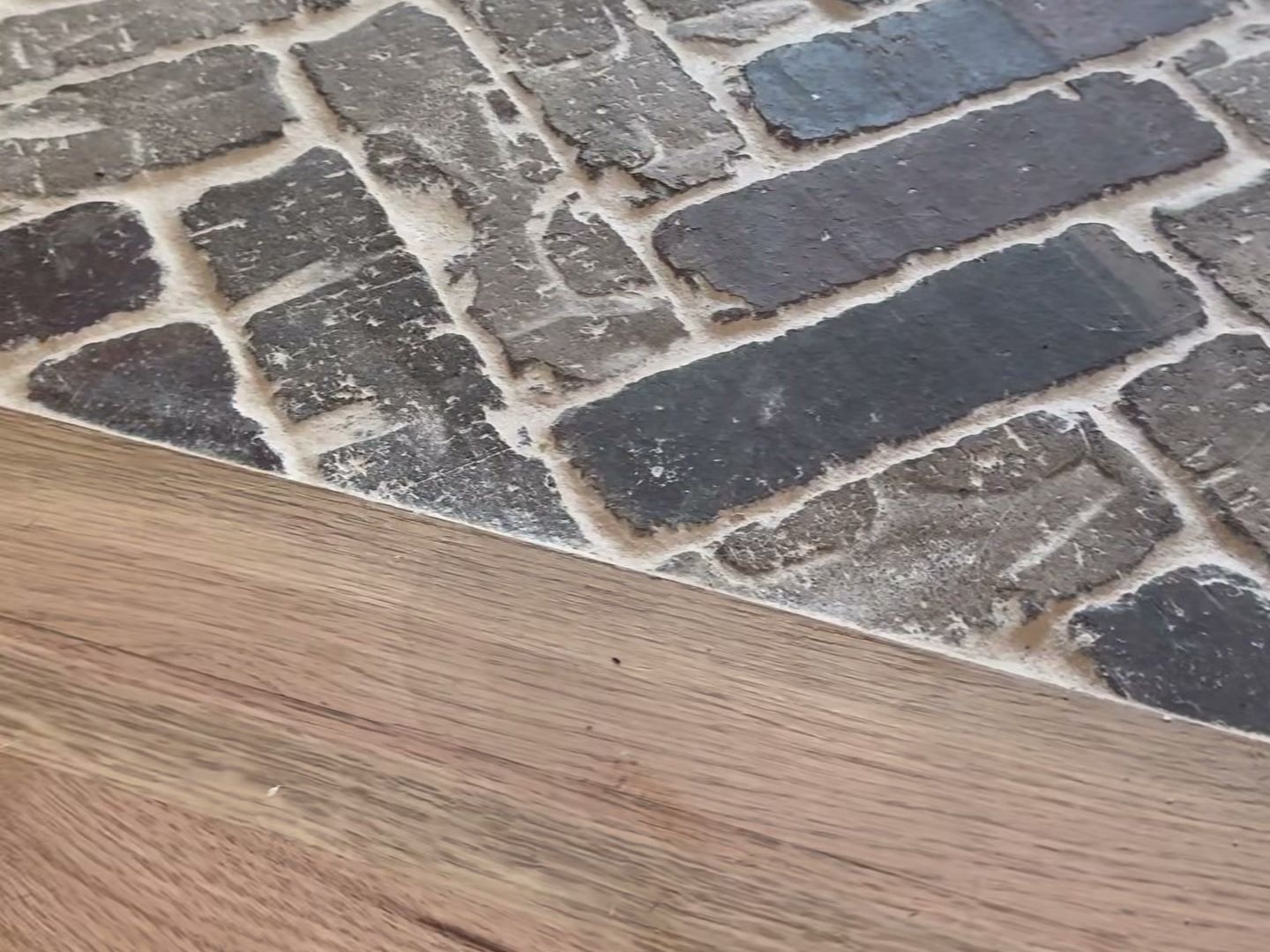
That line is the detail nobody thinks about until it is wrong: tile sitting higher than the plank beside it, a metal strip that catches toes, a cut that wanders. Tile and plank rarely come out at the same height on their own, so we plan the heights before anything is set. You decide with us where each floor stops, often under the interior door so the line hides when it is closed, and what kind of transition goes there.
The question gets bigger in newer homes east of I-75 in Sarasota, where the kitchen, dining area and great room can be one open space. The choice is one floor for all of it, or tile at the kitchen and plank past it. See tile floors for Sarasota homes for how we plan those lines.
Replacing Tile With LVP: What It Takes
If you are leaning toward plank and the home has old tile, the first question is whether the tile comes up. Going over it raises the floor at every doorway and under the appliances, and a loose tile underneath stays a problem under the new floor, so in most rooms we take it out.
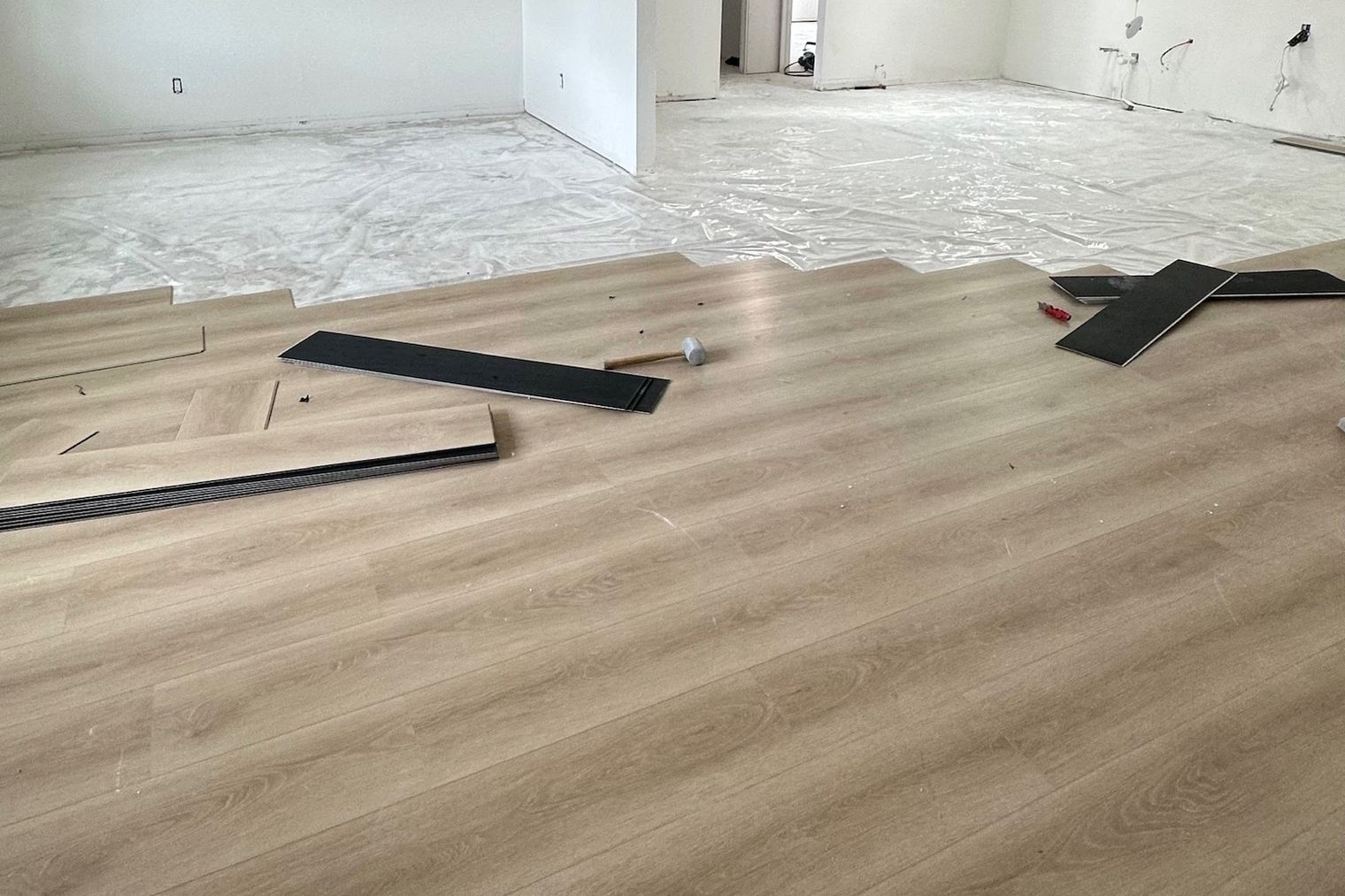
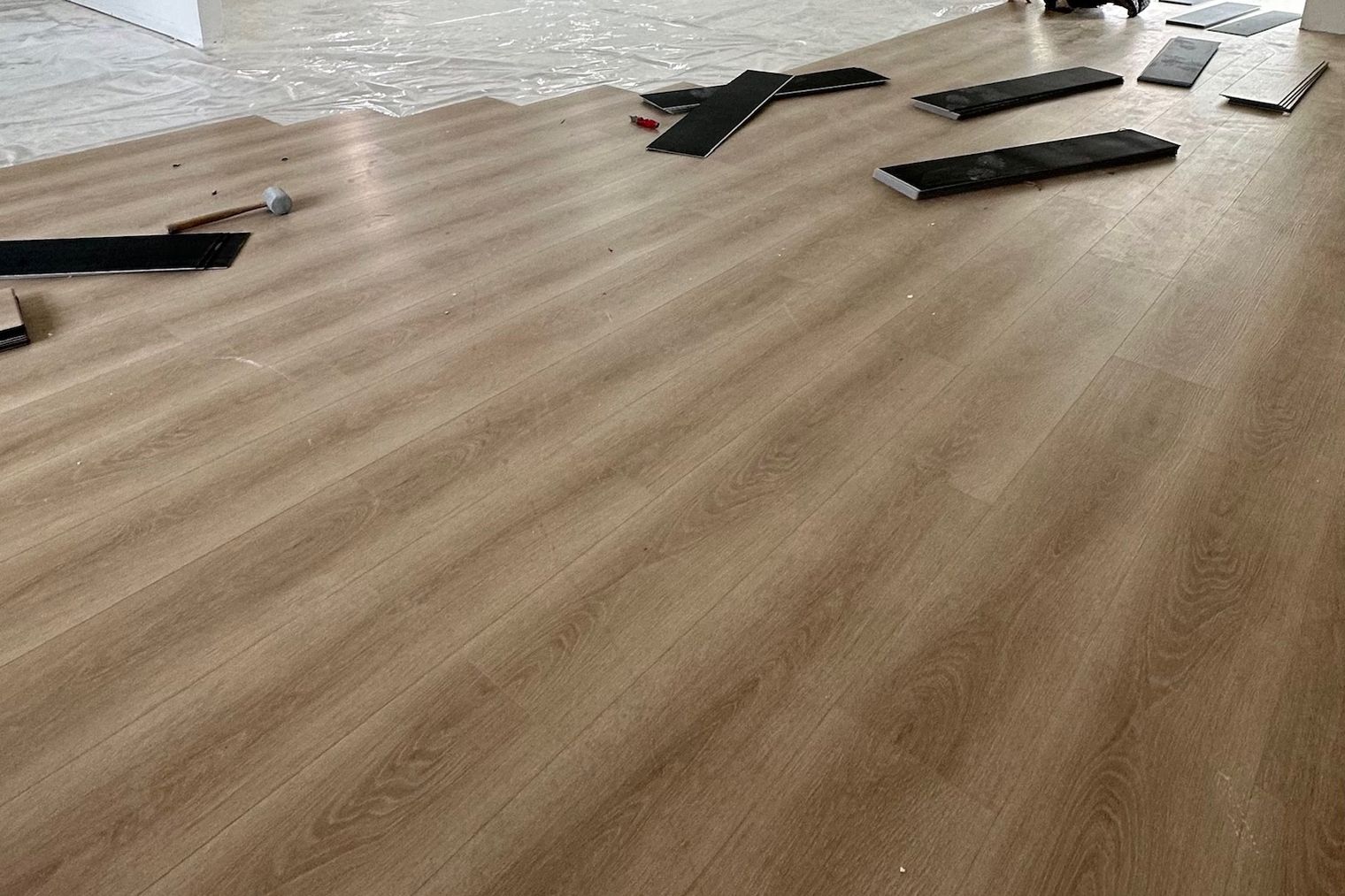
Taking it out is the loud part of the job. On one single-story home, the tile was broken up room by room and the old mortar was scraped off until the concrete was bare. Leveling strips brought the low spots up, the underlayment rolled out, and the click planks went down over it. On any job like this, the baseboards and the transitions come last.
Our page on old floor removal and slab prep covers that work, and the post on the cost of removing old tile from a slab goes through what changes that part of the price.
Common questions
Is LVP better than tile in a Florida home?
Neither one wins everywhere. Tile handles standing water, sand and heat better, so it belongs in full baths, laundry rooms and entries from the pool. LVP is softer, quieter and warmer underfoot, so it suits living rooms, bedrooms and offices. At the walkthrough we go room by room and write down which floor goes where.
Which costs less to install, tile or LVP?
For the same room, a plank floor usually takes less labor, since it clicks together over an underlayment while tile is set piece by piece in mortar and grouted. The product range overlaps, though, and the prep can outweigh both: taking up old tile and leveling the slab is the same work whichever floor goes down next. Your written estimate shows each of those lines before work starts.
Is wood-look tile better than LVP?
It depends on the room. Wood-look porcelain gives you long planks that shrug off water, sand and heat, so it suits a back entry, a laundry or a home that sits closed with the air off. Vinyl plank is warmer, softer and quieter underfoot, and it takes less labor to put down.
Which handles Florida heat and sun better, tile or LVP?
Tile. Heat and sun don't change it. Vinyl plank can fade, discolor or buckle under long hours of direct sun, and many makers want the home kept temperature-controlled. If a room gets strong afternoon sun or the home sits closed with the air off for part of the year, tell us at the walkthrough.
Which lasts longer in a Florida home, tile or LVP?
Tile set in mortar on a sound slab is one of the longest-lasting floors a home can have, and everyday scratches barely mark it. Its weak spots are the grout, which needs cleaning, and a tile that cracks under a dropped pan, which has to be cut out and reset. Vinyl plank has a wear layer on top that grit, pet claws and chair legs can scratch or dent.
Is tile or LVP better for resale in Florida?
We can't speak for buyers or appraisers. What we can say is that a floor reads as finished when it is flat, the edges are clean and the transitions line up at the doorways. A home with tile in the wet rooms and plank in the living areas, planned together, looks deliberate. A floor that changes in odd places does not.
Free estimate
Tile, Plank or Both? Let's Walk the Rooms
Start with your slab. At a free in-home estimate we look at it and every room with you, help you choose tile or plank for each, and give you the price in writing before work starts.