Flooring
LVP vs Laminate in Florida: Which Plank Floor Fits Each Room
Both look like wood and both go down as planks. In a Florida home the real difference is water: where it shows up, what sits under the floor and how damp the air gets in August. We sort it out room by room.
LVP vs Laminate in Florida: What Each One Is Made Of
The short answer on LVP vs laminate in Florida: put vinyl plank wherever water shows up, and give laminate a look in the dry rooms where you want a firm floor that feels close to wood. Some homes end up with one floor throughout. Others mix them, decided room by room. Either way, the exact product matters as much as the type, because one laminate can handle water very differently from another, and the same goes for vinyl plank.
Laminate is built in layers. On top sits a clear wear layer that resists scratches. Under it is a printed image of wood. The core is high-density fiberboard: wood fiber pressed hard with resin. That core is what makes laminate feel solid underfoot, and it is also its soft spot. When water gets into a seam and sits there, the fibers soak it up and the plank edges can swell and lift.
Vinyl plank, the floor sold as LVP, also has a printed wood look under a clear top layer. The difference is the body: vinyl instead of wood fiber. Some planks are thin and flexible. Others have a rigid core and click together much like laminate. Water does not swell vinyl the way it swells fiberboard, and that single difference drives most of what follows.
LVP vs laminate pros and cons at a glance
| Question | Laminate | Vinyl plank (LVP) |
|---|---|---|
| What is inside | Wood fiber pressed with resin | Vinyl, flexible or with a rigid core |
| Spills and wet feet | Fine if wiped up; standing water is the risk | Many products are rated for it |
| Feel underfoot | Firm, close to real wood | A little softer, with some give |
| Sound on a slab | Can click or sound hollow over a thin underlayment | Usually the quieter floor |
| Scratches | Hard top layer that holds up well | Depends on the wear layer you pick |
| Price | Depends on the exact product | Depends on the exact product |
If you already know which rooms stay dry, our page on laminate flooring installation shows how we weigh it against vinyl, and the one on luxury vinyl plank installation covers the slab prep under it.
Laminate Flooring and Florida Humidity: Water, Air and the Slab
Water reaches a floor here in three ways: from above, as a spill or a drip; from the air, as humidity; and from below, through the concrete. Laminate handles the first one as long as you wipe it up. The other two take some planning.
The air: a long, sticky rainy season
On this stretch of the Gulf Coast, the rainy season runs roughly from May into mid-October, with frequent showers and storms and a clear jump in humidity, as the National Weather Service rainy season page (opens in a new tab) explains. Wood fiber slowly takes on moisture from damp air. Vinyl does not soak it up the same way.
Inside, the air conditioning does most of the work. Keep it running, even in a home that sits closed for the summer while you are away. The EPA advises keeping indoor humidity on the low side, and vinyl plank makers ask for a climate-controlled room too. A dry home is kinder to every floor, laminate most of all.
Below: the concrete slab
Many homes in Manatee and Sarasota counties sit on a concrete slab. Concrete can look dry and still give off moisture vapor long after it has cured. That is why many laminate makers call for a moisture test and a film between the slab and the planks, unless the underlayment has one built in.
Vinyl does not swell from that vapor, yet many vinyl plank makers ask for a film over concrete too, because a waterproof plank is not a moisture barrier. Both floors need the same start: the old floor out, the slab scraped clean and the low spots filled. Our post on putting LVP over a concrete slab covers that prep in detail.
A slab job, step by step
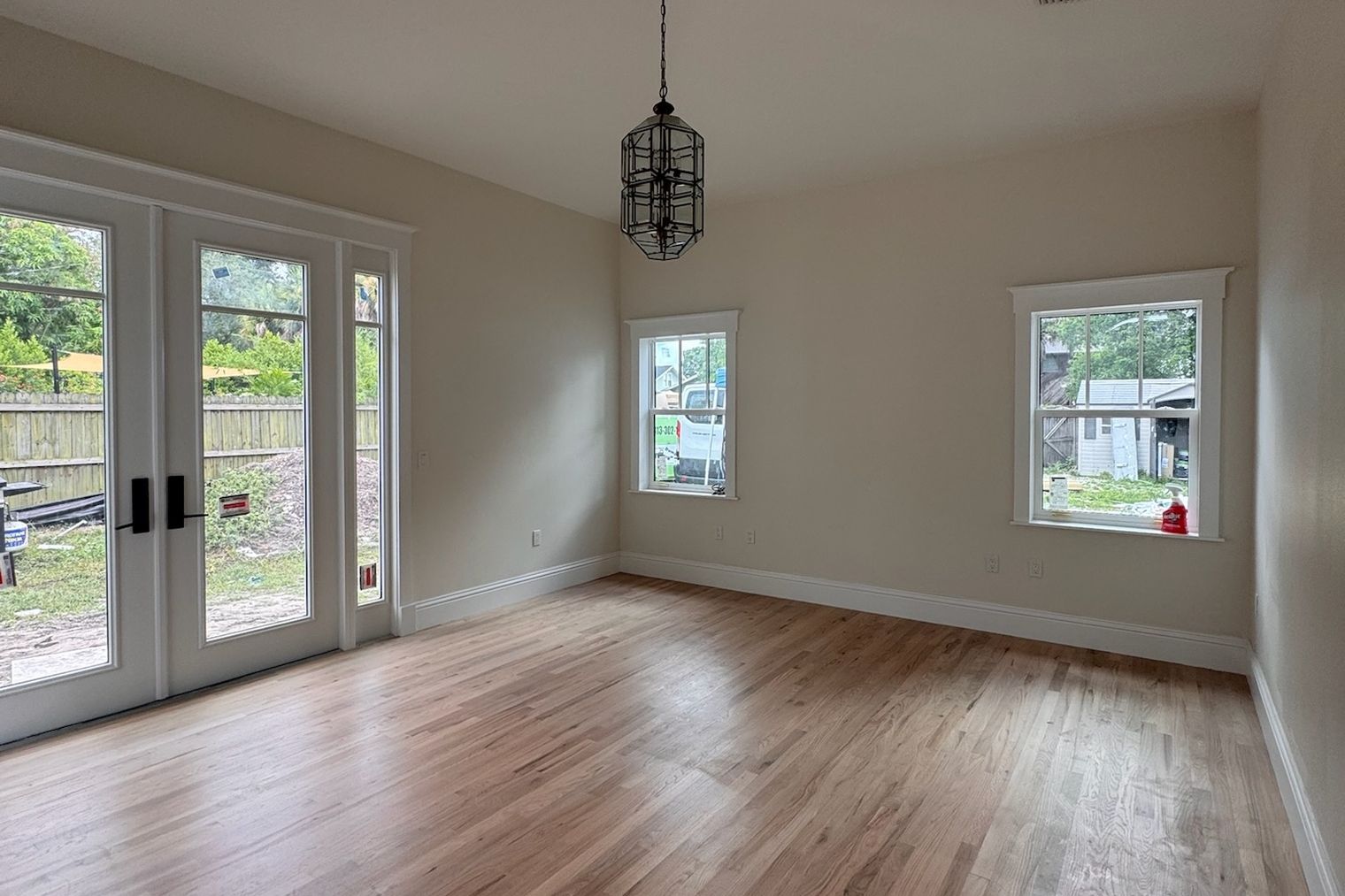
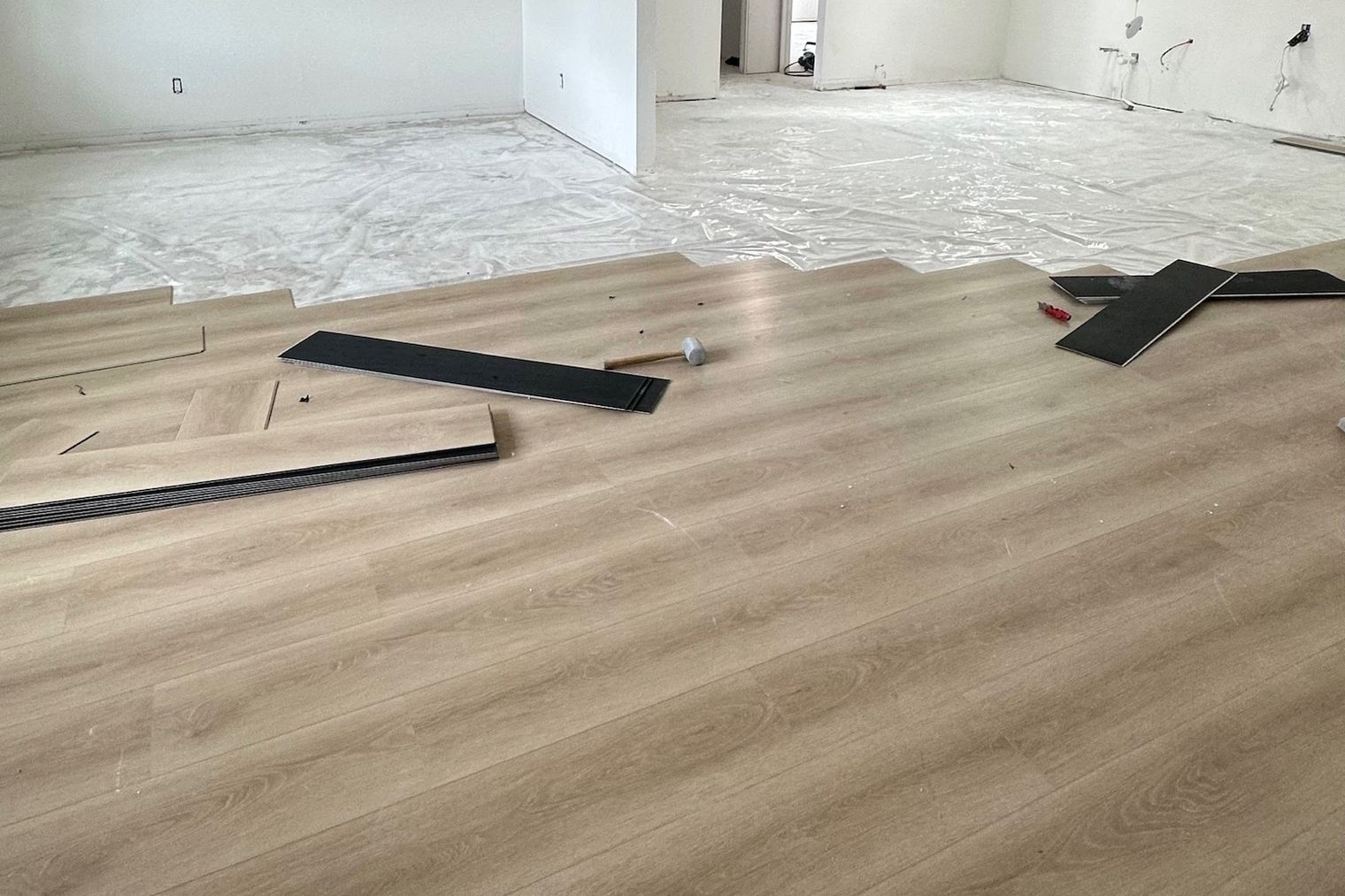
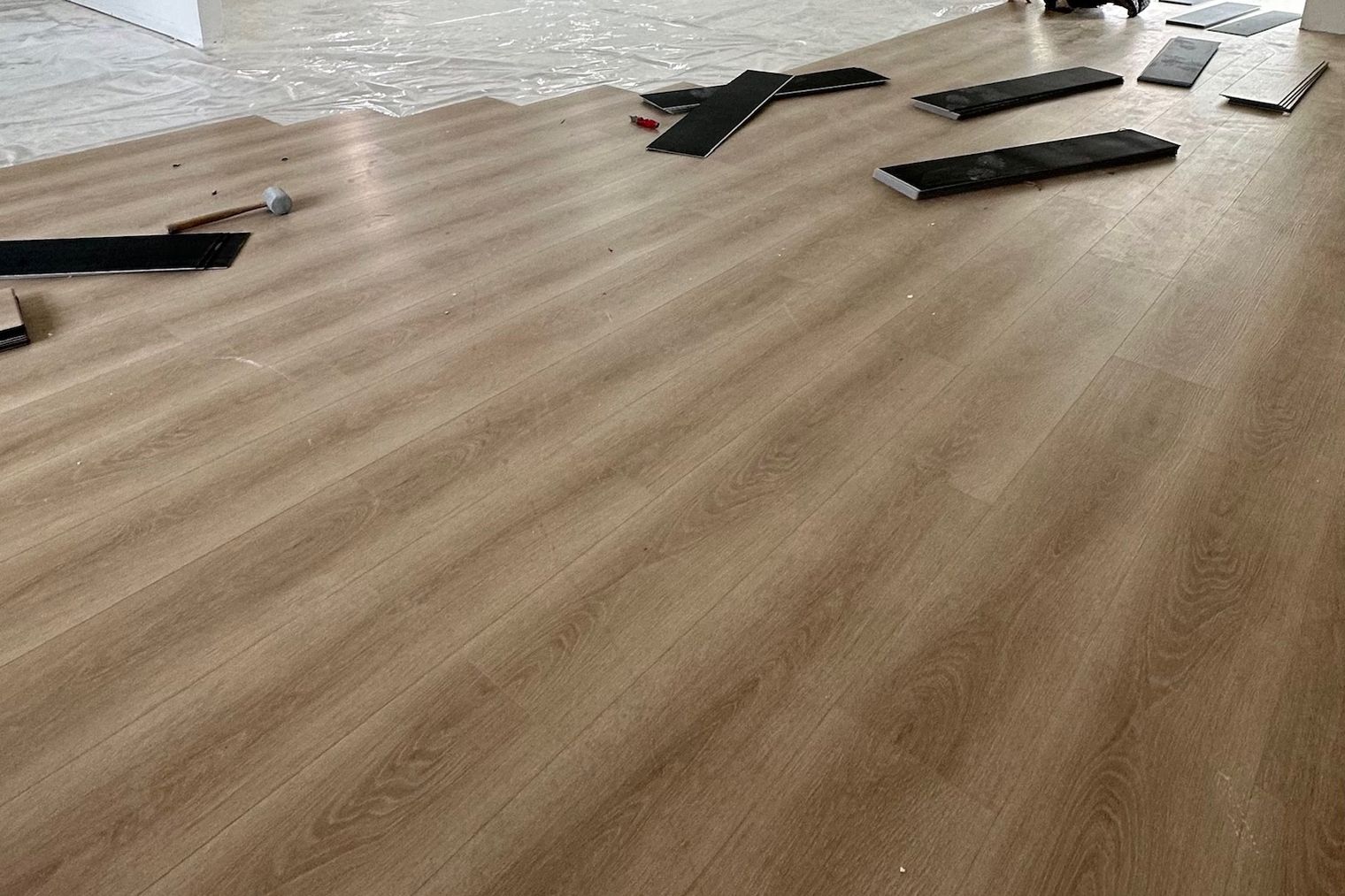
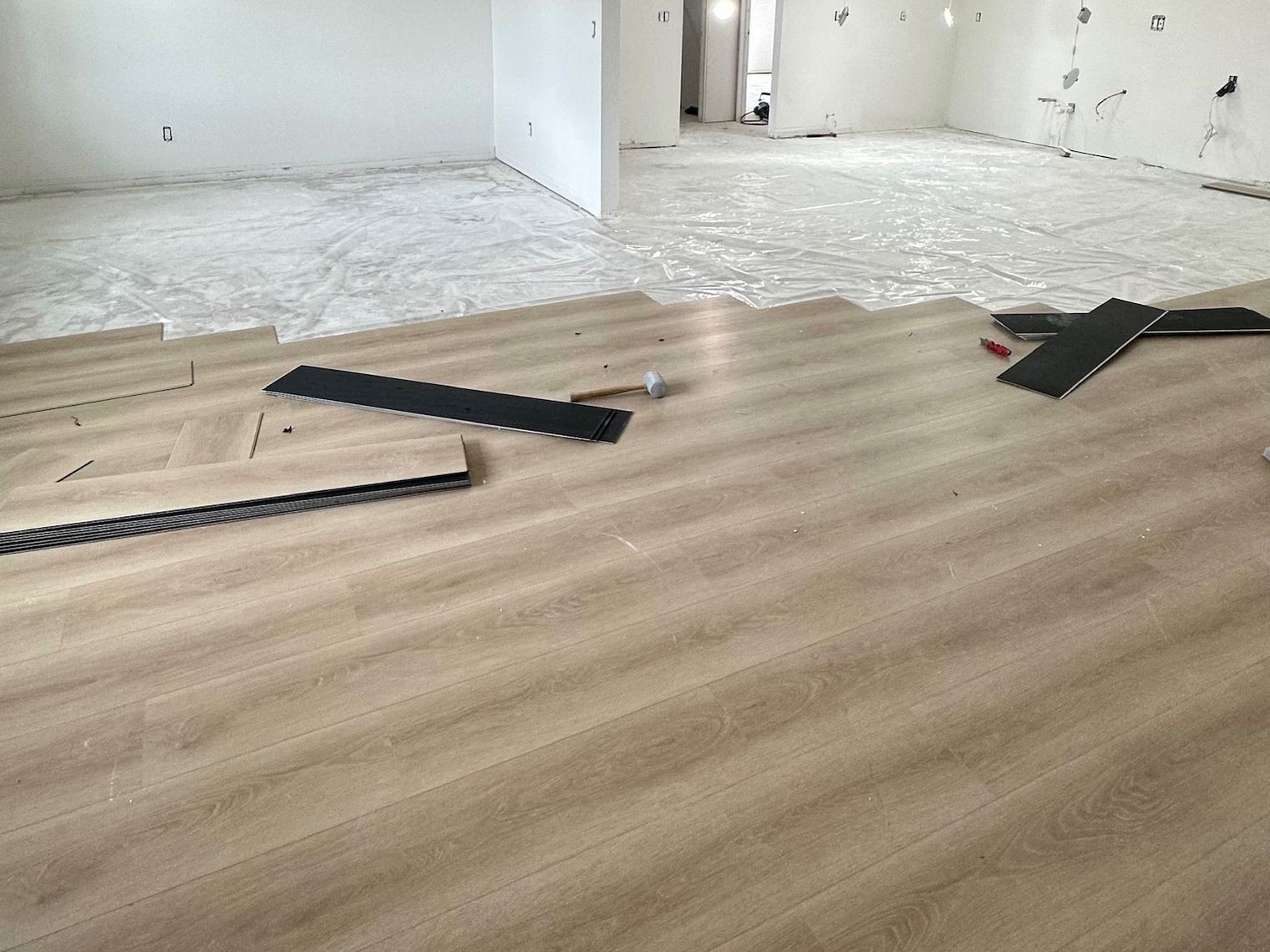
On one single-story home, the old ceramic tile came up and ended in stacks on the dining area floor. The slab under it was scraped to bare concrete, the kind of old floor removal and slab prep that has to happen before any plank goes down. Strips of leveling compound filled the low spots. Then a thin underlayment sheet rolled out, and the click planks went down row by row with the joints staggered.
Good to know
Ask what goes between the slab and your new floor. The answer belongs on the estimate by name, not left for the day of the install.
Room by Room: Kitchen, Laundry, Bedrooms and Living Areas
This is how we talk it through at your home, starting with the rooms that see the most water.
Kitchen
Think about the splash at the sink, the dishwasher, the ice that misses the glass. A slow drip under the sink cabinet can sit for a long time before anyone notices. In a kitchen, vinyl plank is often the calmer choice. Some laminates carry a water rating meant for kitchens. If you love one of them, we read that rating together before you commit.
Laundry room
A washer hose that lets go puts a lot of water on the floor at once. That is vinyl plank or tile territory. On one home with four different floors, the laundry room got a herringbone brick pattern, oak went into other rooms and marble went into the main bath. Each room got the floor that fit how it gets used. For the wet spots, see our tile flooring page or the tile vs LVP comparison for Florida homes.
Bathrooms
A full bath with a shower or a tub sees steam and wet feet every day. We steer laminate away from it. Vinyl plank or tile handles that room better, and tile is the usual pick inside the shower itself.
Bedrooms, living areas and halls
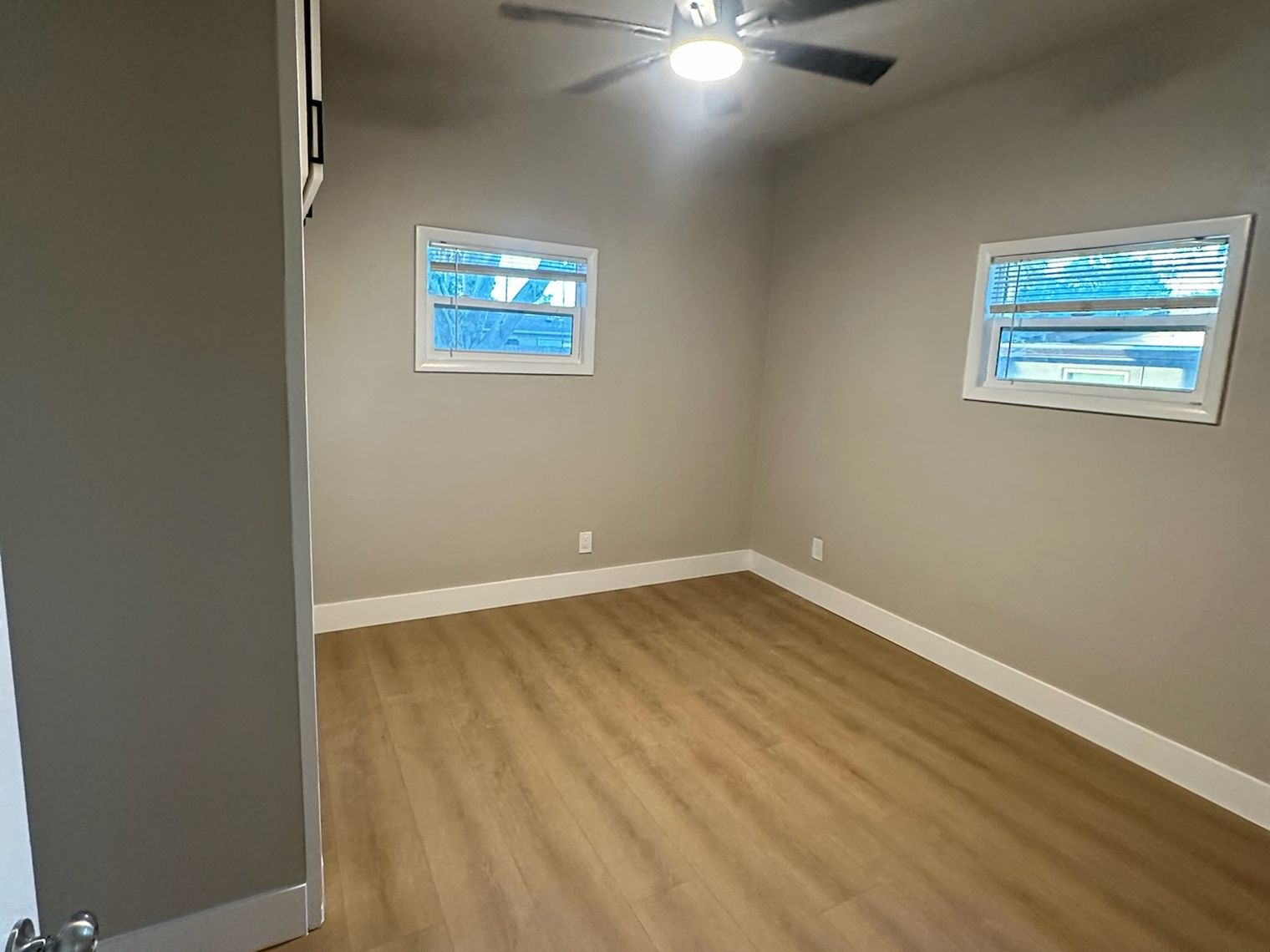
These are the rooms where laminate earns its place. They stay dry, they see most of their traffic in socks and bare feet, and a firm floor feels good under a bed or a sofa. Both floors run well down a hallway, so one plank can carry from room to room without a break.
Feel and Sound Underfoot
Laminate feels firm and a little closer to real wood. Vinyl plank has a touch more give. Neither one wins on feel. It comes down to what you like when you cross the room barefoot, so it is worth walking on both before you decide.
Sound is where the slab matters. A floating floor over concrete can click or sound hollow under hard shoes when the underlayment is thin or the slab dips. Laminate shows this more than vinyl does. A flat slab and the right underlayment take care of most of it, which is why both get their own lines on our estimates.
If you live in a condo, ask the association whether it has an underlayment rule for sound before you choose a product. Some associations do, and the rule can narrow your choices. Our guide to condo flooring rules and underlayment goes through what boards tend to ask.
Sun on the floor
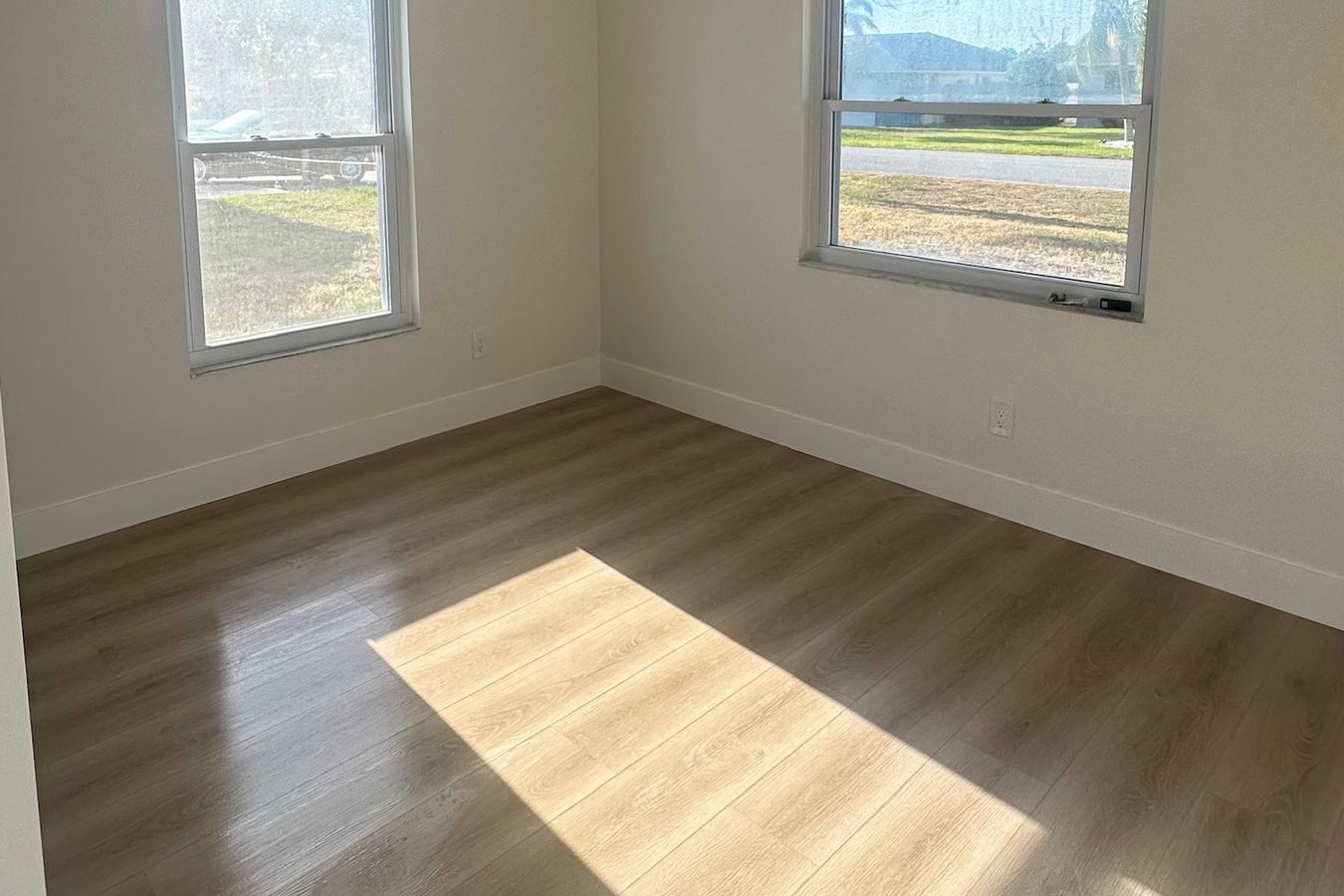
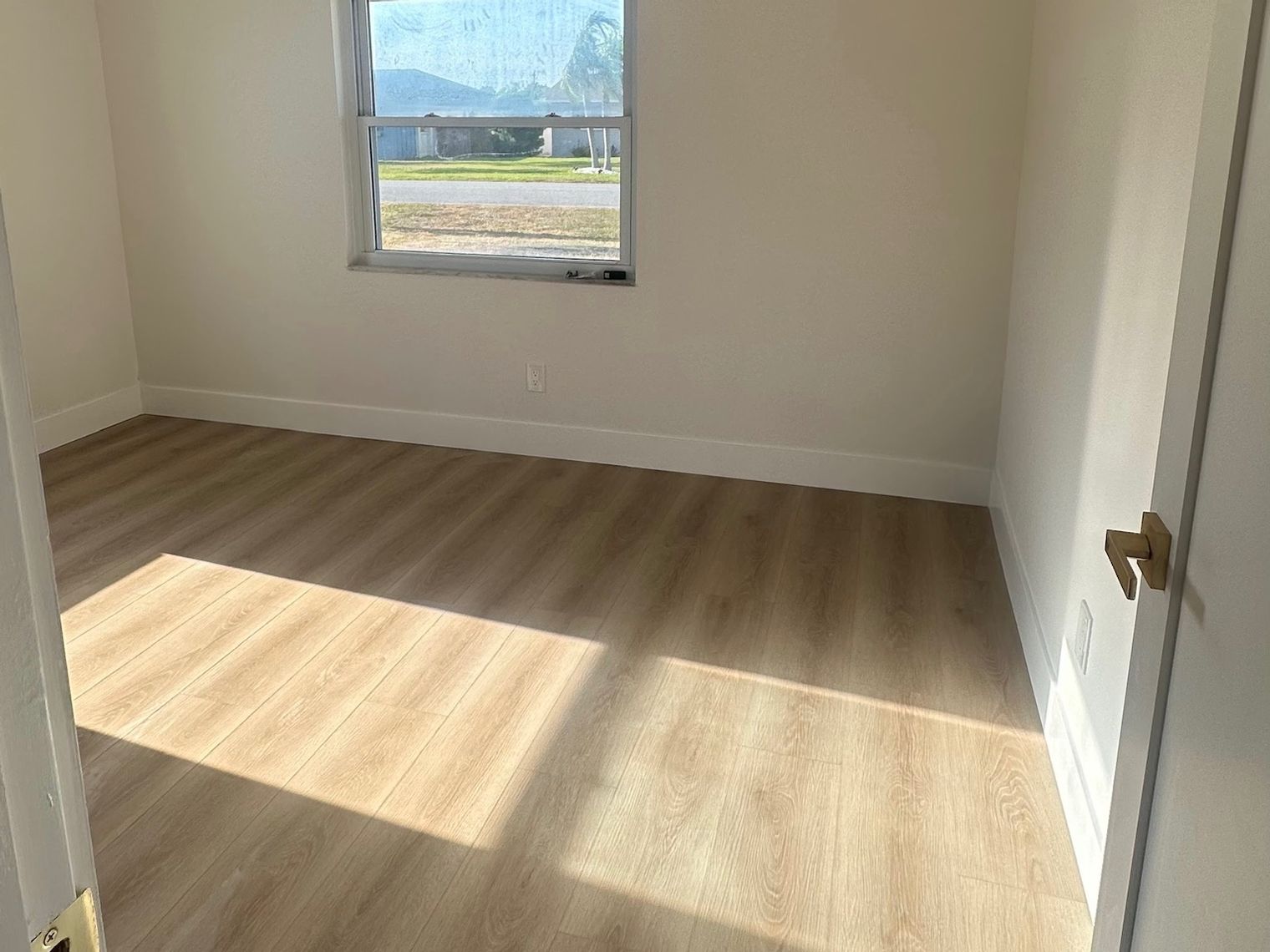
West-facing windows put strong sun on a floor every afternoon. On the single-story home above, the sun lands in wide patches across the bedroom floors. Some makers of rigid core vinyl plank recommend blinds, shades or drapes where direct sun sits on the floor at peak hours, and shade helps any plank keep its color. Plan the window coverings along with the floor.
Is Laminate Cheaper Than LVP?
Not always. The price gap runs in both directions: a given laminate can come in under a given vinyl plank, or over it. Thickness, the top layer, the core and the water rating all move the price of the product itself. So we do not settle the LVP vs laminate cost question with a rule of thumb. We price the products you are actually weighing, for your rooms, and set them side by side in writing.
The product is only part of the bill. These lines change the total just as much:
- What comes out first: carpet, old plank or tile set in mortar, and how much scraping the slab needs.
- Low spots that need leveling compound before any plank goes down.
- What goes between the slab and the floor: underlayment, plus a moisture barrier film where the product calls for one.
- Baseboards, the transition at each doorway and the finishing pieces at hearths and steps.
- The layout of the rooms: long open runs go down differently from small rooms with many cuts.
Every one of those lines belongs on paper before work starts. Our post on what a written flooring estimate should include goes through them one at a time.
Pets, Kids and Wet Feet From the Pool
A water bowl that gets pushed around, a dog that comes in dripping, a puppy still learning: all of that is water on the floor, and vinyl plank forgives it more easily. Claws are a different story. The hard top layer of laminate stands up to scratches well, so in a dry living room with a big dog it can be a good fit. Felt pads under furniture legs help either floor.
Then there is the path from the pool. Kids run in through the sliders, drip across the living room and head for the hall bath. Walk that path with us at the estimate and plan the floor around it: vinyl plank or tile where the wet feet land, a good mat at the entry, and laminate kept to the rooms past it.
Homes that back onto water have their own wet path. In Venice Gardens, many ranch homes face a lake, a pond or a canal. If the back room that opens to that view is the one everyone walks through, treat it as a wet room: vinyl plank or tile there, laminate in the bedrooms down the hall. Our page on laminate floors for Venice homes covers where it fits there, and the Venice service area page shows the rest of what we do in the area.
How We Help You Pick at the Walkthrough
We are a family-owned company based in Bradenton, and choosing between these floors is something we work out with you in your own rooms, in your own light.
- We walk every room with you and measure it.
- We mark where water shows up: the kitchen sink, the laundry, the baths and the path in from the pool.
- We look at what is on the floor now and, where we can see it, what sits under it.
- We compare the products you are weighing, room by room, and read each water rating with you.
- You get the estimate in writing: the exact product named, what comes out, what gets prepped and the full price.
Products change. A plank rated for kitchens this year may give way to a new line next year, so your estimate names the exact product, not just laminate or vinyl. If your home is in Sarasota, our page on laminate floors for Sarasota homes looks at the rooms where it fits there. For the wider picture, our guide to the best flooring for Florida homes brings tile and hardwood into the mix.
Common questions
Is LVP or laminate better for Florida humidity?
Vinyl plank is the easier floor in humid rooms and on a slab, because damp air and vapor from the concrete do not swell vinyl the way they can swell a wood-fiber core. Laminate still does well in the dry rooms of an air-conditioned home, laid over a moisture barrier where the product calls for one. Keep the AC running all year and read the water rating of the exact product you pick.
Is laminate flooring waterproof or just water resistant?
Standard laminate is not waterproof. Its core is wood fiber, and water that sits in a seam can swell the edges. Some laminates are sold as water resistant, and some even as waterproof, each with its own test rating. Those ratings differ from one product to the next, so we read the one on the box with you and name that exact product on your estimate.
Is laminate good for Florida homes at all?
Yes, in the right rooms. Bedrooms, living rooms, offices and halls that stay dry are where laminate fits: it feels firm, it handles scratches well and it gives a convincing wood look. Keep it out of full baths and laundry rooms, think twice in the kitchen and plan around the path in from the pool. Plenty of homes put laminate in the dry rooms and vinyl plank or tile in the wet ones.
Which lasts longer, LVP or laminate?
It depends more on the product and the room than on the type. A tougher top layer resists wear on either floor. What usually cuts a laminate floor short is water left standing. What marks a vinyl floor is a heavy, sharp point, like a chair leg without a pad. Put each floor in the rooms that suit it, add felt pads and mats, and both hold up well.
Will LVP or laminate hold up if the home floods?
A spill is one thing, a flood is another. In its technical bulletin on materials that resist flood damage (opens in a new tab), FEMA rates plastic laminate flooring as unacceptable, and vinyl as acceptable only when it is set with a chemical-set adhesive. Tile set in mortar makes the acceptable list. After a flood, a floating floor of either kind may have to come up so the slab can dry. If a room has taken water from a storm before, tile is worth a look there.
Can you mix LVP and laminate in the same home?
Yes. Vinyl plank in the kitchen, laundry and baths with laminate in the bedrooms works well. The part to plan is the doorway where they meet: the two floors may sit at slightly different heights, so we decide with you where each transition lands and write it on the estimate before work starts.
Free estimate
Not Sure Which Plank Fits Each Room?
Not sure where water reaches your floors? We walk every room with you at a free in-home estimate, mark the wet spots and put the product, the scope and the price in writing before work starts.