Flooring
Removing Old Tile From a Concrete Slab: What Sets the Cost
Before a new floor goes down, the old tile has to come up and the slab has to be clean and flat. This is what that work involves in a Florida home, and what moves the price up or down.
What Sets the Cost of Removing Tile From a Concrete Slab
The cost of removing tile from a concrete slab depends less on the tile you can see and more on what's holding it down. How many rooms have it, how it was set, what's left on the slab once it's up and how many low spots need filling: those are what set the price. National cost guides quote a range per square foot, but a range can't see your floor. We price old floor removal and slab prep after we've looked at your tile in person, for homes in Bradenton and across Manatee and Sarasota counties.
| What changes the price | Why it matters | What to look for at home |
|---|---|---|
| How much tile | Every room, closet and hallway with tile is part of the removal. | Tile in closets, the laundry and the halls, not only the main rooms |
| How it was set | Tile on a thin layer of mortar grips the slab hard; tile on a thick mortar bed is more material to break out. | A tiled room that sits higher than the room next to it |
| What's left on the slab | Ridges of mortar and old adhesive get scraped off before anything new goes down. | Rooms that were patched or tiled again at some point |
| Low spots | Dips get leveling compound so the new floor lies flat. | A chair or table that rocks, or grout that keeps cracking in one area |
| Edges and baseboards | Old baseboards come off where new ones are going on. | Baseboards caulked or painted down to the tile |
| Rooms to work around | Furniture, a kitchen in daily use and a condo elevator all change how the work moves. | Who clears each room, and where the furniture goes meanwhile |
Taking the tile out is written as its own line, beside the floor that replaces it. That way you see what the removal and the prep cost apart from the floor you pick.
Do You Need to Remove Old Tile Before New Flooring?
In most rooms, yes. Whatever goes down next wants a base that is clean and flat, and old tile rarely gives you that once you look closely: cracked grout, a chipped corner, a tile that sounds hollow when you tap it. Taking the tile out also keeps the new floor level with the rooms around it, and it lets you see the slab before anything covers it again.
Can You Put LVP Over Tile?
Sometimes. Some vinyl plank makers allow their floor over old ceramic tile when the tile is solid and the grout lines are filled flush first. The catch is height. The new floor sits on top of the old one, so it ends up higher than the room beside it, interior doors may need trimming, and baseboards and transitions have to be reset. Loose or cracked tiles stay under the plank, along with whatever made them loose. That's why going over tile is rarely our plan. For how the floors compare on their own, read tile vs LVP for a Florida home.
How We Remove Ceramic Tile From a Concrete Slab
Removal follows the same order in every room on the scope, once the furniture is out of the way.
- Old baseboards come off where new ones are going on, so the tile can come up right to the wall.
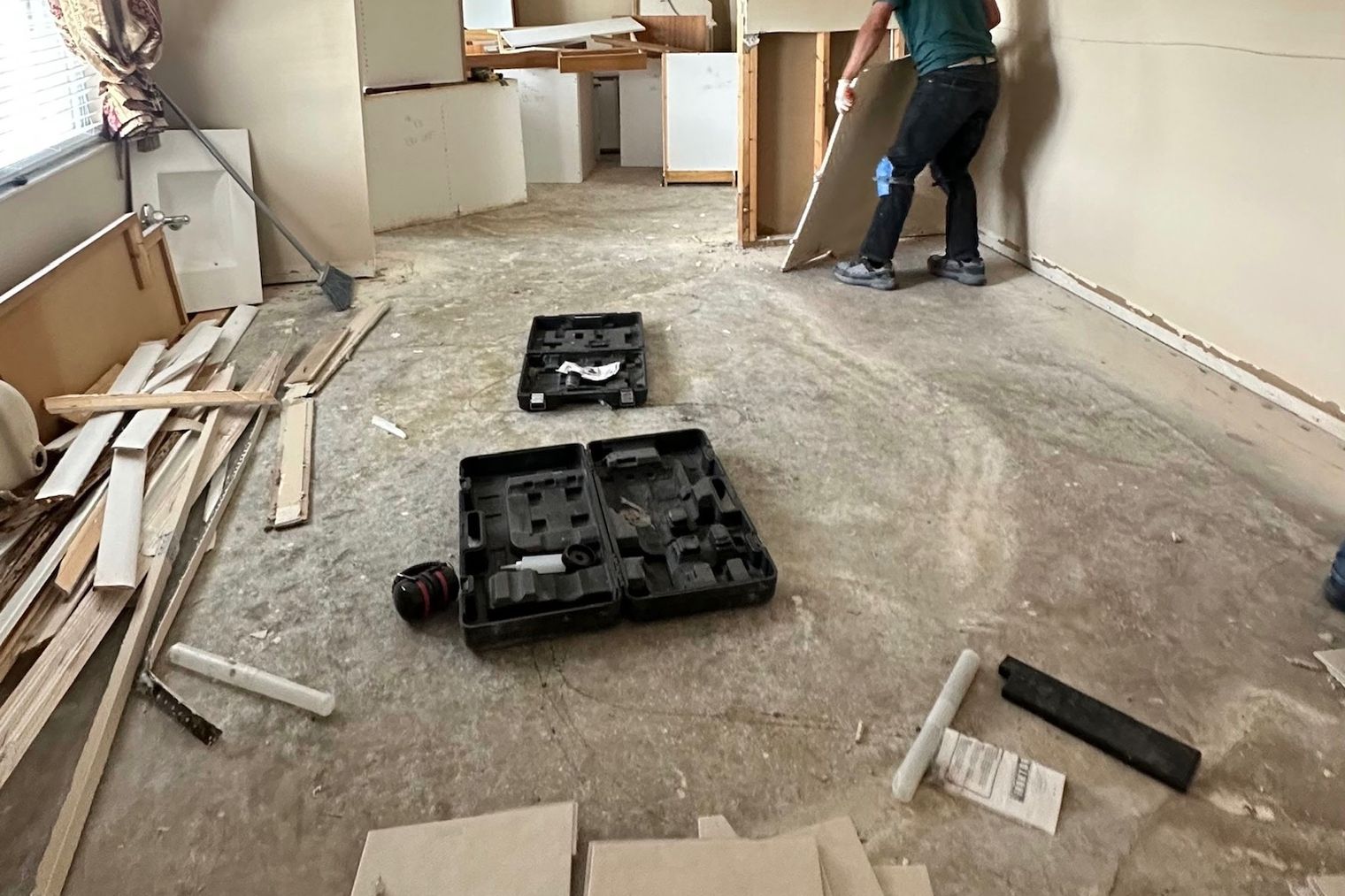
- The tile is broken loose and pried up row by row, and the pieces are stacked and carried out of the room.
- Leftover mortar is chipped and scraped off until the slab is bare.
- The bare slab is swept and checked, and every low spot gets marked.
- Leveling compound fills those spots, and the slab is checked again before the new floor goes down.
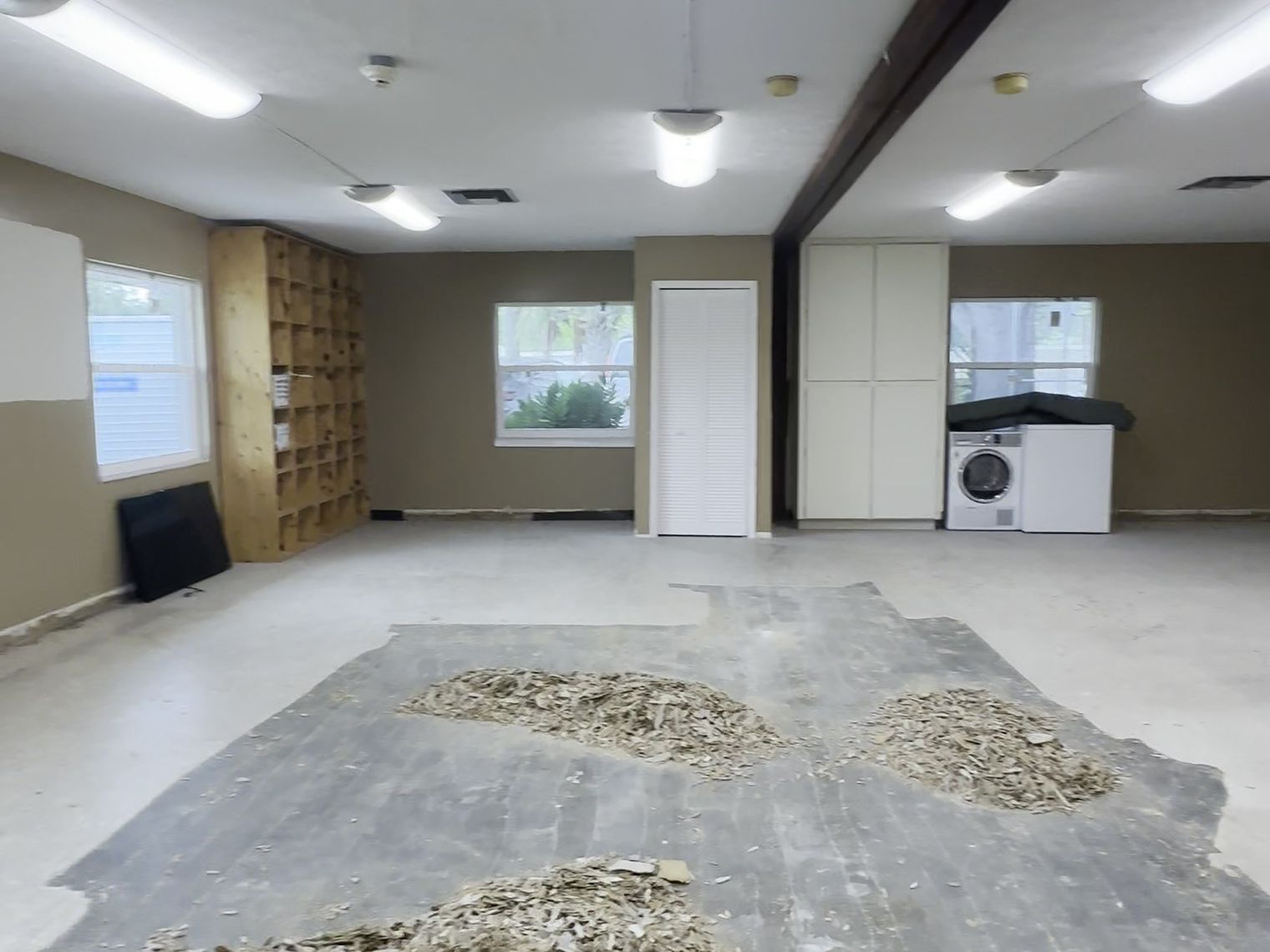
Tile stuck to concrete doesn't come up in clean sheets. It breaks into sharp, heavy pieces, and a whole room of it is loud work. Under a thick mortar bed, there is more to break out than the tile itself.
Getting Old Tile Glue and Mortar Off the Slab
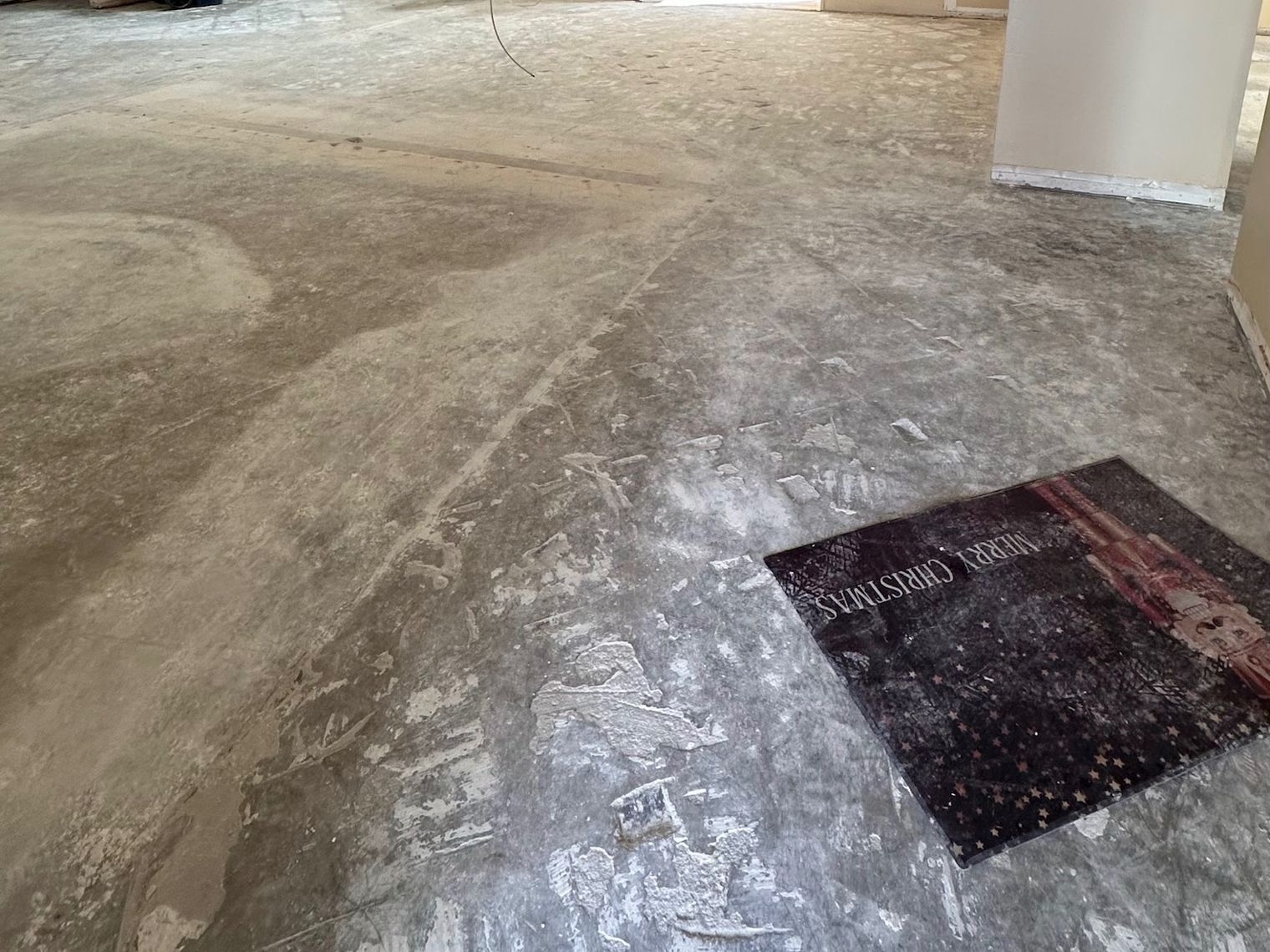
Once the tile is up, the slab is usually covered in ridges of old mortar, the trowel lines from the day the tile went down. Some tile was set with an adhesive instead of mortar, and that has to come off too. Ridges left under a floating plank make it flex and work the joints loose, and ridges under glue-down wood or new tile keep it from bedding flat.
Floor makers are specific about this. Their install guides ask for a concrete base that is clean, flat and dry, with nothing left on it from the old floor. So the leftovers are scraped down to bare concrete, not just knocked down to a lower ridge.
Good to know
Tile, grout, mortar and concrete all contain silica. Chipping and scraping them puts fine dust in the air, so keep kids and pets away from those rooms while the work goes on.
Low Spots and Leveling After the Tile Comes Up
A slab that spent decades under tile can hide dips you never felt. Some tile sits on a thick bed of mortar, and when that bed comes out, the real shape of the slab shows. Thin-set tile hides less, but the low spots are still there.
Makers of vinyl plank, laminate and wood floors each set a limit on how flat the base under their floor has to be. Low spots get leveling compound, a cement-based mix that is spread into the dips and smoothed out to meet the slab around it. On some slabs that means strips along a few dips; on others, a wider area. How much leveling a slab needs is a big reason removal is priced after someone has seen the tile in person.
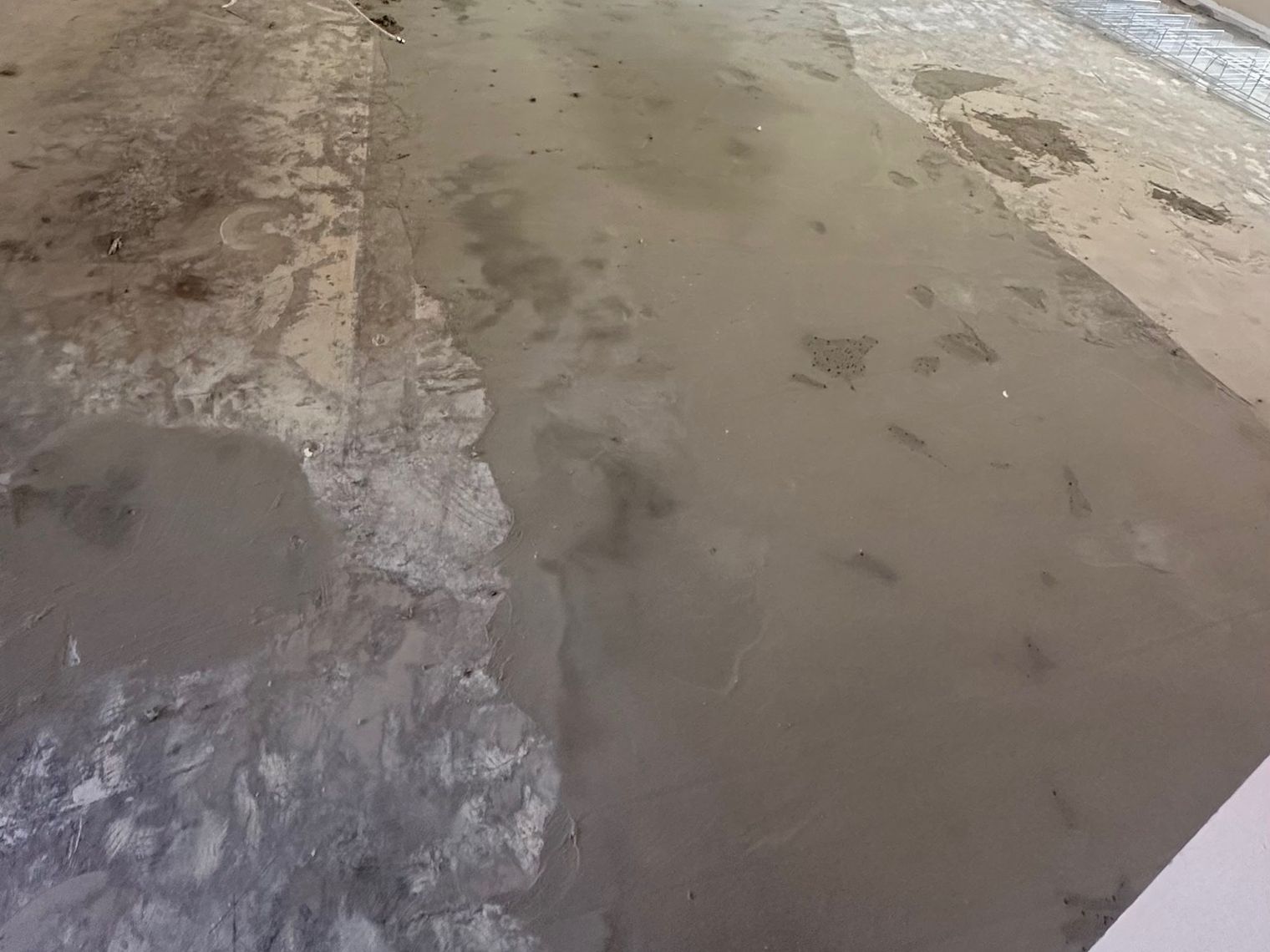
The slab also has to be dry enough for the floor going over it, and plank makers ask for that in their guides too. In a humid Florida climate it's worth asking about before you choose a floor. Our post on LVP over a concrete slab in Florida covers what the slab needs before plank.
Sometimes the bare slab shows more than the walkthrough could: dips deeper than anyone expected, or an older floor or layer of glue hiding under the tile. How a change like that is handled is spelled out in the contract and the written estimate you sign before work starts.
Living in Your Home While the Tile Comes Up
Tile removal is loud and dusty, and the rooms on the scope are out of use while it happens. These steps make it easier to live with:
- Clear the rooms. Furniture, rugs and anything stored low along the walls should go somewhere else first.
- Close off the rest of the home. Shut the interior doors to rooms that aren't on the scope and cover open shelves nearby.
- Plan around the kitchen. If the tile runs through it, expect to cook and eat somewhere else for a stretch.
- Think about the order. Doing one side of the home and then the other can keep a bedroom and a bath in use.
- Ask about debris. Where the broken tile goes and how it leaves the home should be settled before removal starts.
Condos and 55-and-over communities add their own rules. Associations often limit the hours for loud work and set how debris leaves the building, so get those rules in hand before the walkthrough. Venice, for one, has several 55-and-over communities, and our page on old floor removal in Venice covers how removal works there.
If you're away for part of the year, tile removal can be planned for a stretch when no one is living in the home.
Old Tile Removal in Sarasota and Manatee County Homes
A large share of the homes in Manatee and Sarasota counties were built before the turn of the century, census data shows. Old ceramic tile set right on the slab is one of the floors we expect to find in homes from those years, sometimes original, sometimes from a later update.
In Sarasota, the one-story block ranches of Southgate are a good example. Many of those homes were built with terrazzo floors, so in an older ranch it's worth asking at the walkthrough what's under the tile before it comes up. Our page on old tile removal in Sarasota covers the floors we expect there.
Newer homes are often simpler: one layer of tile on a newer slab. If your home is in a newer community, like Artisan Lakes in Palmetto, ask what the builder put down and whether anything was added since. See old floor removal in Palmetto for how we plan it there.
From Bare Slab to New Floor: One Single-Story Home
On one single-story home, the old ceramic tile came up room by room through the living and dining areas, and the old baseboards came off with it. The kitchen was being redone at the same time, so the floor work ran right through it.
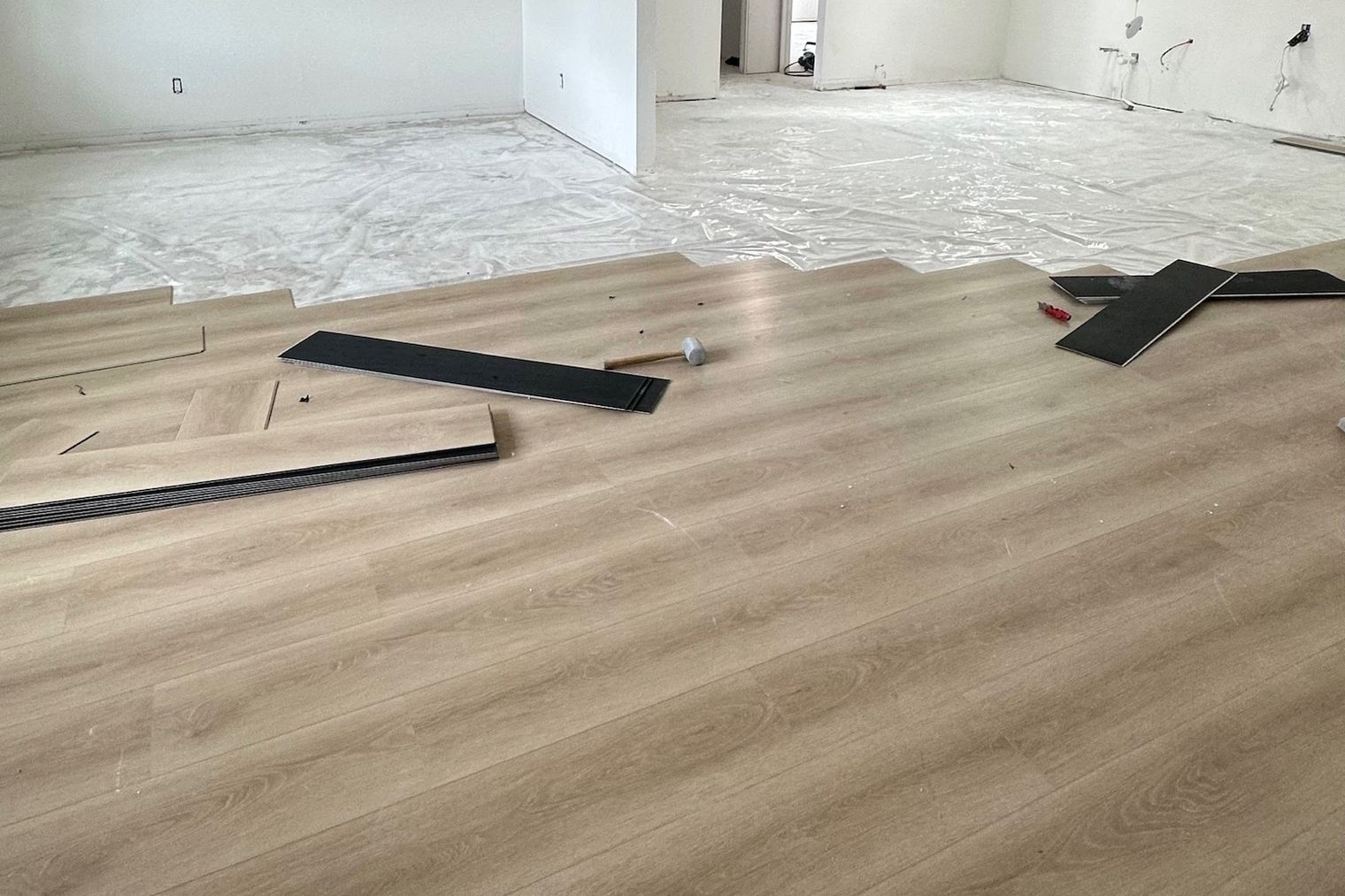
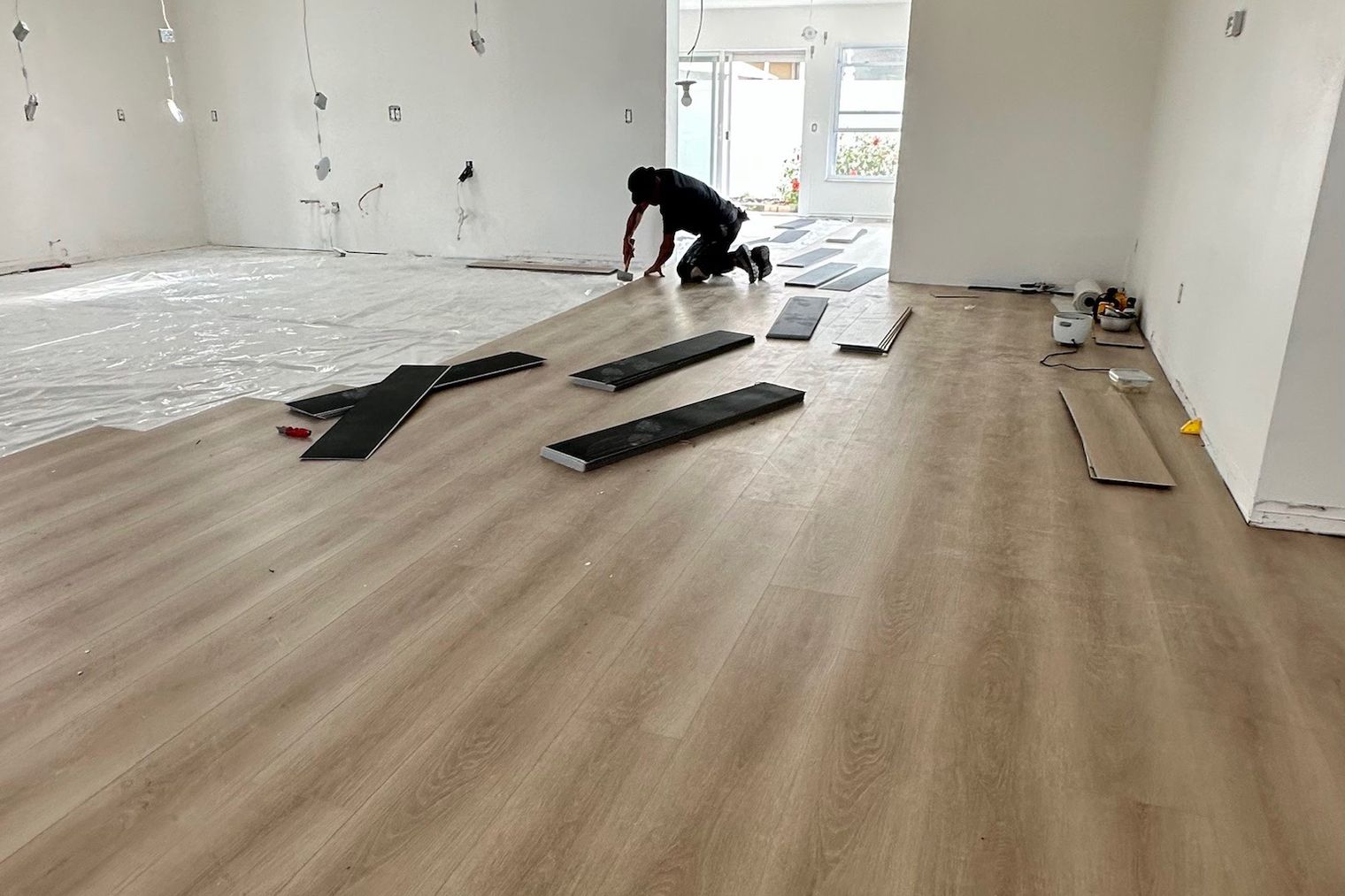
With the tile out, the mortar left on the slab was scraped off and swept up. That showed where the slab dipped, and strips of leveling compound went into the low spots. Once the compound had set, a thin underlayment rolled out over the slab and the new click planks went down on top of it, row by row, finished at the walls with new baseboards.
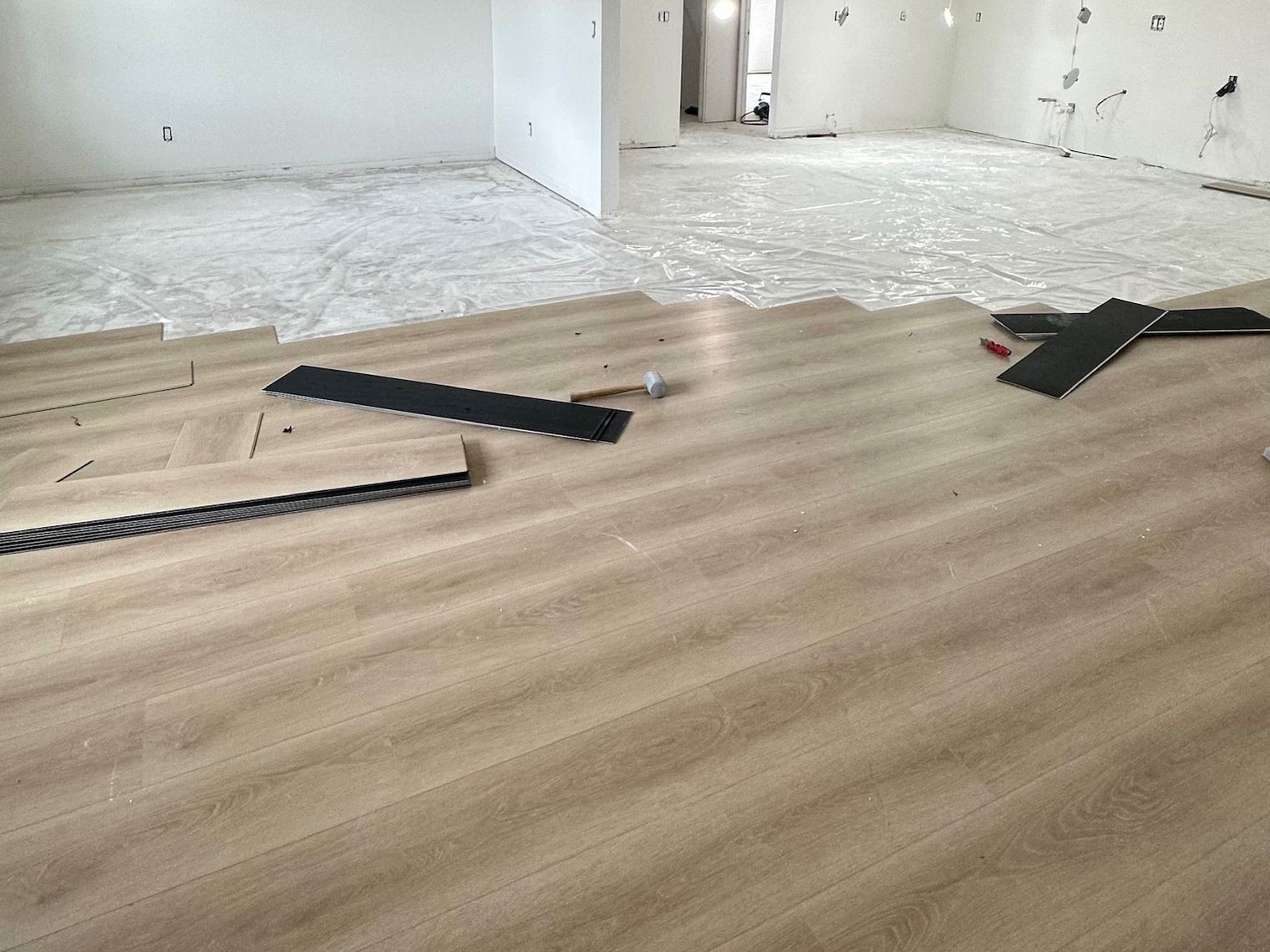
On our estimates, each of those steps is a line you can read before anything comes up: the rooms the tile comes out of, the scraping, the leveling and the floor that goes down. If you're comparing bids, our post on what a written flooring estimate should include shows what to check.
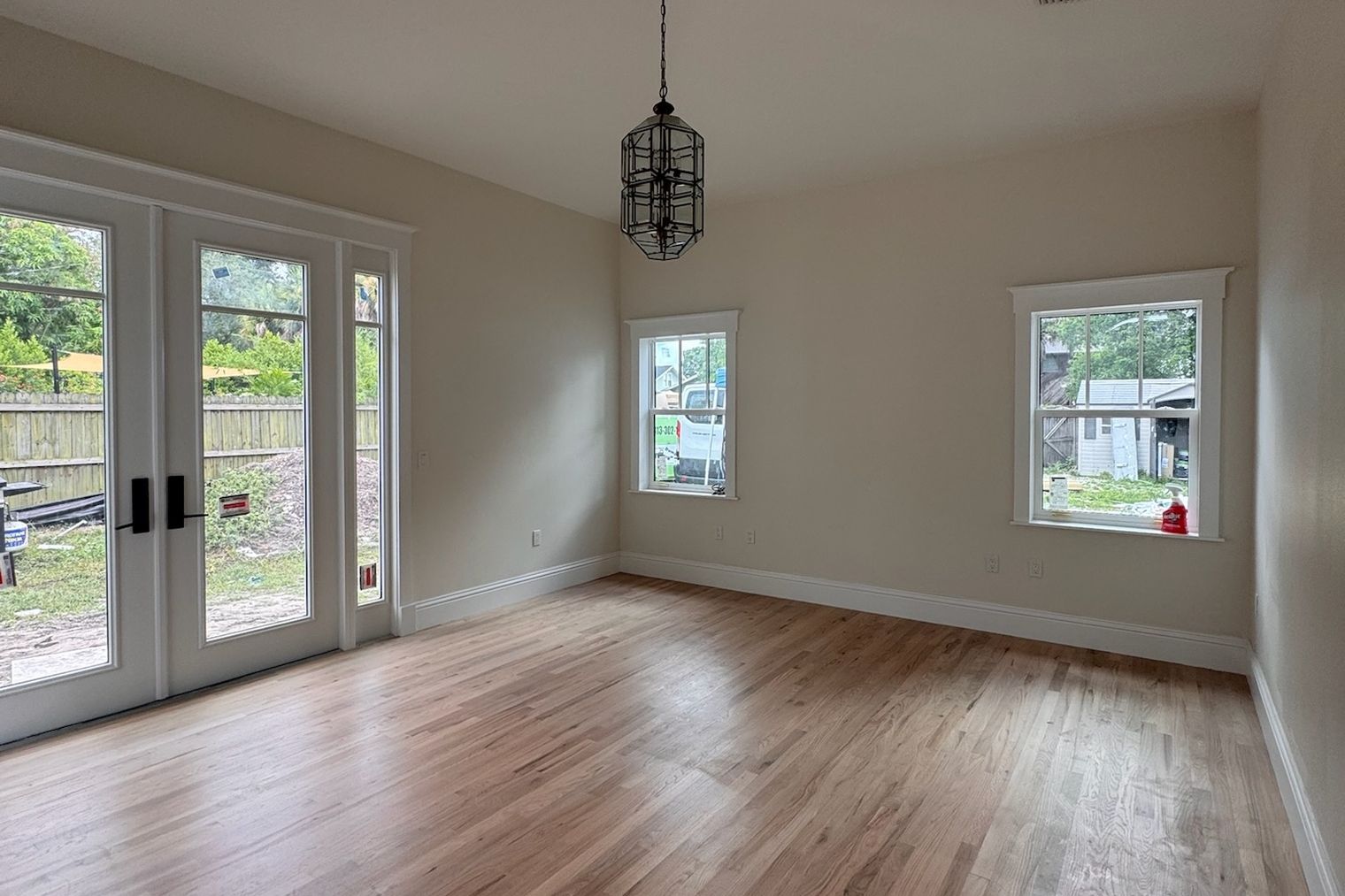
The new floor can be luxury vinyl plank, laminate flooring, hardwood floors or tile flooring. The prep under each one starts the same way: old tile out, slab bare, low spots filled.
Common questions
How much does it cost to remove tile flooring per square foot?
National cost guides list a per-square-foot range for tile removal, and the spread is wide for a reason. A small bath of thin-set tile on a flat slab and a whole floor on a thick mortar bed with deep dips are different jobs. We look at your tile, check how it was set and find the low spots at a free in-home estimate, then write the removal and the prep as their own lines with the price.
How long does it take to remove tile from a concrete slab?
It depends on how many rooms are on the scope, how the tile was set and how much leveling the slab needs once it's bare. Leveling compound also has to set before the new floor goes over it, and that step can't be rushed. At the walkthrough we go over the order of the work, so you know which rooms will be out of use and in what sequence.
Is removing tile from a concrete floor dusty?
Yes. Breaking up tile and scraping mortar makes dust, and some of it is fine enough to drift into nearby rooms. Plan on clearing the rooms, closing interior doors to the rest of the home and keeping kids and pets out of the area. Ask how dust and debris will be handled, and make sure the answer is on the estimate.
Does removing tile damage the concrete slab underneath?
It can leave marks. Where the mortar gripped hard, small chips can come off the top of the slab along with it. Those spots get leveling compound, the same as the low spots, so the base is flat again before the new floor goes down. If a crack or something bigger shows up once the tile is off, your contract already says how that change works, so it gets settled before the job goes on.
Can new tile go over old tile on a slab?
It can be done, but it isn't how we lay a tile floor. Our tile work starts with the old floor out and the slab flat, then a membrane over the slab before the new tile is set. Tile on top of tile adds height at every doorway, and the new floor ends up only as solid as the old tile's grip on the slab.
Does it cost less to put new flooring over tile than to remove it?
Sometimes, because the removal line goes away. But going over tile adds work of its own: grout lines filled flush, baseboards and transitions reset for the extra height, and any loose or cracked tile dealt with first, since the new floor sits right on it. At the walkthrough we check how solid your tile is, and the written estimate shows what taking it out involves next to the new floor.
Free estimate
Find Out What's Under Your Tile
Show us the floors you want gone. At a free in-home estimate we look at the tile and the slab with you, then put the removal, the prep and the price in writing before work starts.