Flooring
Best Flooring for a Florida Condo: Underlayment, Approval and Hours
Before you pick a plank, read your building's rules. Florida condo associations tend to ask for approval and a sound layer first, and the work itself has to fit the building's hours, its elevators and owners who live here part of the year.
The Best Flooring for a Florida Condo Starts With Your Building
The best flooring for a Florida condo is usually the one your association will sign off on, laid over the sound layer it asks for. For many owners that turns out to be vinyl plank in the living areas and bedrooms, with tile kept in the baths. Laminate and glued-down wood can work too, where the rules allow them. The floor itself is half the answer. The other half is what goes under it and how the work fits the building.
Vinyl plank earns its place for plain reasons. It has a little give underfoot, unlike ceramic tile or stone. It clicks together over concrete once the old floor is out and the surface is flat, and it cleans with a damp mop. Our page on luxury vinyl plank installation walks through the whole job, from the old floor out to the last baseboard. Damp air, sun through the sliders and sand on bare feet weigh on the choice too, and our guide to the best flooring for Florida homes covers them. In a condo, the building's rule comes first.
We wrote this for owners in the condo buildings of Longboat Key, Siesta Key and Venice, and in the towers near the downtown Sarasota bayfront, where building rules often shape the floor job. If your unit is on Longboat Key, see our page on vinyl plank for Longboat Key condos.
Condo Association Flooring Approval: What the Board May Ask First
Many older condo documents in Florida were written to require carpet in most rooms. The trend now is to allow hard floors, but only after the association approves them, and that approval usually depends on proof of a sound-deadening layer under the new floor. Your declaration and the board's written rules say which version applies to your building.
Approval tends to come from the board, or a committee it names, on a form, before anyone touches the old floor. What the form asks for varies, but these items come up often:
- The rooms getting a new floor, and which floor goes in each one
- The product sheet for the plank or the tile
- The sheet for the underlayment, with its sound rating
- A test report or a letter from the maker covering the floor and the layer under it together
- The company doing the work and the dates it expects to be in the building
Hard Flooring Condo Rules and the Slab Under Your Unit
In many Florida condos, the unit's boundary runs from the surface of the concrete floor upward, so the slab itself sits outside your unit. That is one reason a board may ask how the old floor comes out and what goes onto the concrete. Read the boundary paragraph in your declaration, and if it is unclear, ask the manager before the walkthrough.
Good to know
Get the flooring rule and the approval form from the manager in writing before you shop. Picking from the floors your building accepts beats falling for a plank it won't.
Sound Underlayment for a Condo: What Goes Under a Hard Floor
In a building, your new floor is also the ceiling of the unit below. A sound underlayment is the thin layer between the concrete and the plank or tile, and its job is to soften what travels down: heels, a dropped pan, a chair pulled out from the table. When the owner below starts hearing footsteps all day, that is the problem the rule was written to prevent.
Rules often name two kinds of sound. Impact sound, often written IIC, is what footsteps and a chair dragged across the floor send down. Airborne sound, written STC, is voices and the television. Both ratings belong to the whole build-up, from the plank through the underlayment and the slab to the ceiling below, not to one product. That is why a board asks for a test report on a floor and an underlayment together.
Condo Flooring Underlayment Requirements in Florida: What to Check
- Does the rule name one product, or a rating that any product can meet?
- Does a plank with a pad already attached count, or does the board want a separate layer too?
- Does the rule cover every room, or only the rooms above another unit?
- Does tile need a different mat than plank?
- Does the board want to see the underlayment before the plank covers it?
- What paperwork does the board want back once the floor is down?
Some boards ask for a separate sound layer even under a plank with a pad built in. If the plank you like has an attached pad and the rule wants a second layer as well, we check that the plank's own instructions allow both before anything is ordered. When they don't, the rule decides, and we look at a different plank.
LVP, Laminate, Tile or Wood in a Florida Condo
Here is how the four hard floors we put down compare once a building's rules come into it.
| Floor | In a condo | Ask the board |
|---|---|---|
| Vinyl plank (LVP) | A little give underfoot; clicks together over flat concrete; cleans with a damp mop | Is a plank with an attached pad enough, or is a separate layer required? |
| Laminate | Wood-fiber core; floats over its own underlayment; best kept to the dry rooms | Is laminate treated like any other hard floor under the rule? |
| Tile | Hard and cool; at home in baths and laundry rooms; set in mortar over a membrane | Which sound mat or membrane is accepted under tile? |
| Engineered wood | A real wood face; often glued down on concrete | Is wood allowed at all, and which sound layer goes under it? |
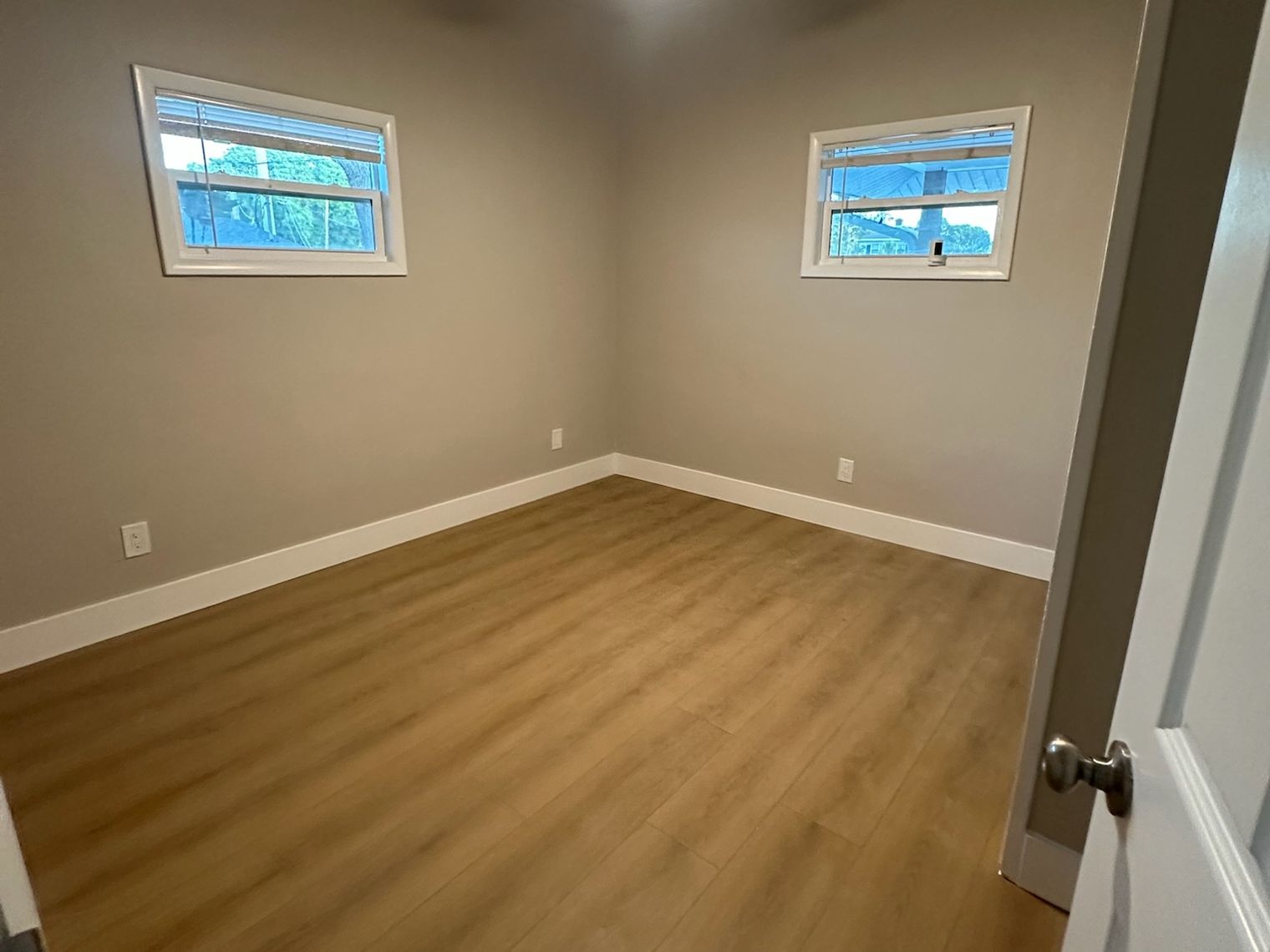
Many owners mix them: plank through the living areas and bedrooms, tile in the baths and the laundry. If you are torn between the two planks, our post on LVP vs laminate in Florida homes compares them room by room. For the wet rooms, our page on tile floors in Sarasota covers tile set over a membrane on the slab, and our laminate flooring page explains where a wood-fiber core belongs.
Work Hours, Elevators and Getting Materials Upstairs
A condo floor job is planned around the building as much as the room. Associations commonly set hours for noisy work and ask for the service elevator to be reserved for deliveries and for the old floor on its way out. Some limit major work to the months when most seasonal owners are away, and some want the elevator padded every time it carries materials.
Longboat Key Condo Flooring: Town Hours, Then Building Hours
On Longboat Key, the town sets construction hours of its own and keeps Sundays free of construction noise, and each building can set tighter hours on top. The two sets of hours stack, so the loud steps go where both allow them. Our Longboat Key service area page has more on the island's buildings and homes.
Getting materials up is its own plan. This is the order we follow in a building:
- Get the building's contractor rules and the approval form from the manager.
- Book the service elevator for the delivery and for each trip out with the old floor.
- Pad the elevator and cover the hall from the elevator to your entry.
- Keep the boxes of plank inside your unit, out of the hall.
- Cut where the manager allows it, and leave the hall clean at the end of each workday.
Taking Out the Old Floor on an Upper Floor
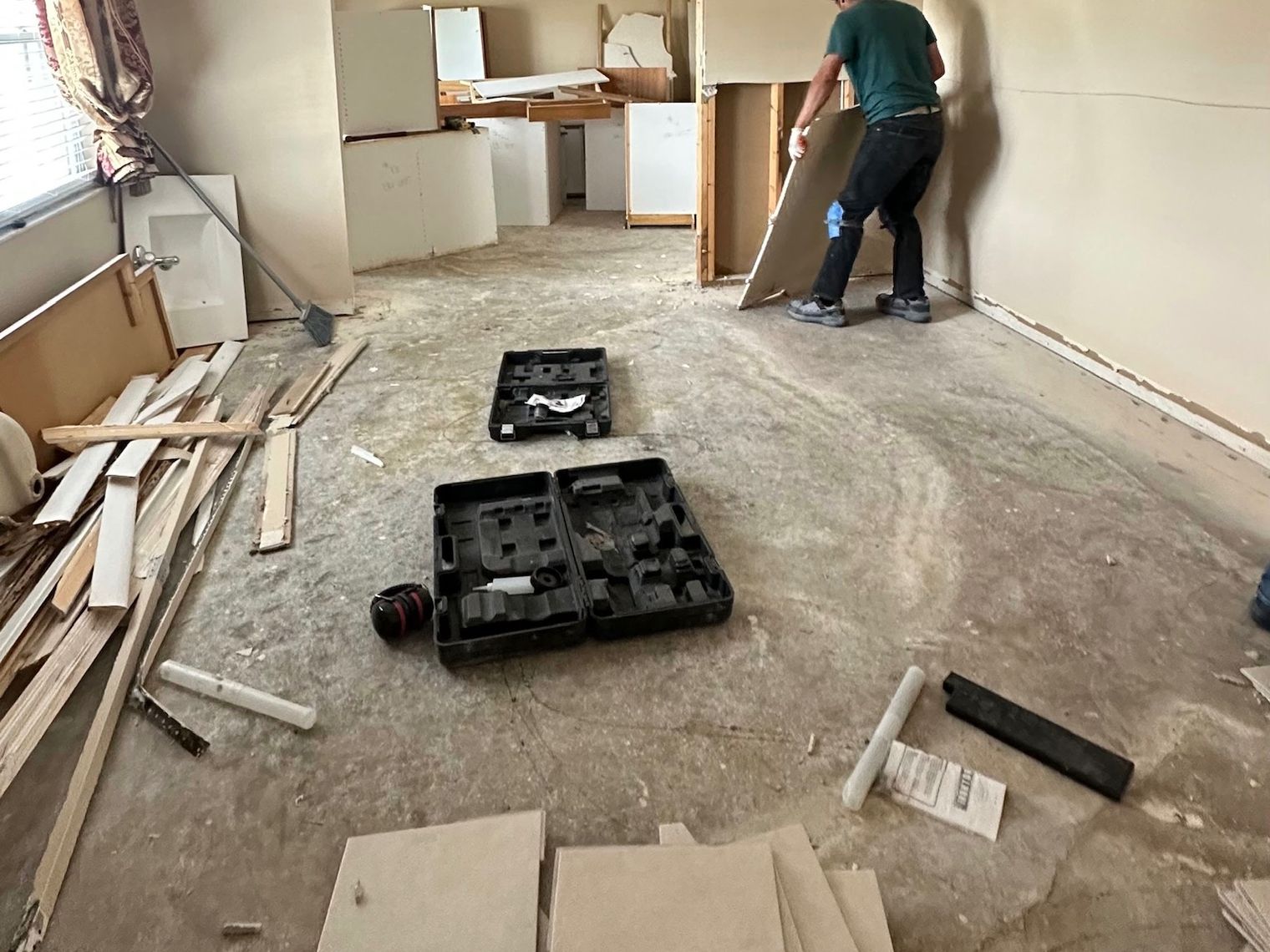
Most of the noise in a condo floor job comes before the new floor goes down. Old tile set in mortar on concrete comes up in heavy, broken pieces, and scraping the mortar off afterward is loud too. That part goes first, inside the allowed hours, and the debris leaves by the route the manager sets. Our page on old floor removal and prep on Siesta Key explains how that part is planned in a building.
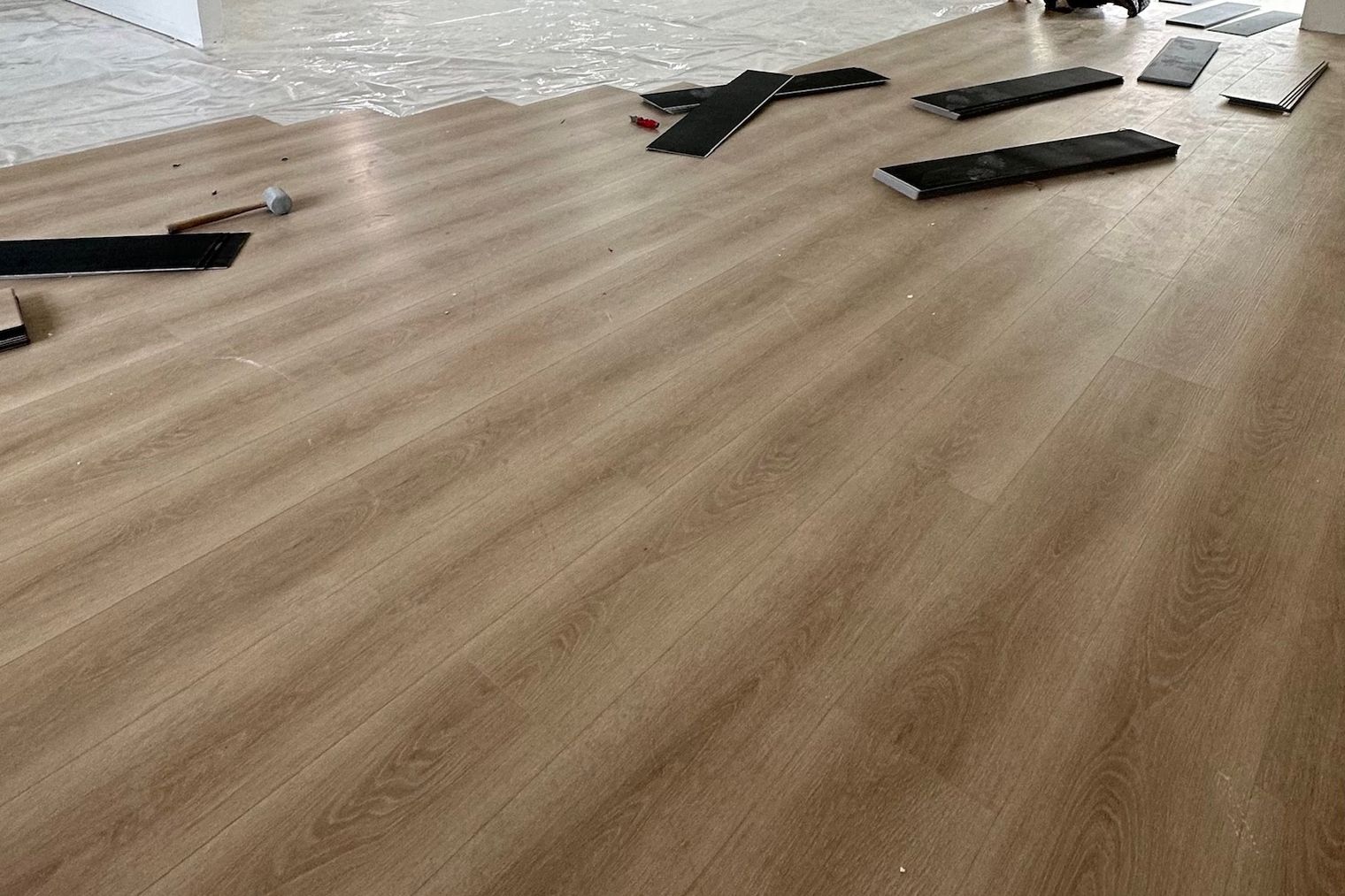
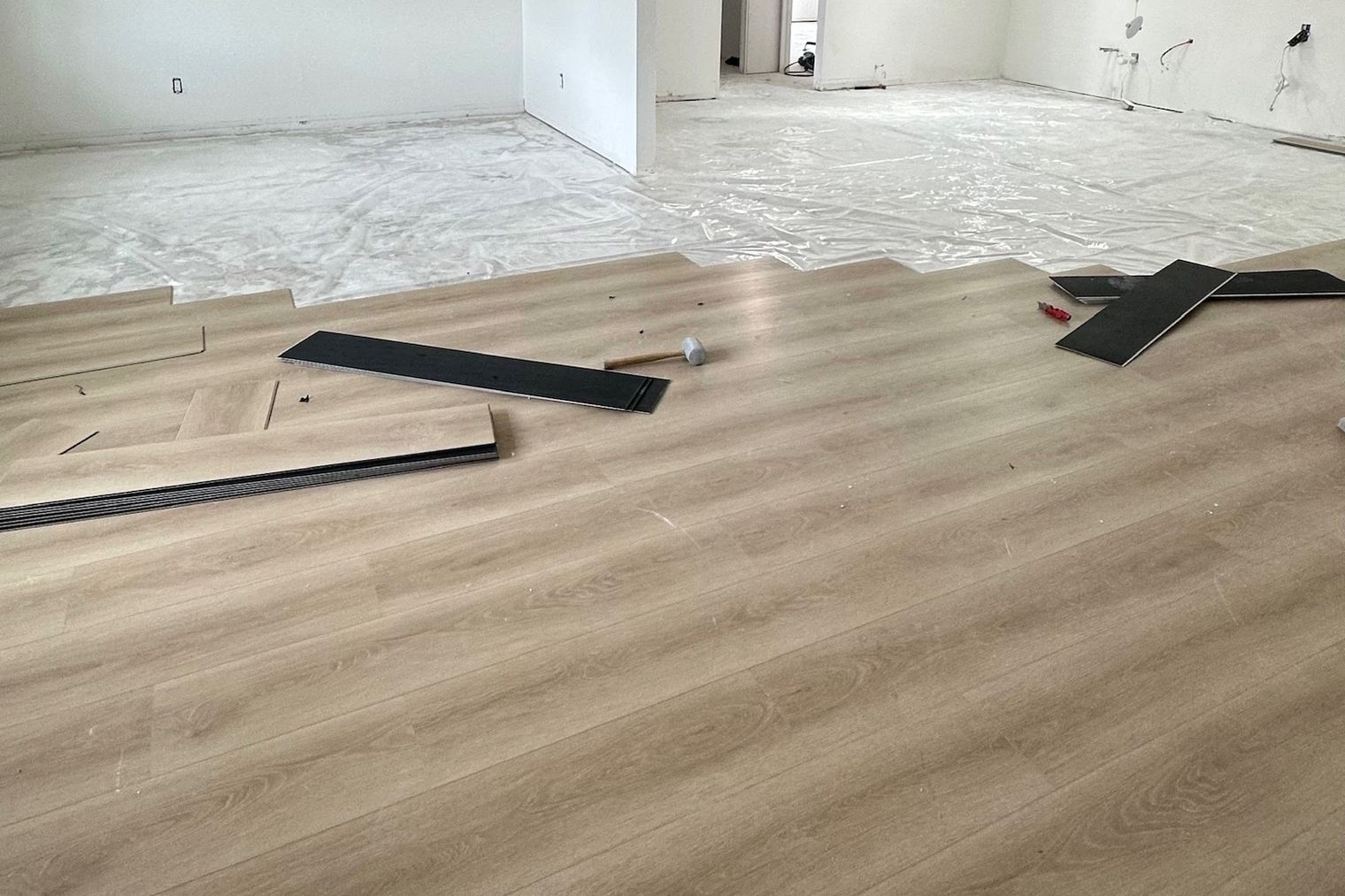
The order of the work is the same as on any slab. On one single-story home, the old tile came up room by room, the concrete was scraped bare and the low spots were leveled. Then a thin underlayment sheet rolled out and the click planks went down over it, row by row. In a building, what changes is when the loud part can run, how the debris gets down and which sound layer the board signed off on. The prep in detail is in our post on installing LVP over a concrete slab.
Older buildings can hold surprises under the floor. Some Gulf-front condo buildings on The Esplanade, on Venice Island, go back to the late sixties, and some on Crescent Beach, on Siesta Key, come from the same years. In a unit that age, the floor you see may not be the first one put down, and that changes the removal line on your estimate. Our page on vinyl plank in Venice has more on homes and condos there.
Doorways, the Entry and the Sliders
A sound layer and a new plank add height, and the floor they meet may sit higher or lower. In a condo that happens at the entry from the hall, at the sliders to the balcony and at a bath kept in tile. We plan a transition for each of those spots and write down where each one lands.

Seasonal Owners: What to Settle Before Work Starts
A large share of the homes on Longboat Key are held for seasonal use, and many owners there spend mainly the winter on the island. That can work in your favor. In buildings that keep loud work out of the winter season, the months you are away may be the window for a new floor. If your unit is on Siesta Key, our page on vinyl plank for Siesta Key condos covers the key.
If you won't be here while the floor goes in, settle these before you leave:
- The board's approval in hand, with a copy for us
- Who lets us in, and the sign-in rules at the front desk or the gate
- The elevator dates the manager has booked
- The plank and underlayment you picked, named on the signed estimate
- How you want to hear from us along the way, and who walks the finished floor with us
Putting the Building's Rules on Your Written Estimate
Everything above ends up on paper. After a free in-home estimate, where we measure each room with you, the written estimate names the plank and the underlayment picked to match your building's rule. You can attach it to the approval form, so the board sees exactly what is going in.
- The plank or tile by name, and the underlayment under it
- Each room, measured with you
- The old floor coming out and the concrete prepped
- A transition at the entry, the sliders and each doorway
- Baseboards to finish the edges
- The building's work hours and elevator dates, noted so the plan follows them
The full price sits on the same page, before any work starts. For a line-by-line look at what any flooring quote should carry, read what a flooring estimate should include.
Common questions
Can I put LVP in my condo?
In many Florida condos, yes, once the association approves it and the layer under it meets the building's sound rule. Some older documents still call for carpet in parts of the unit, so read your declaration and the board's rules before you shop. Where hard floors are allowed, vinyl plank is one of the simpler ones to fit: it has some give underfoot and clicks together over flat concrete.
What underlayment does my condo require?
Your association decides, and the answer changes from building to building. Some rules name one product. Others name a rating that the floor and the layer under it have to reach together, and some ask for a separate layer even under a plank with a pad attached. Bring the written rule to the estimate, and the underlayment gets picked from it.
What sound rating does a condo floor need in Florida?
There is no single answer for every building. Florida's building code sets sound ratings for the floors between units when a building goes up, and many associations write their own minimums for the floor an owner puts in later, sometimes stricter ones. Ask the manager for the exact ratings in writing, and for the kind of test report the board accepts.
Do I need association approval to replace my condo floors?
For a hard floor in a Florida condo, usually yes. Approval tends to come in writing from the board or a committee before work starts, and the form often asks for product sheets and proof of the sound layer. Some buildings' forms say work done without approval comes out at the owner's cost, so get the form early and keep a copy.
Is vinyl plank quieter than tile for the unit below?
Not by itself. Vinyl plank has a little more give underfoot than tile, but both are hard floors, and what the owner below hears depends a great deal on the layer under the floor and the concrete. That is why buildings look at the rating of the floor and the underlayment together. Compare those tested ratings, not the plank or the tile alone.
When is a good time to replace floors in a seasonal condo?
Many owners plan it for the months they are away. Some buildings keep major work out of the winter season, which leaves the rest of the year for loud steps like taking up old tile. Start the approval early, since the board has to sign off before work begins, and settle who lets the crew in while you are gone.
Free estimate
Bring Your Building's Rules, We'll Plan the Floor
Have your building's flooring rule handy. At a free in-home estimate we measure every room with you, match the plank and underlayment to that rule and put the full price in writing before work starts.