Flooring
Best Flooring for Florida Homes: A Room-by-Room Guide
A floor in a Florida home sits on concrete, lives with humid air and takes strong sun through the glass. We weigh vinyl plank, laminate, tile and engineered hardwood against those conditions, then match each one to the rooms it suits.
The Best Flooring for Florida Homes Depends on the Room
There is no single best flooring for Florida homes. The right answer changes from room to room. For most homes here, luxury vinyl plank and tile are the strongest all-around picks, because neither one is made of wood fibers that swell with humid air. Engineered hardwood is the usual way to get real wood over a concrete slab. Laminate is a good fit for dry rooms where water rarely reaches the floor.
That is the short version. The longer one starts with what a home in Manatee or Sarasota County asks of a floor, then goes floor by floor and room by room. Near the end, you will see a real home where the floor changes from room to room, and why each one made sense where it went.
What a Florida Home Asks of a Floor: Slab, Humidity, Sun and Sand
The best flooring for a concrete slab in Florida starts with prep
Slab-on-grade construction dominates in Florida, so in many homes the new floor goes straight onto concrete. A slab can give off moisture vapor through its surface, and flooring makers often set a limit for it in their install rules. That is why the prep counts as much as the material. The old floor comes up, leftover mortar and glue get scraped away, and low spots are filled before anything new goes down. Our page on old floor removal and slab prep walks through that work.
Humid air, most of the year
Sarasota has a subtropical climate, with hot, humid summers and a wet season of afternoon rain and thunderstorms, and homes along the rest of this coast live with the same damp air. Wood takes on moisture when the air is humid and gives it back when the air dries out, so it swells and shrinks with the seasons. Tile and vinyl plank don't soak up moisture from the air. Your air conditioning carries a lot of the load for any floor, and the most for wood.
If you leave for the summer, the county extension office's guide to closing up a Florida home (opens in a new tab) notes that some owners come back to a moisture problem, and that running the air conditioning while you are away can keep that down. That matters most for a wood floor.
Sun through the sliders
Plenty of homes here have sliders or a wall of glass facing a pool, a lake or the Gulf. Ultraviolet light through glass fades what it lands on, and the floor nearest the glass takes the most of it. Low-E glass blocks part of that light, and shades during the brightest hours help too.
Sand and wet feet
Grit and beach sand carried in on shoes wear a finished floor down more than almost anything else, and no surface we put down is immune to scratches. A mat at each entry, outside and in, stops a lot of it. Wet feet coming in from the pool are the other daily test, and that is where the water rating of a floor starts to matter.
Luxury Vinyl Plank: The All-Around Pick on a Slab
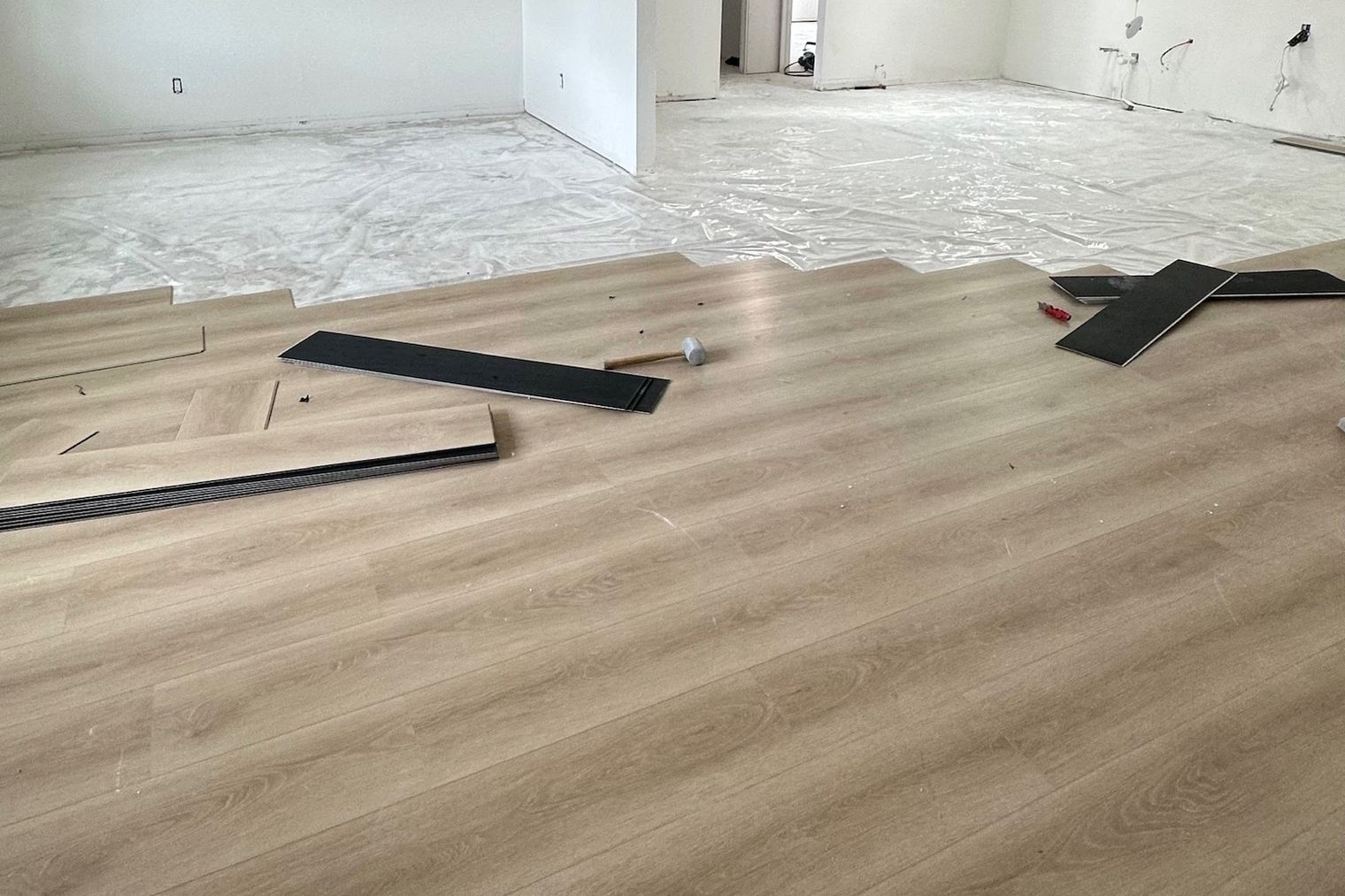
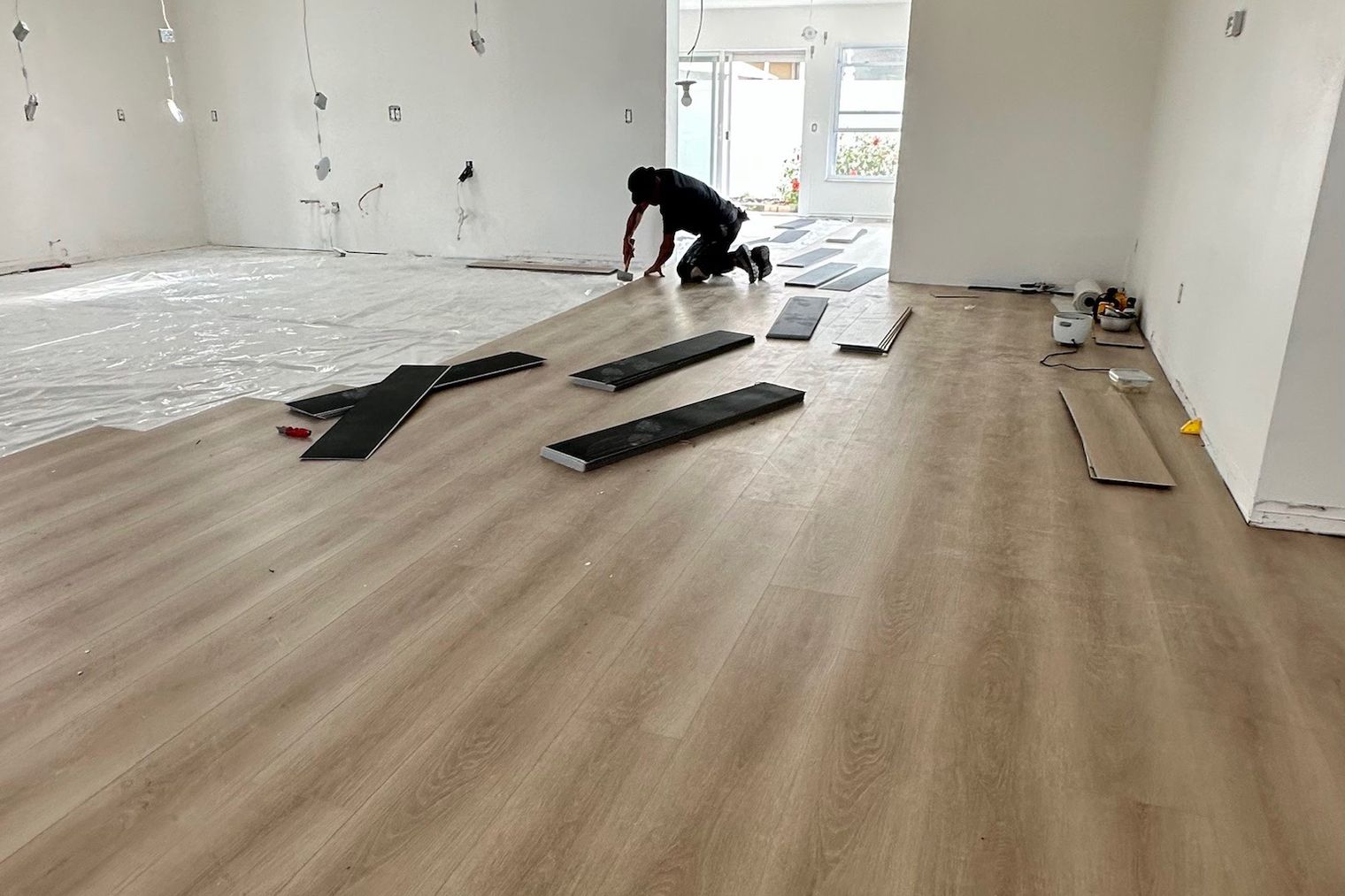
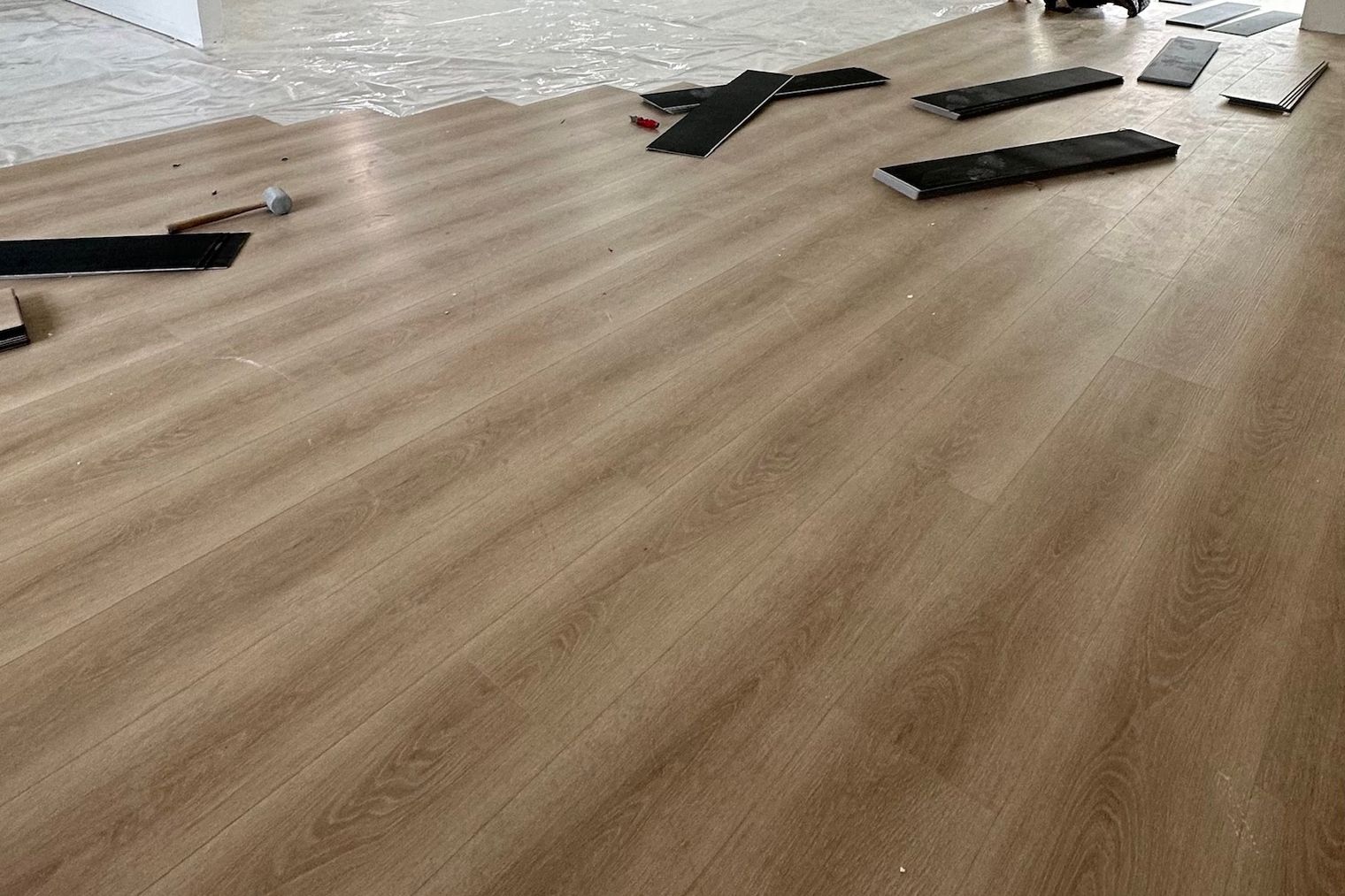
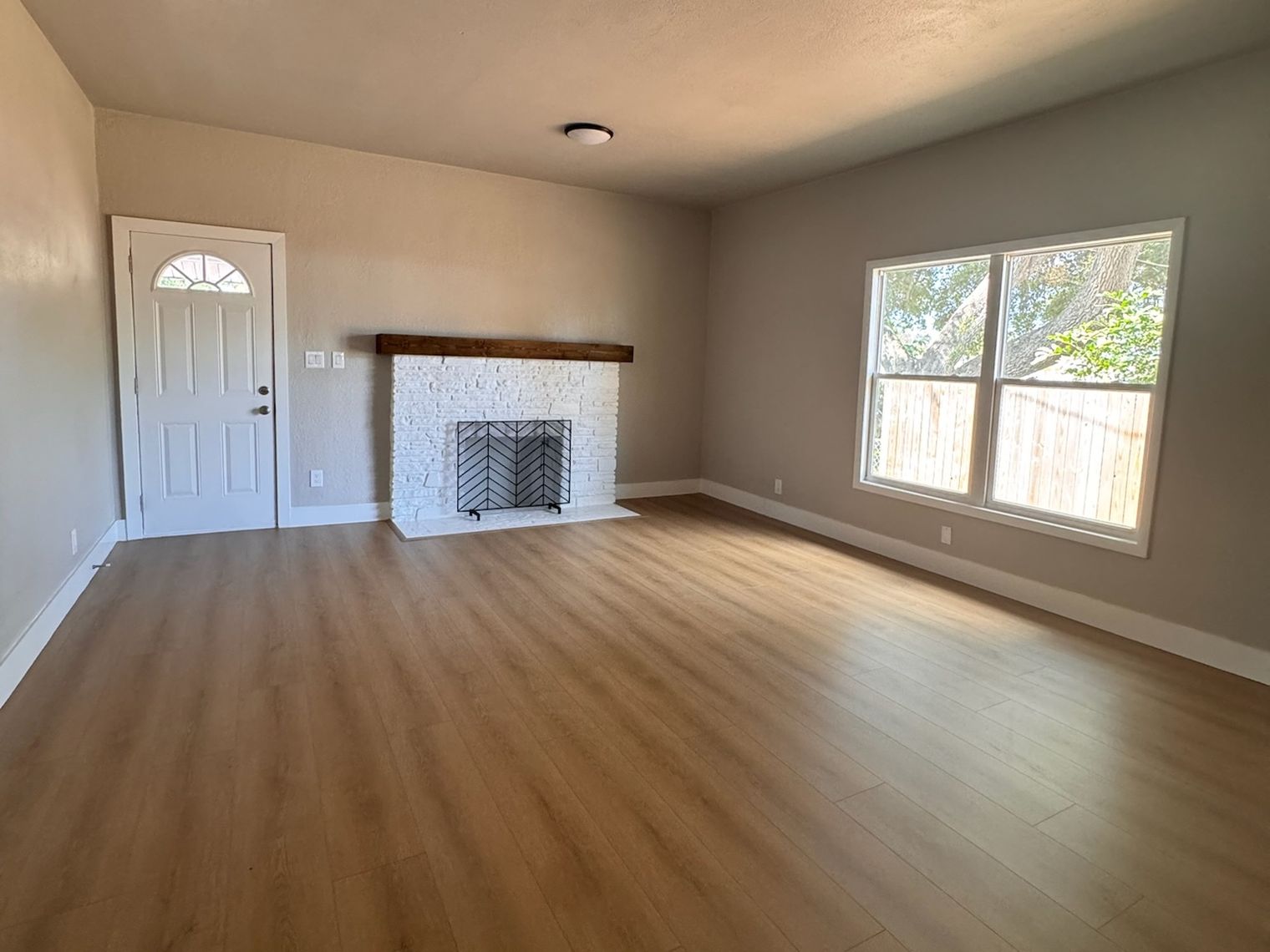
Vinyl plank gives you the look of wood over a core that humid air leaves alone. It suits nearly every room of a home on a slab: living areas, bedrooms, hallways, kitchens and laundry rooms. It is quieter and warmer to bare feet than tile, and one plank can carry the same look from the living room down the hallway into the bedrooms.
The order of work on concrete is the same each time. The old floor comes out and the slab is scraped bare. Low spots get filled, the underlayment rolls out, and the planks click together row by row in the direction you chose. Then the edges: a finishing piece around the hearth, a transition at each doorway that needs one, and new baseboards. Our post on vinyl plank over a concrete slab covers that prep in detail.
Waterproof Flooring in Florida: What the Label Means
Plenty of vinyl plank is sold as waterproof. That word describes the plank: a spill sitting on top won't swell it. It says nothing about water that runs under the edges or a slab that stays damp. Ratings and install rules change from product to product, so your estimate names the exact plank and you can read both before you decide.
Good to know
Before you sign, read the plank's water rating and what its maker says about direct sun. Your estimate names the exact product, so both are easy to look up.
Laminate: A Good Fit for Dry Rooms
Laminate is a printed wood look under a hard, clear wear layer, pressed onto a core of high-density fiberboard. That top layer resists scratches and stains well, which helps in a home with pets and kids. The core is still a wood product. It copes with humid rooms, but like other wood-based floors it doesn't tolerate water sitting on it for long.
In a Florida home, that makes laminate a sound choice for bedrooms, a home office or a living room far from the pool, and a weaker one for a kitchen, a laundry or a bath. If you are torn between the two plank floors, our comparison of vinyl plank and laminate for Florida homes sorts it out room by room, and our laminate flooring page covers the work from removal to baseboards.
Tile: The Safe Pick Where Water Lands
Porcelain and ceramic tile don't swell when they get wet, they stay cool underfoot, and they take wet feet from the pool in stride. For a ground-floor room that could see flood water in a storm, FEMA's guide to flood damage-resistant materials (opens in a new tab) is a useful reference: it rates ceramic and porcelain tile set in mortar as resistant, rates engineered wood, solid wood and laminate as not, and accepts vinyl only in narrow glued-down forms.
Tile asks the most of the prep and of the layout. The slab has to be flat, a membrane goes over it, and a pattern like herringbone is dry-fitted before a single piece is set in mortar. It is also harder and louder underfoot than plank, and grout lines need cleaning. Our tile floors page shows the steps, and our post comparing tile and vinyl plank in Florida weighs the two side by side.
Engineered Hardwood: The Best Wood Floors for Florida Homes
Real wood can live in a Florida home. The question is which kind. A solid board is one piece of wood, so it moves the most as the humidity rises and falls. Engineered hardwood has a real wood top layer over several thin plies with their grain crossing, which limits that movement and makes it more stable than solid wood.
On a slab, engineered planks are often glued straight to the concrete. On one lake home, every room started as bare concrete. The adhesive went down a section at a time, the wide planks followed board by board, and the step at the foyer got its own nosing so the edge looks finished. Our hardwood floors page shows the edges we plan, and our guide to engineered hardwood on a concrete slab covers the glue-down work.
Wood still asks for one thing a tile floor doesn't: steady indoor air. Keep the AC running, including in a home that sits empty for part of the year, and the wood moves less.
Room by Room: A Simple Guide
Here is how the floors line up in a typical Florida home. Use it to narrow the list, then make the final call in your own rooms.
| Room | What it deals with | Floors that fit |
|---|---|---|
| Living areas and bedrooms | Sun through glass, long views, daily traffic | Vinyl plank, engineered hardwood or laminate |
| Kitchen | Spills, dropped pans, hours of standing | Vinyl plank or tile |
| Bathrooms | Standing water and steam | Tile, or vinyl plank in a powder room |
| Laundry | Leaks and a heavy washer | Tile or vinyl plank |
| Entry from the pool or beach | Sand and wet feet | Tile or vinyl plank, with a mat |
| Closets | Little light, little water | Any of them, including a pattern |
| Florida room | Sun on several sides and heat | Tile, or a plank its maker allows there |
Condos add one more line. Many associations set rules for what goes under a hard floor, often a sound-rated underlayment, so footsteps don't carry to the unit below. Get your building's rules before you pick a floor, and read our guide to condo flooring and underlayment rules.
One Home, Four Floors: How Each Room Was Planned
One home shows how this works in practice. It ended up with a different floor in each kind of room, each one picked for what that room has to handle.
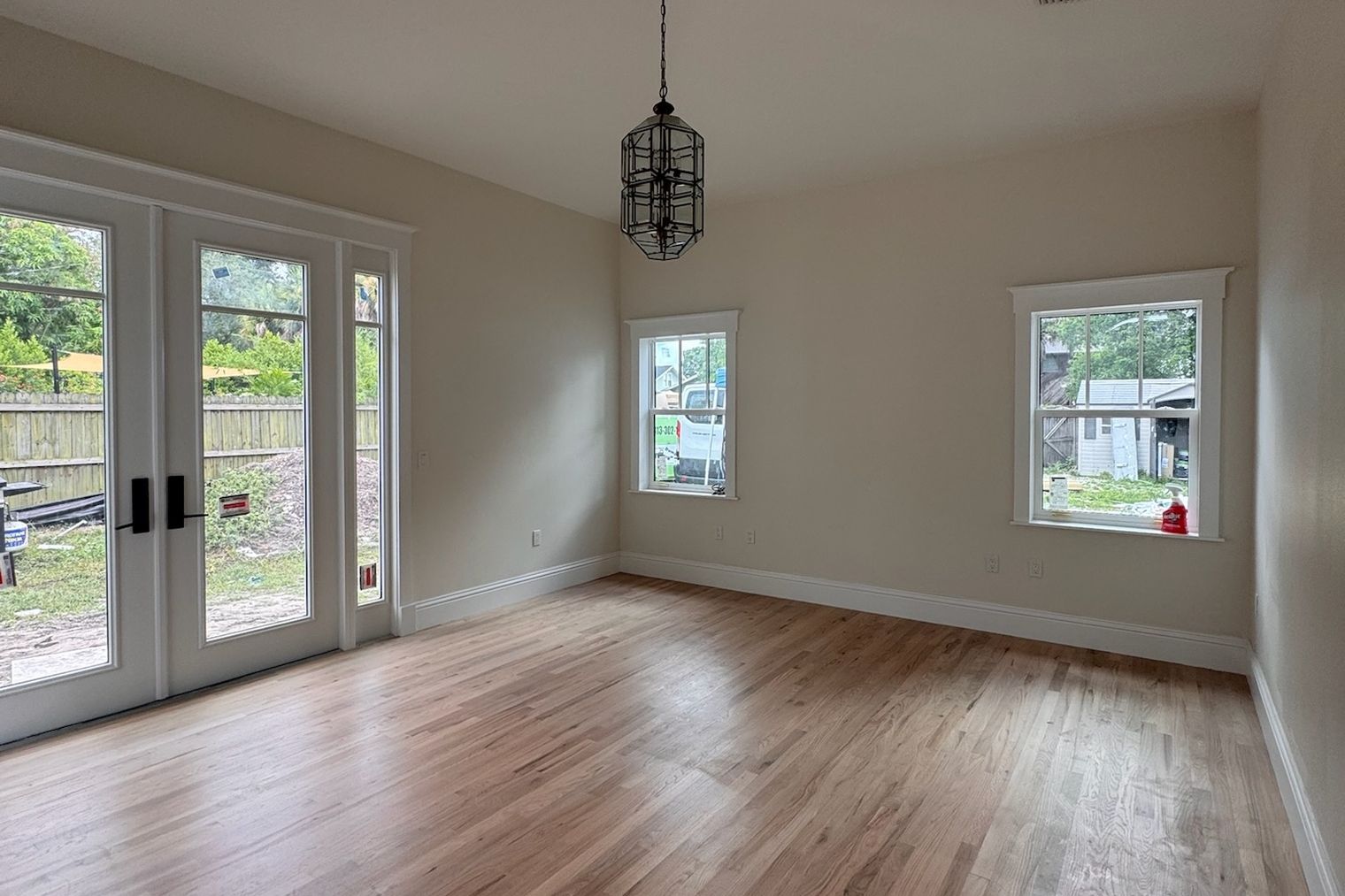
Oak in the living spaces
Oak went into the main living spaces and the hallway, laid board by board, with white baseboards along every wall. The room at the top of this page is one of them. These are the dry, air-conditioned rooms of the home, where real wood has the steadiest air.
Brick in a herringbone in the laundry
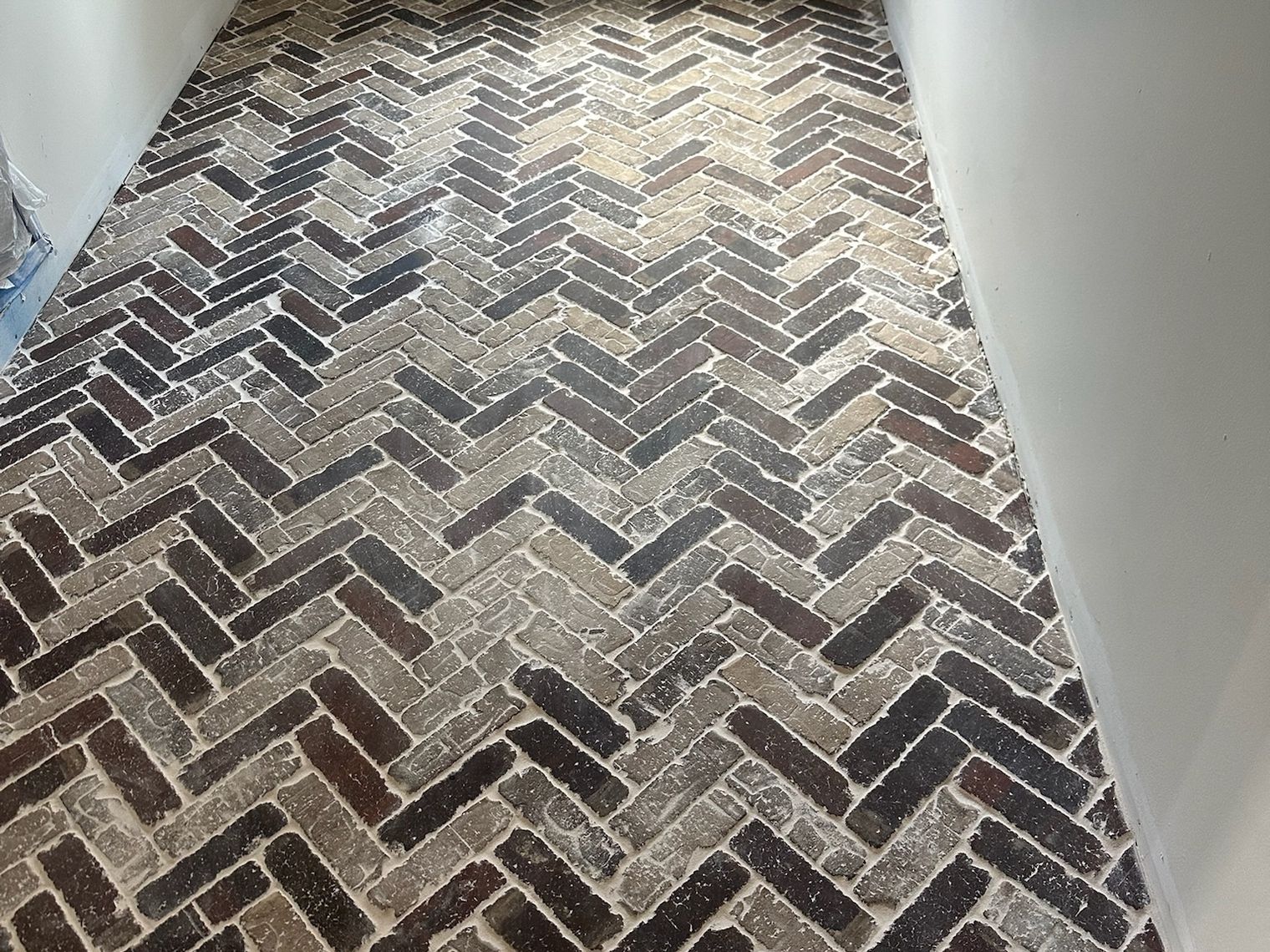
A laundry is a likely place for a leak, so this one got thin brick, set like tile. A membrane went down first. The bricks were then dry-fitted in a herringbone to settle the pattern, and each row was set in mortar and checked against a laser line. At the laundry doorway, the brick ends on a clean line against the wood of the next room.
Herringbone vinyl plank in the closet
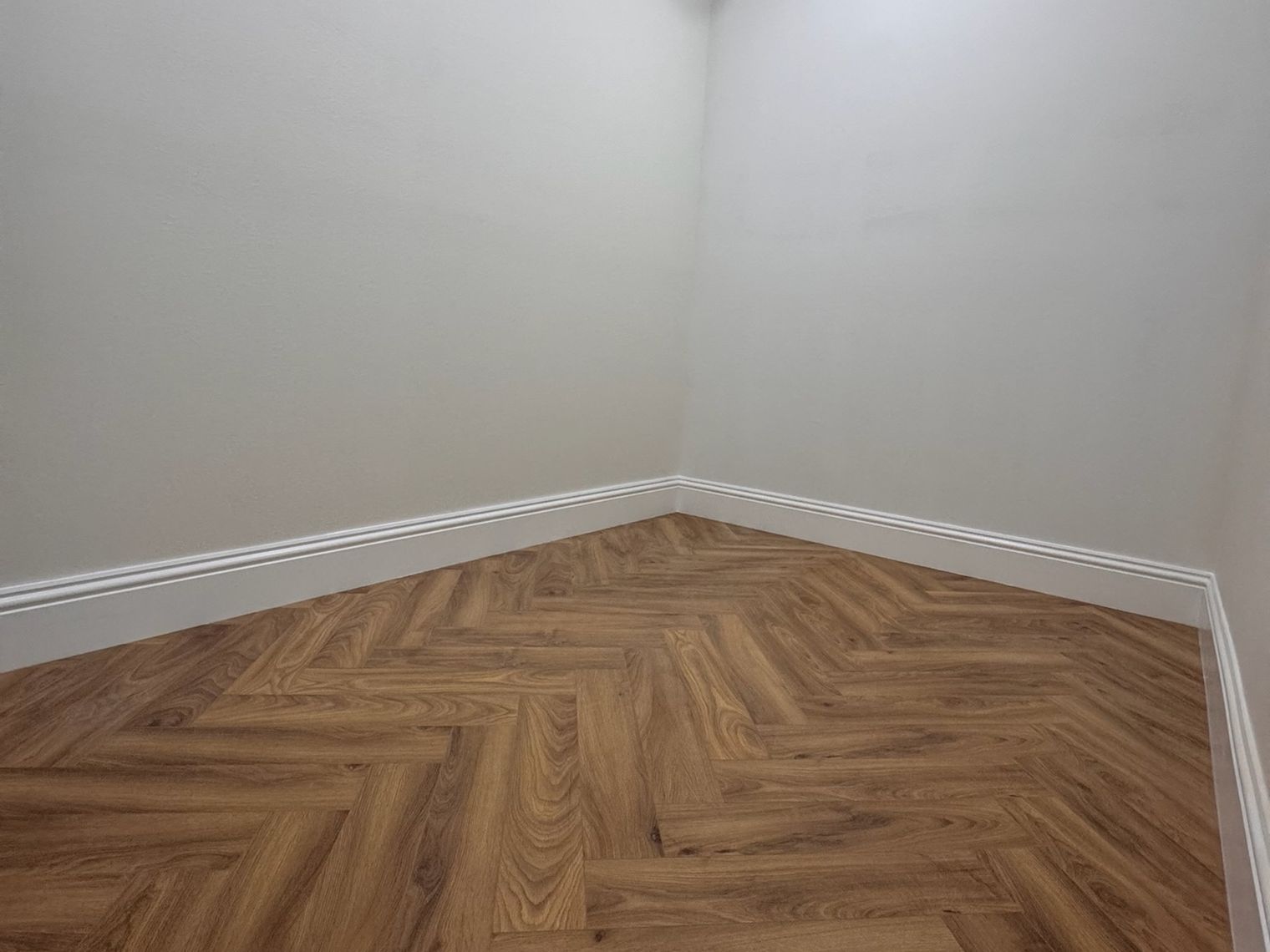
The closet repeats the herringbone, this time in vinyl plank. A closet sees little water and almost no sun, which makes it an easy room for a pattern. If herringbone is on your list, our post on what goes into herringbone flooring cost explains what changes when planks go down in a pattern.
Marble in the primary bath
The primary bath got marble: large tiles across the floor, a hexagon mosaic on the shower floor and subway tile up the walls. Because each floor stays inside its own room, the home reads as planned rather than patched together.
Check Colors in Your Own Light Before You Pick
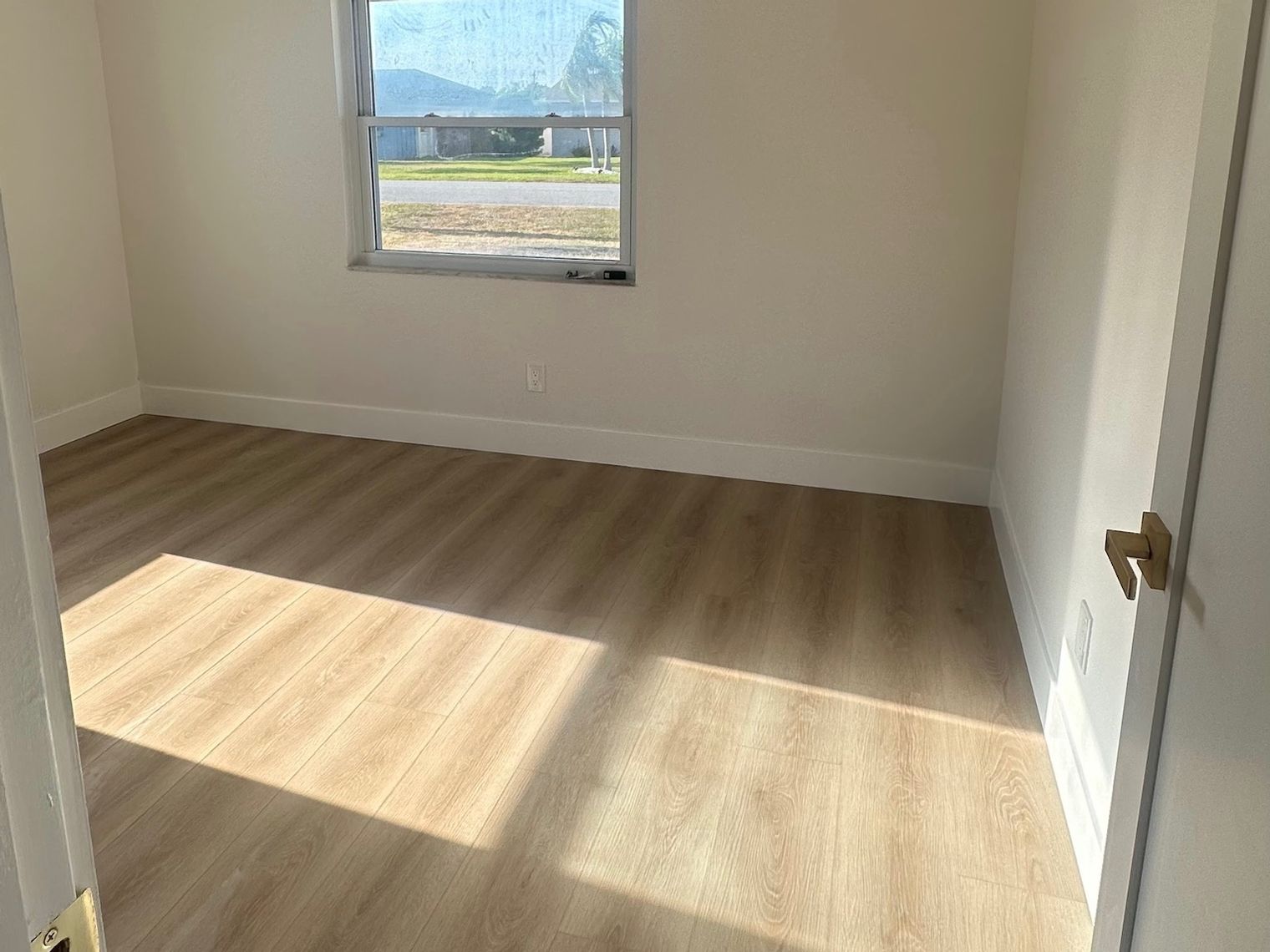
Florida light is strong, and it changes how a floor's color reads. Before you decide, look at your top choices in your own rooms: near the sliders in the morning, and again late in the day when the sun comes in low. A gray that looks soft in bright light can read cold in a shaded room, and a warm oak can lean orange when low afternoon sun hits it.
Once you have chosen, it all goes in writing: the exact product, what comes out, how the slab gets prepped, the transitions and the baseboards, and the full price before any work starts. What moves that price is the floor you pick, the size of the rooms, how much prep the slab needs and how many doorways and walls need finishing. We are a family-owned company based in Bradenton. Our pages on vinyl plank floors in Lakewood Ranch and floors and finish work in Sarasota cover two nearby cities, and our service areas lists the rest.
Common questions
What flooring is best for Florida humidity?
Tile and vinyl plank, because neither one is made of wood fibers that take on moisture from the air. If you want real wood, engineered hardwood is the better pick, since its crossed plies move less than solid boards. Laminate's fiberboard core handles humid rooms but not standing water. Whatever you choose, steady air conditioning helps every floor, and wood most of all.
Is LVP a good choice for a Florida home on a concrete slab?
Yes, for most rooms. Vinyl plank goes over concrete well after the old floor comes up and the slab is scraped, filled and flat. Its core shrugs off humid air, and many planks are rated for spills. Check two things on the exact product: its water rating and what its maker says about direct sun near sliders.
Why do so many Florida homes have tile floors?
Tile suits how homes here are built and lived in. Most sit on a concrete slab, and tile set in mortar bonds right to it. It doesn't take on moisture from humid air, it shrugs off sand and wet feet from the pool, and it feels cool on a hot afternoon. The tradeoffs are a harder, louder floor and grout lines to clean, which is why many homes keep tile in the wet rooms and put plank in the rest.
What is the best flooring for a Florida bedroom?
A bedroom is among the driest rooms in the home, so most floors work there. Vinyl plank is quiet and soft underfoot, engineered hardwood brings real wood, and laminate gives a firm wood look. What narrows it down: how much sun the windows let in, and whether the bedroom should match the hallway so the same floor runs through without a break.
What is the best flooring for a Florida room or sunroom?
Tile is the safe pick. A Florida room often has glass on several sides, so it gets more sun and more heat than the rest of the home. If you want plank there, check that its maker allows it in a room with strong sun and swings in temperature, and look at the color in that room's light before you decide.
Does every room need the same floor?
No. One floor through the open living areas keeps the long views clean, but wet rooms and closets can have their own. The trick is where each floor stops. A change that lands in a doorway, with a flush or low transition, looks planned. A change in the middle of an open room usually doesn't.
Free estimate
Choose Your Floors Room by Room, With Us
Tell us which rooms need new floors. We come out for a free in-home estimate, help you choose each floor, and give you the price in writing before any work starts.