Flooring
Cost to Replace Carpet With LVP in Bradenton: What Moves the Price
Swapping carpet for vinyl plank is priced line by line: the old carpet out, the slab or subfloor prepped, the plank named, then transitions and baseboards. Here is what moves each line, and what to ask before you sign.
What Goes Into the Cost to Replace Carpet With LVP in Bradenton
The cost to replace carpet with LVP in a Bradenton home comes down to a short list of lines, in the order the work happens. The carpet, pad and tack strips come out. The slab or subfloor gets prepped. An underlayment goes down, then the plank. Transitions go in at the doorways, and baseboards finish the edges. Each of those lines moves on its own, so a single number per square foot tells you little until you know which lines it covers.
We don't post a price per square foot here, because homes with the same square footage can need very different prep. What we can do is walk you through each line, what makes it grow or shrink, and what should be written next to it. The install itself is laid out step by step on our luxury vinyl plank installation page.
| Line on the estimate | What moves it |
|---|---|
| Carpet, pad and tack strips out | Rooms and closets on the scope, and whether the pad was glued or stapled |
| Slab or subfloor prep | Old glue, low spots, cracks, soft or loose subfloor sheets |
| Underlayment | A pad attached to the plank or a separate layer, plus a vapor sheet over concrete |
| The plank | Square footage plus extra for cuts, then thickness, wear layer, water rating and look |
| Transitions | Each doorway where the plank meets tile, or carpet that stays |
| Baseboards | Keep them and add a trim piece, or new baseboards on every wall |
Carpet, Pad and Tack Strips: Taking Out the Old Floor
Carpet comes out in layers. The carpet itself rolls up. The pad under it is stapled to a wood subfloor or glued to a slab, and a glued pad leaves a crust of foam and adhesive behind. Around the walls, tack strips hold the carpet tight, nailed or glued down along every edge. All of it has to go: plank makers list carpet and carpet pad among the surfaces their floors can't be laid over.
What moves this line is how many rooms and closets are on the scope, and whether the pad was glued. Furniture is a separate question worth settling early: who moves it, and when. Taking out the old carpet is part of the job, and it sits on your estimate as its own line, so you can see it was counted.
Reading the Cost to Remove Carpet and Install LVP on a Quote
Some quotes fold removal into the install price. That can be fine, as long as the quote says so. Watch for a quote that never mentions it, because a glued pad or a closet nobody measured turns into a change order later. On ours, removal has its own line. Our page on old floor removal and slab prep shows what that part of the work looks like.
What Is Under Your Carpet: Slab or Subfloor, and the Prep It Needs
You won't know for sure until the carpet is up, but the age of the home is a clue. By Census Bureau figures, the typical home in Sarasota and Manatee counties was built in the eighties or nineties. A home that age has often had its floors redone before, and each round can leave something behind: old glue, patched cracks, or low spots nobody leveled.
Replacing Carpet With LVP on a Concrete Slab
On a slab, prep comes down to clean, flat and dry. Clean means the pad glue and old adhesive are scraped off: plank makers want residue removed mechanically and the slab free of solvent. Flat means low spots filled and high spots ground down, because a click plank that bridges a dip flexes, and its locking edges take the strain. Dry matters because the plank may be waterproof, but the slab under it is not, which is where the underlayment line comes in. Our post on installing LVP over a concrete slab in Florida goes deeper on the slab.
Older Homes With a Wood Subfloor
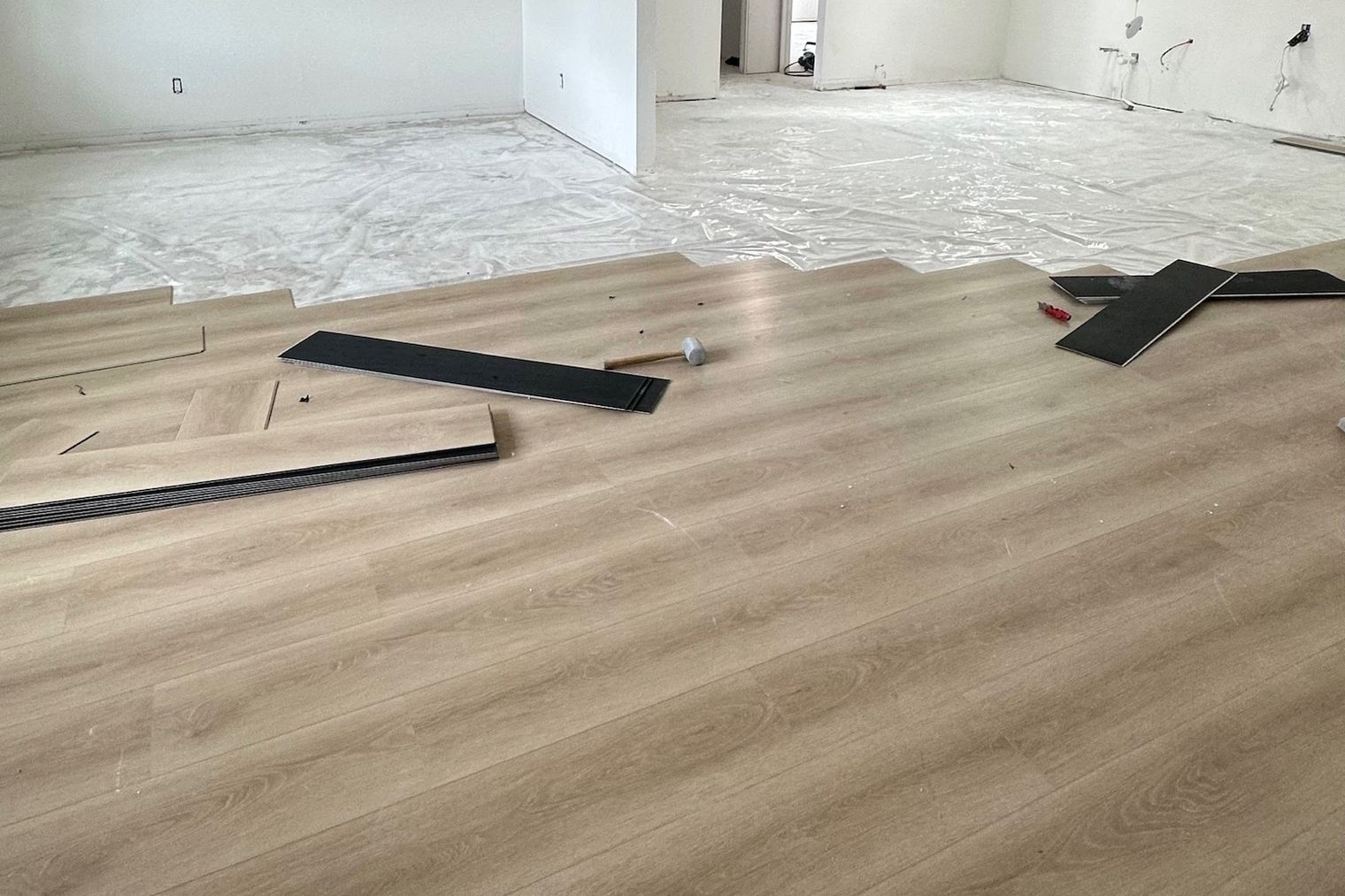
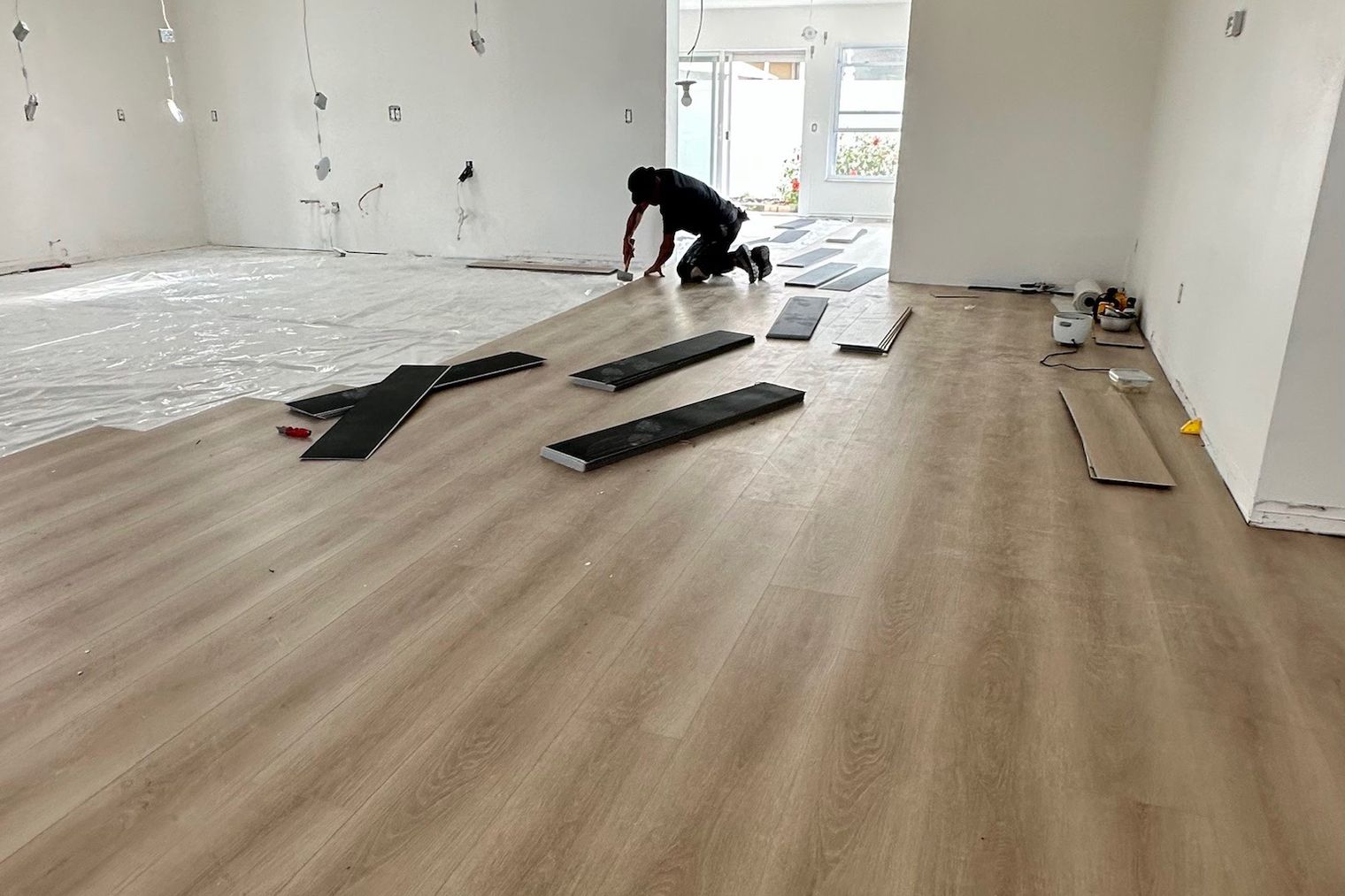
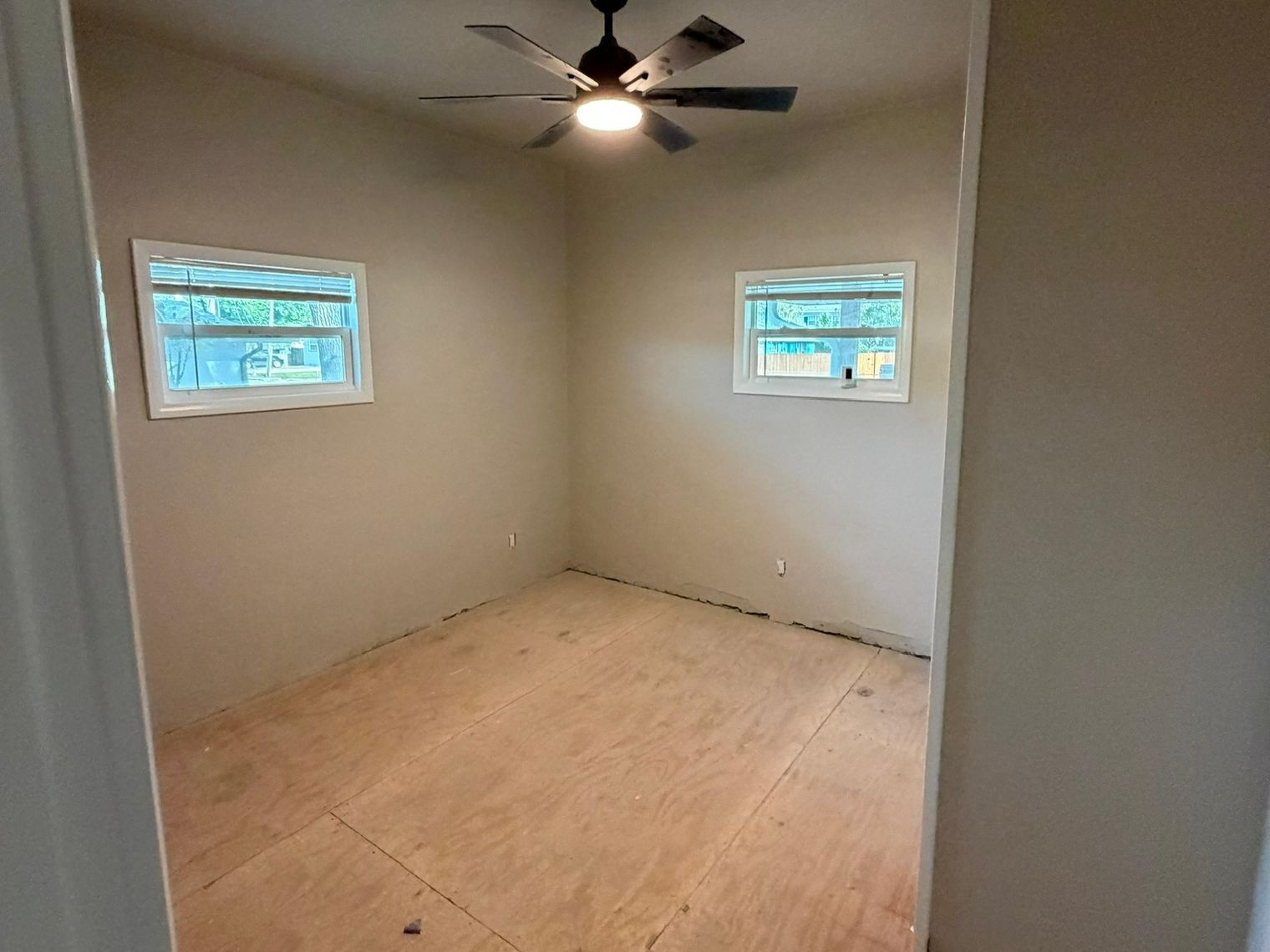
Some older homes sit on a wood subfloor instead. There, the prep line is about soft spots, loose sheets and squeaks, and sheets past saving get replaced. That was the story on one bungalow: the old floor came out all the way down to the joists, new subfloor sheets went down, and only then did the plank start, room by room.
LVP Flooring Cost in Sarasota and Bradenton Homes With Some Age
In older neighborhoods of Sarasota and Bradenton, the carpet may hide what came before it: a strip of old tile at a hallway edge, glue lines from an earlier floor, or patches from past repairs. Each of those changes the prep, and it is one reason quotes for the same rooms can land far apart. Ask for the prep written room by room. If tile has to come up too, see our post on taking old tile off a concrete slab. Our page on LVP floors for Sarasota homes covers what we look for there.
The Plank Itself: Thickness, Wear Layer and Water Rating on Paper
An estimate that only says vinyl plank leaves the biggest choice open. The plank should be named on paper, with the details you would want to check before anything is ordered:
- The product name, so you can look it up yourself.
- The overall thickness, which changes how solid the floor feels underfoot.
- The wear layer: the clear coat over the printed wood look, measured in mils, or thousandths of an inch. It takes the grit from beach sand and patio shoes.
- The water rating, read on the maker's sheet, since waterproof and water-resistant are not the same claim.
- The color, picked in your own light, morning and afternoon.
What moves this line is the plank you choose times the square footage, plus some extra plank for the cuts at walls, closets and doorways. A room with many corners or angled walls takes more cutting than a plain rectangle. A thicker wear layer or a rigid core usually costs more per box. Whether it is worth it depends on the room: a guest room that sees little traffic is not a kitchen with a dog and sliders to the lanai.
If you are still weighing a wood-fiber core, our post on LVP vs laminate for Florida homes compares the two. Our laminate flooring page shows that option on its own.
Underlayment: Attached Pad or Separate Layer
Underlayment is a small line, but it should be there. Some planks come with a pad attached, and their makers say not to add a second one. Others need a separate layer. Over a slab, install guides often call for a plastic vapor sheet under it all, overlapped and taped at the seams. If you live in a condo, the building may have its own rules for condo underlayment, so have them handy at the walkthrough.
Good to know
Ask for the product name on the estimate. With it, you can check the thickness, the wear layer and the water rating yourself.
Transitions, Doorways and Baseboards Around the New Floor
Carpet to LVP Transition in a Doorway
If some rooms keep their carpet for now, each doorway between carpet and plank needs a transition piece. It goes where the carpet edge meets the plank, ideally right under the interior door when it is closed, so each room reads as one floor. Where the plank meets tile, the height difference decides which piece fits. The jambs at each doorway also get trimmed at the bottom, so the plank slides under them instead of being notched around them.
Baseboards: Keep, Add a Trim Piece, or Replace
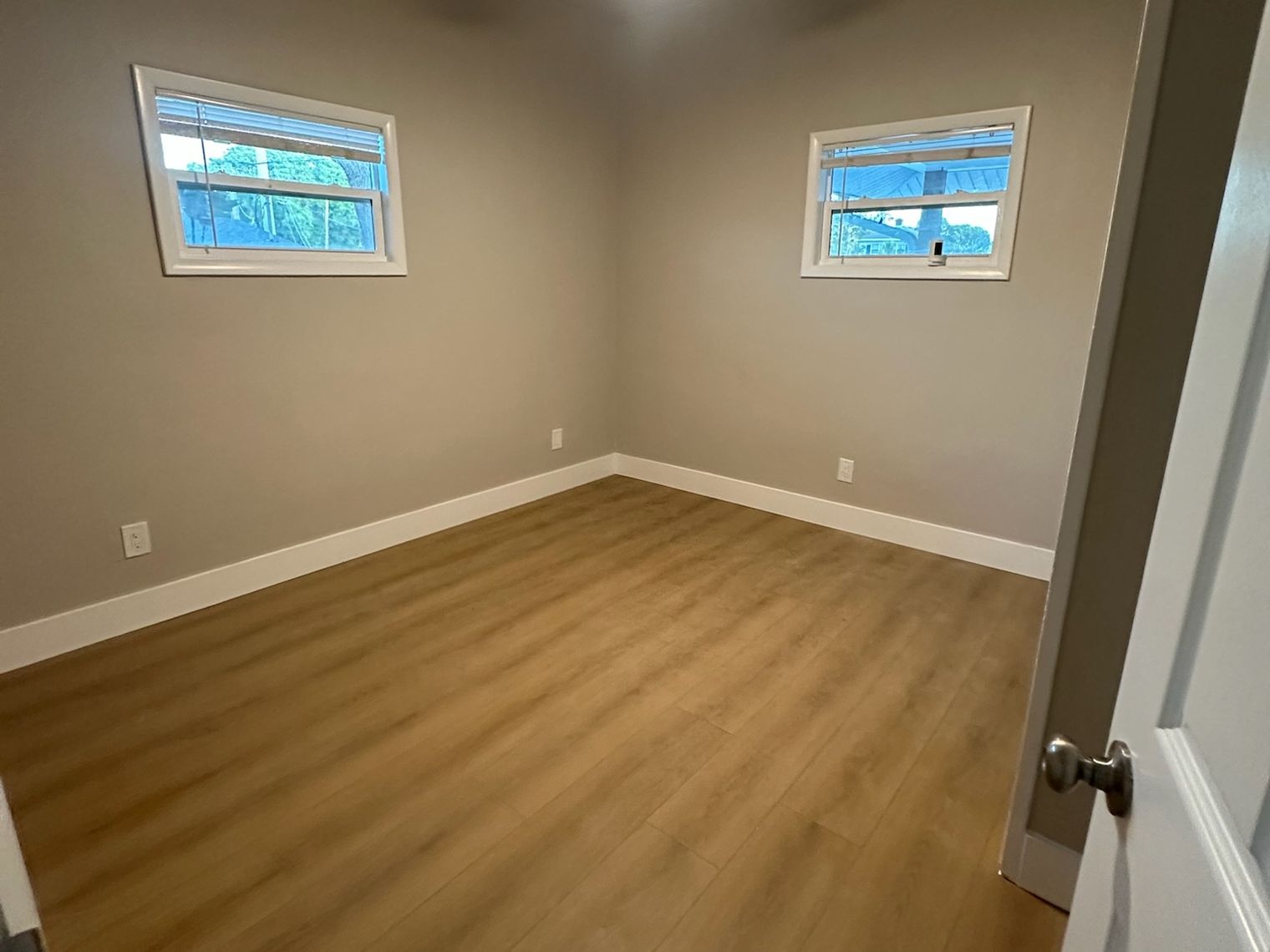
Carpet is often tucked under the baseboards, and once it comes out, a gap can open at the bottom of the wall. You can close it with a small trim piece in front of the old baseboards, or with new, taller baseboards. The trim piece is the smaller line; new baseboards give the cleanest edge. On the bungalow, new baseboards went on every wall once the floor was in. Our page on baseboards and trim after a new floor shows how that edge gets finished.
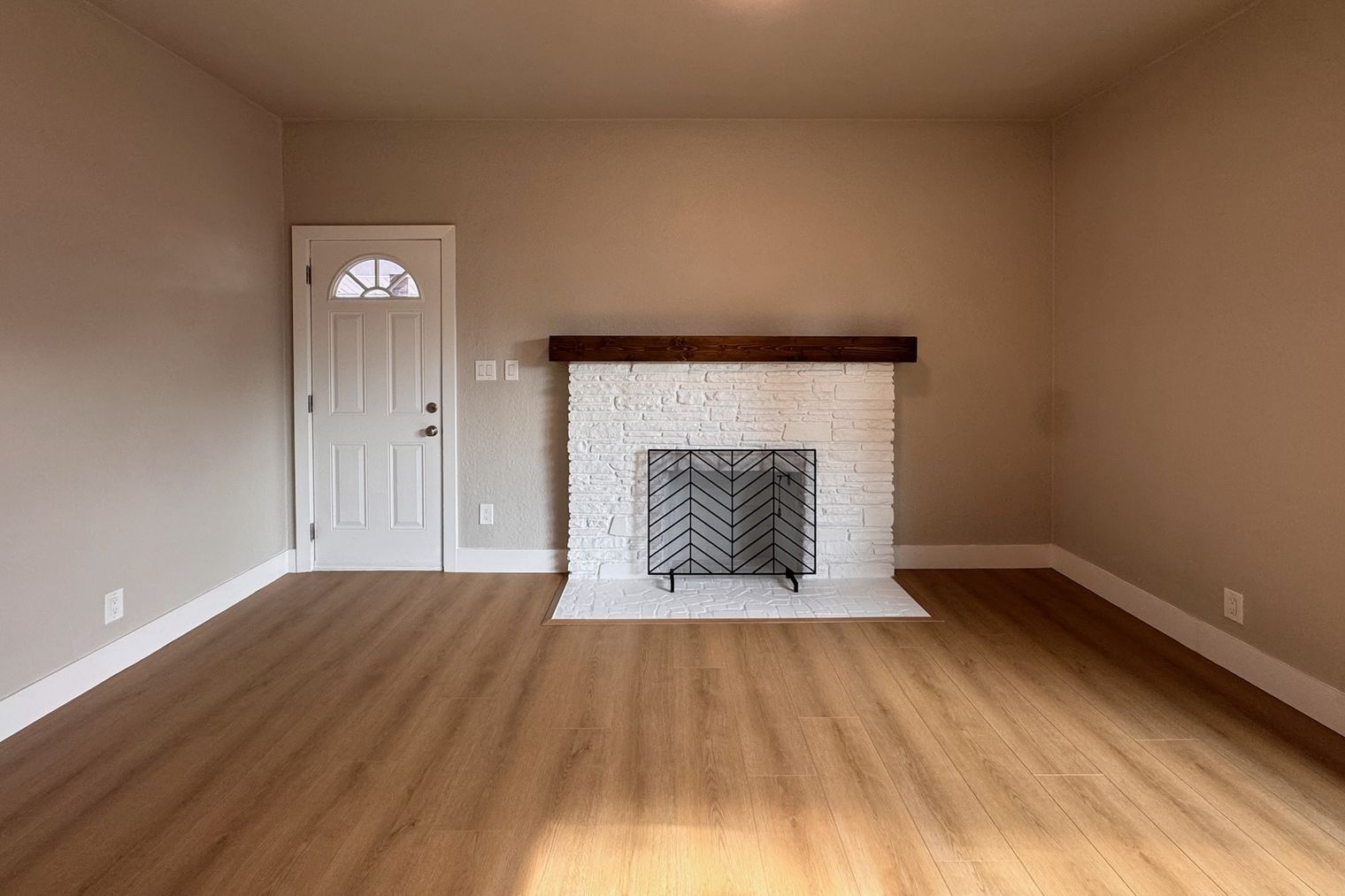
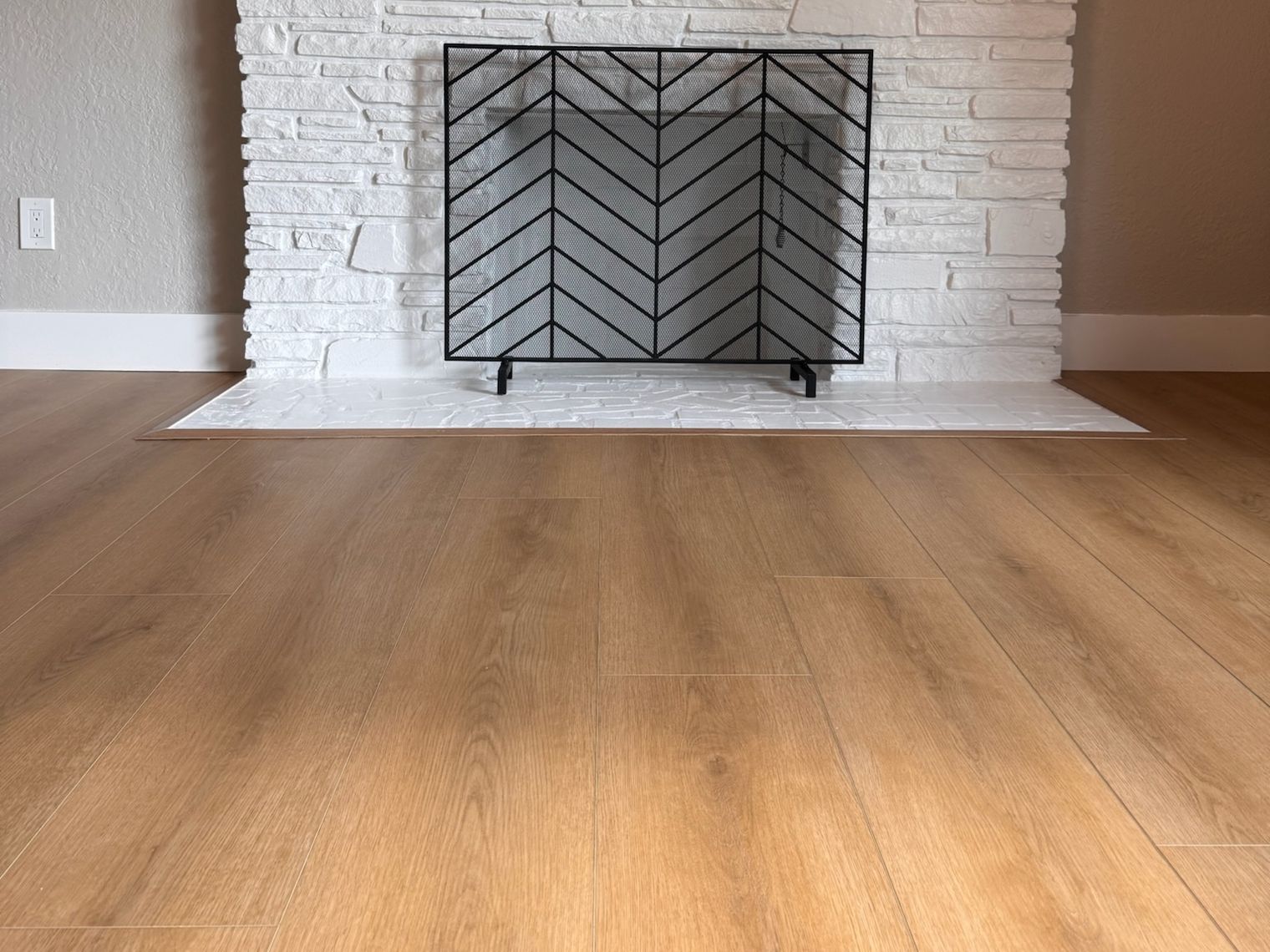
A fireplace hearth or a step down into a sunken room each needs its own finishing piece. Those pieces are small, but they add up, and each one belongs on the estimate.
Bedrooms Only or the Whole Home at Once?
Replace Bedroom Carpet With LVP First, the Rest Later
Starting with the bedrooms is common, since that is where most of the carpet tends to be. It works, and it keeps the job smaller. The tradeoffs: a transition at every bedroom doorway, a plank that has to sit well next to whatever is in the hall, and another round of moving furniture when you do the rest.
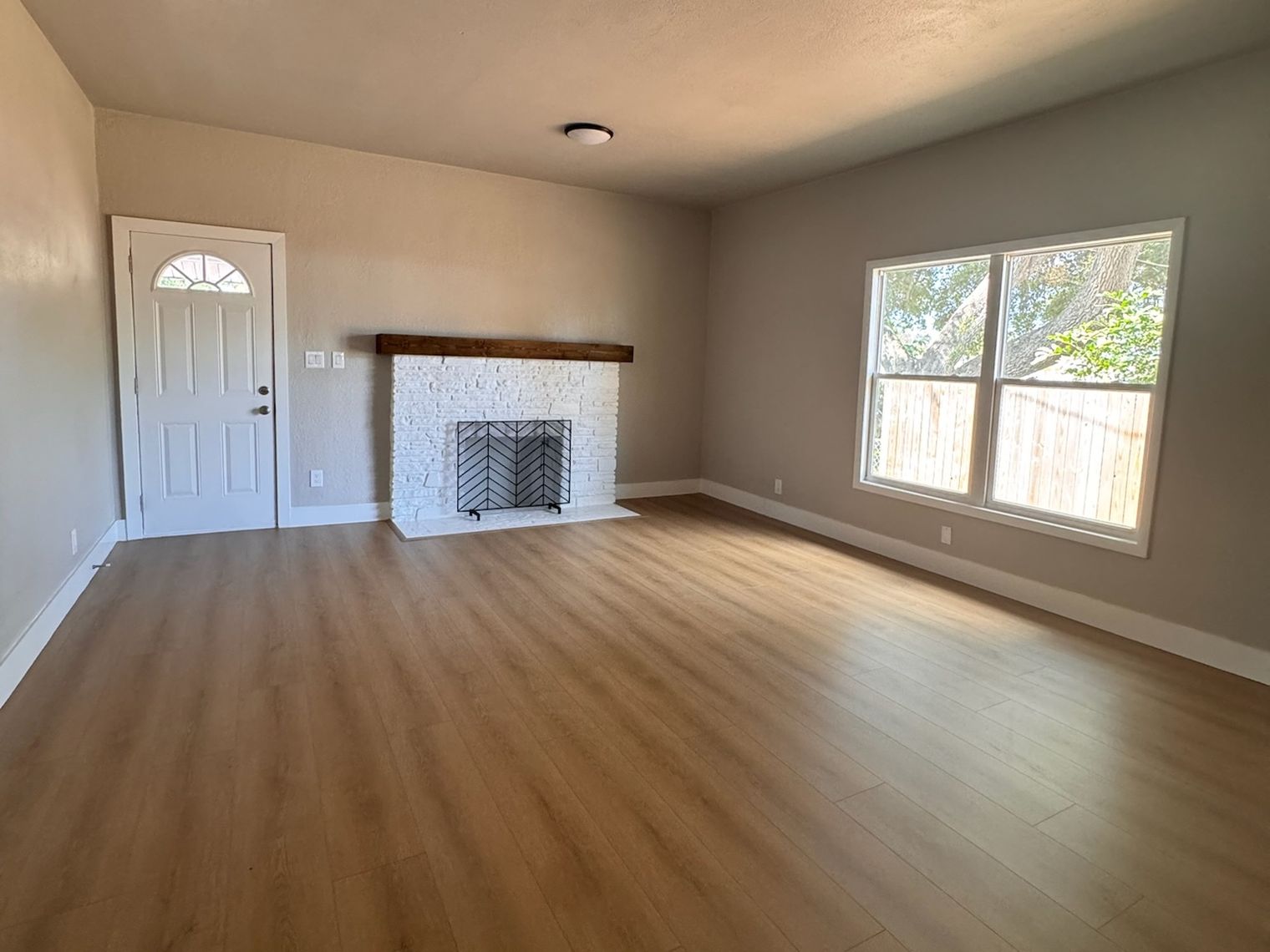
Doing every room at once is a larger total, but the setup is shared, and one plank can run through the hallways with no breaks at the doorways. It also means one round of prep, one round of baseboards and one round of paint touch-ups. On the bungalow, the walls got their paint while the subfloor sat bare, then the plank ran from the living room through the bedrooms.
Newer Homes in Lakewood Ranch and Parrish
In a newer home, the question is often just the bedrooms. If you bought in one of the villages of Lakewood Ranch, or in a subdivision around Parrish built on what used to be farmland, the slab is younger and the prep line tends to be smaller. What matters more is how the new plank sits next to the floor already in the main rooms: the color, and the height at each bedroom doorway, which decides the transition piece. See LVP floors in Lakewood Ranch and LVP floors for Parrish homes for those areas.
Carpet vs LVP in a Florida Home
Carpet vs LVP Cost Beyond the Install
Carpet can cost less to put down than plank. The comparison shifts once you count how a floor lives in a Florida home:
- Humidity. UF/IFAS on dust mites in Florida homes (opens in a new tab) notes that our summers rarely get dry enough to hold dust mites back, and suggests a smooth floor in place of carpet.
- Water. A storm or a leak can ruin carpet pad. NC State Extension on water-damaged carpet (opens in a new tab) says pad soaked with dirty water should be thrown out, no exceptions.
- Sand. Near the beaches it rides in on every pair of shoes. It grinds into carpet and gets swept off a plank floor, where the wear layer takes it.
- Seasonal use. If the home sits closed part of the year, a hard floor is simpler to come back to: a dust mop and a damp mop instead of a deep clean.
None of this makes carpet wrong. Some homeowners keep it in one bedroom for the softness. It only means the floor that costs less to put down is not always the one that costs less to live with.
How We Price It: A Free Walkthrough, Then Your Price in Writing
We are a family-owned company based in Bradenton. We come out, measure every room with you, and look for clues to what is under the carpet: a tile edge at a doorway, a step in the floor between rooms, a soft spot in the hall. Then you get a written estimate with removal, prep, underlayment, plank, transitions and baseboards each on its own line, priced for your rooms, before any work starts. For a fuller checklist, see what a written flooring estimate should include.
Before you sign any quote, ours or someone else's, these are the questions worth asking:
- Is taking out the carpet, pad and tack strips its own line?
- Which rooms, closets and hallways are counted?
- What prep is written for the slab or subfloor, room by room?
- Which plank, with its thickness, wear layer and water rating?
- What goes under it?
- Where does each transition land?
- Baseboards: kept with a trim piece, or new?
- Who moves the furniture, and is hauling away the old carpet written down?
If the floor under the carpet turns out different from what anyone could see, ask how that gets handled before you sign. That should be in writing too.
Common questions
Does LVP cost more than carpet?
Often the plank costs more to put down than carpet, though the gap depends on the products you compare and how much prep the floor needs. Where vinyl plank can come out ahead is over the years in a Florida home: it does not hold humidity, sand or spills the way carpet and pad do. Your estimate prices the plank and the prep for your rooms, so you can weigh it with real figures.
Do you have to remove carpet before installing LVP?
Yes. Plank makers list carpet and carpet pad among the surfaces their floors can't go over. The carpet, the pad and the tack strips all come out, the staples or glue under them get cleaned up, and the slab or subfloor is checked before the first plank goes down. That removal is part of the job and is written on your estimate as its own line.
Is LVP louder than carpet?
Yes. Any hard floor carries more sound than carpet and pad, so footsteps, chair legs and a dropped toy read louder on plank. The underlayment under the plank takes some of the edge off, and area rugs in the bedrooms and the living room soak up much of the rest. In a condo, the building may have its own rule for what goes under a hard floor, so check it before you choose.
Can some rooms get LVP while others keep their carpet?
Yes. Plenty of homes start with the bedrooms or the living area and leave the rest for later. Each doorway where plank meets carpet gets a transition piece, ideally under the interior door so each room reads as one floor. If you plan to finish the other rooms later, keep the name and color of the plank, since the same line can be hard to find a few years on.
How much does it cost to replace carpet with LVP in one bedroom?
It depends on the size of the room, what is under the carpet and the plank you pick. A single bedroom still has every line a whole floor has: removal, prep, underlayment, plank, a transition at the doorway and baseboards. Some of those lines barely change with size, so one room on its own can come out higher per square foot than several rooms done together. We measure at a free in-home walkthrough and write the price down before any work starts.
Free estimate
See Your Carpet-to-Plank Price Before Anything Moves
Point us to the carpeted rooms. At a free in-home estimate we measure each one with you, then put the plank, the prep and the price in writing before any work starts.