Finish work
Paint Before or After Flooring? Why We Paint First Whenever We Can
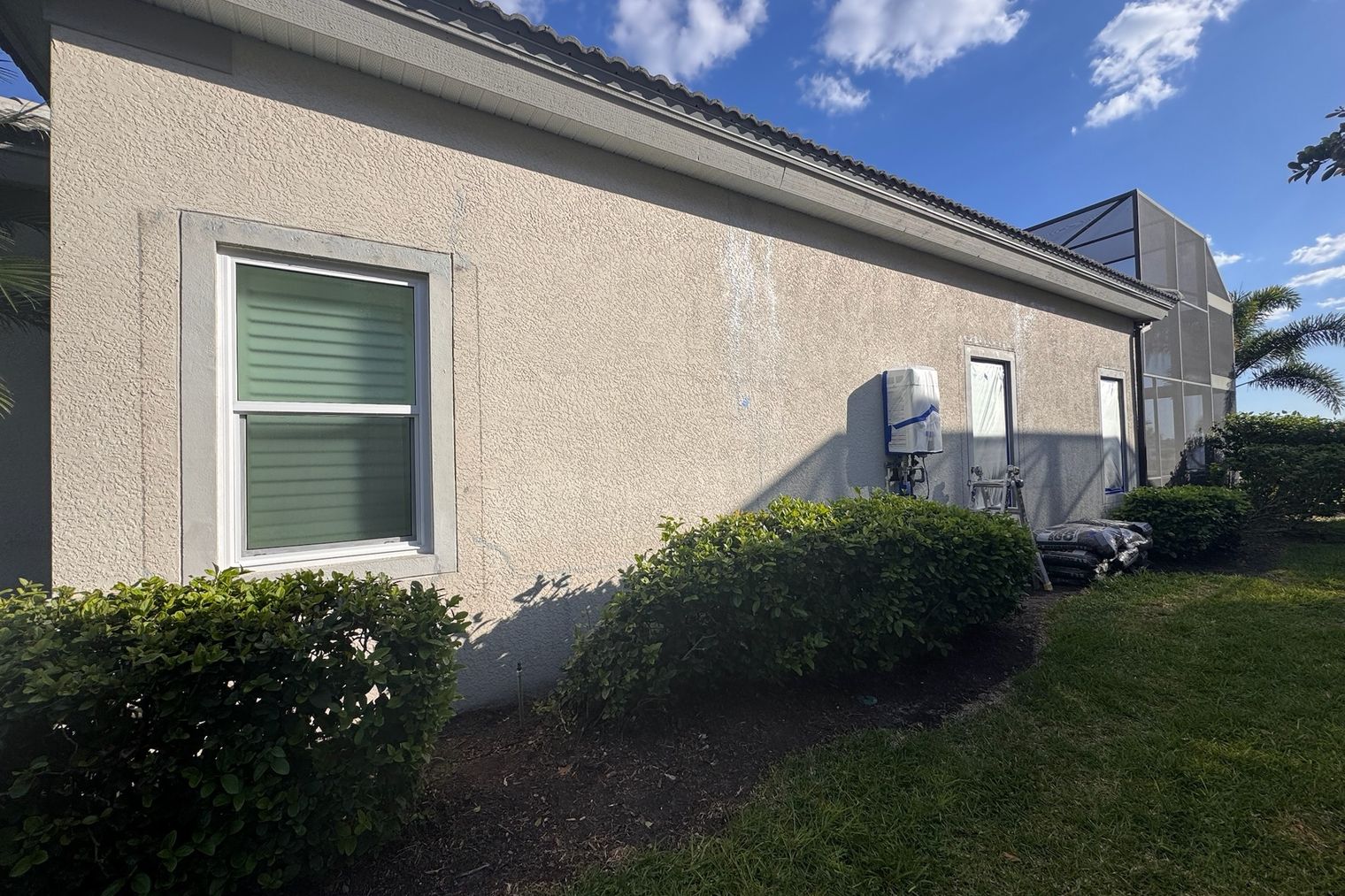
Advice online splits both ways on this one. We paint first whenever the job allows, so ladders and drips stay off the new floor. Floors first still has its place, and the baseboards and the right sheen for Florida humidity fit the same plan.
Paint Before or After Flooring? Both Work, One Is Safer
Should you paint before or after flooring? When both are on your list, we paint first whenever the job allows. The old floor comes out, the walls and ceilings get their repairs and their color over a bare slab or subfloor, and then the new floor goes down. The baseboards go on last, and the walls get a light touch-up where they meet the trim. That is how we plan interior painting and wall repair when a new floor is coming.
Plenty of guides say floors first, and they are not wrong. Both orders work. What changes is where the risk lands. Paint first, and the worst case is a scuff low on a wall while the floor goes in. The baseboards cover the bottom edge and a small brush handles the rest. Floors first, and the worst case is a drip of ceiling paint, a ladder foot or a dragged drop cloth on a floor you just paid for. A scuffed wall is a touch-up. A gouged plank has to come out.
| Question | Paint first | Floors first |
|---|---|---|
| What can go wrong | A scuff low on a wall | Drips, spatter or a ladder mark on the new floor |
| How it gets fixed | Baseboards cover the edge, then a touch-up | Spot cleaning, or a plank cut out and replaced |
| Where the ceiling gets rolled | Over a bare slab or subfloor | Over a covered new floor |
| Works well when | Paint and floor are planned together | Paint is a later project, or the floor can't wait |
Why We Paint First Whenever We Can
Ceilings are the messiest part of any paint job. A roller overhead throws a fine spatter, and the ladder moves all the way around the room. Over a bare slab or subfloor, none of that matters. Over a new floor, every step needs a cover, and covers slide, bunch up and let paint through at the seams.
- Drips and spatter land on a surface the new floor will cover.
- Ladders, buckets and drop cloths stay off the new floor.
- No painter's tape stuck to the new floor, and no tape marks to clean off later.
- Drywall work and paint bring water and dust into the room. Both are gone before the new floor arrives.
Wood flooring installation guidelines point the same way. They say wood flooring should not be delivered or installed until drywall, texturing and painting are done, and that this wet work should be thoroughly dry first. The logic holds for any floor: finish the room, let it dry, then put the new surface down.
The Job in the Photos: Walls First, Plank Second
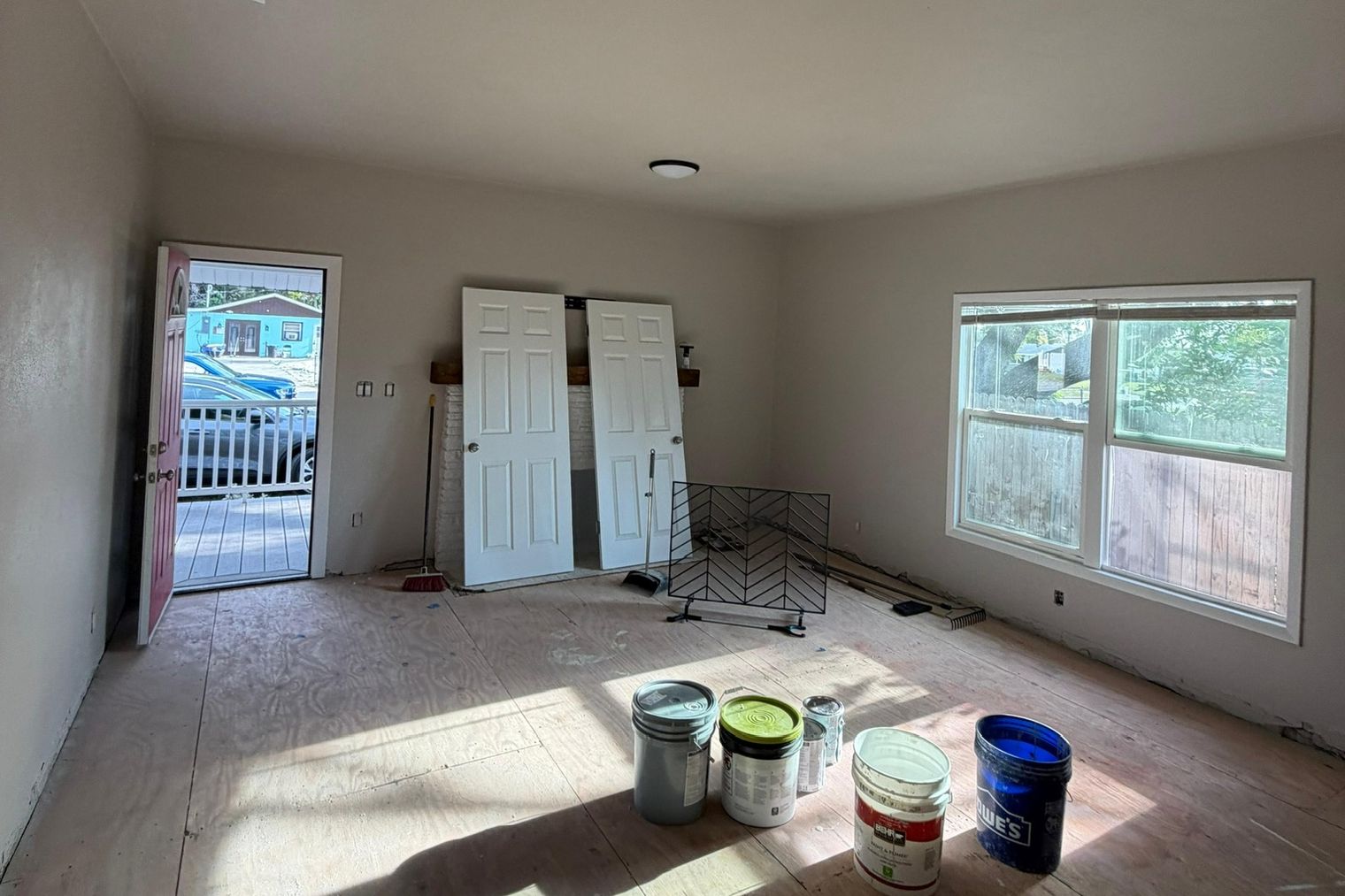
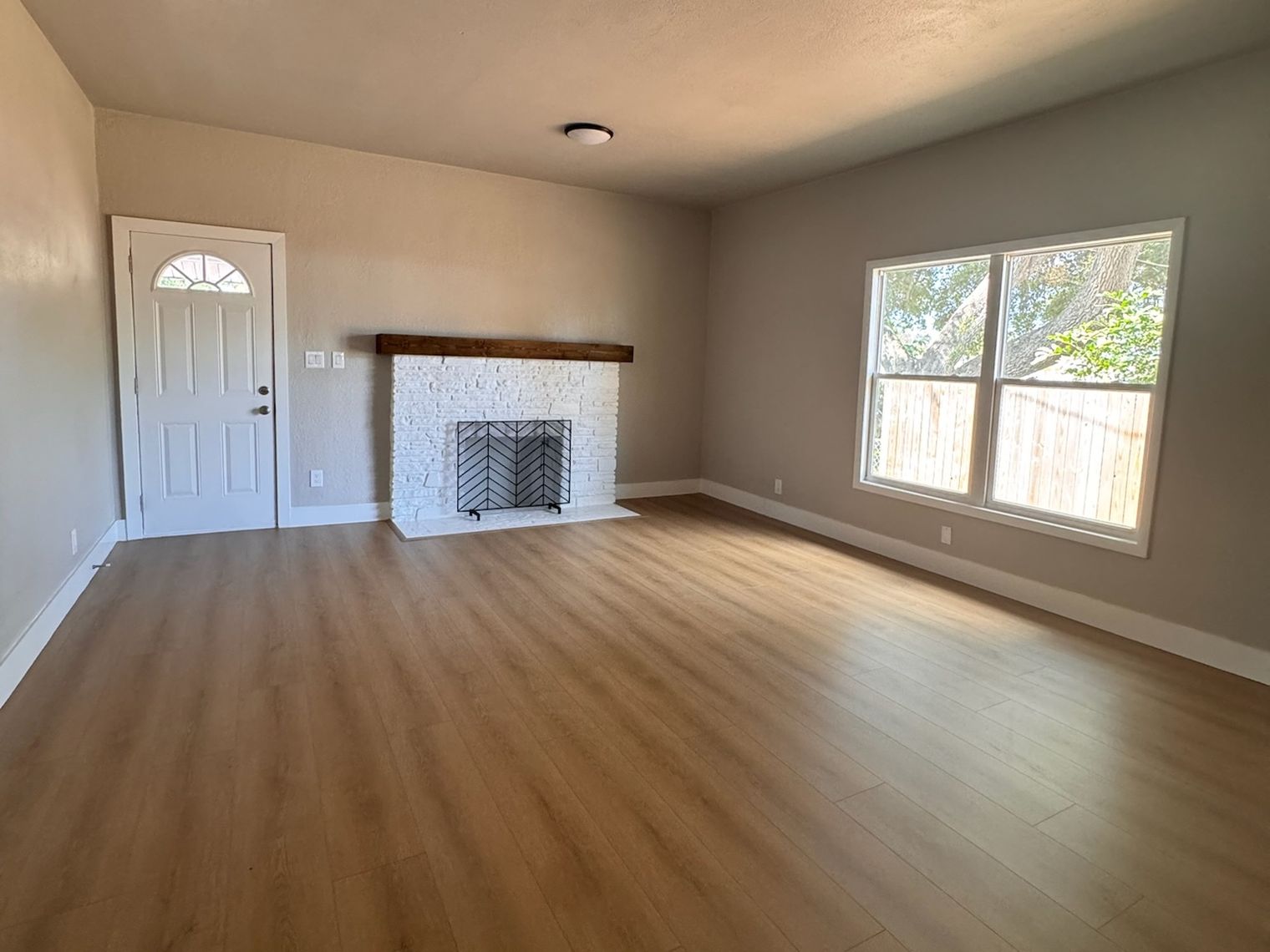
On one bungalow, the old floor came out all the way down to the joists and new subfloor sheets went down. Before a single plank, the walls and ceilings got their paint. The cans sat right on the bare subfloor, and two interior doors leaned against the fireplace wall while the room was worked on. There was nothing on the floor to protect.
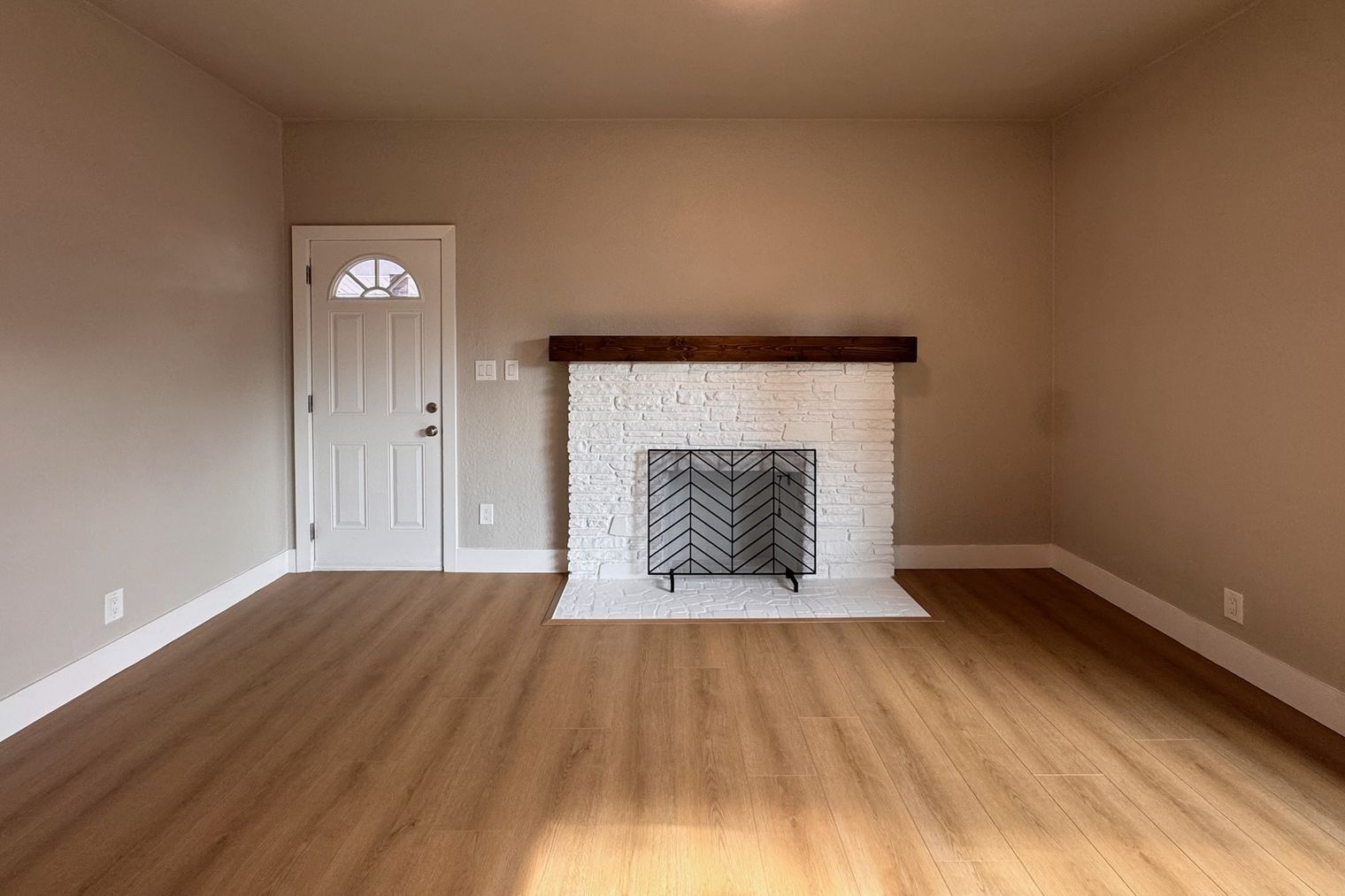
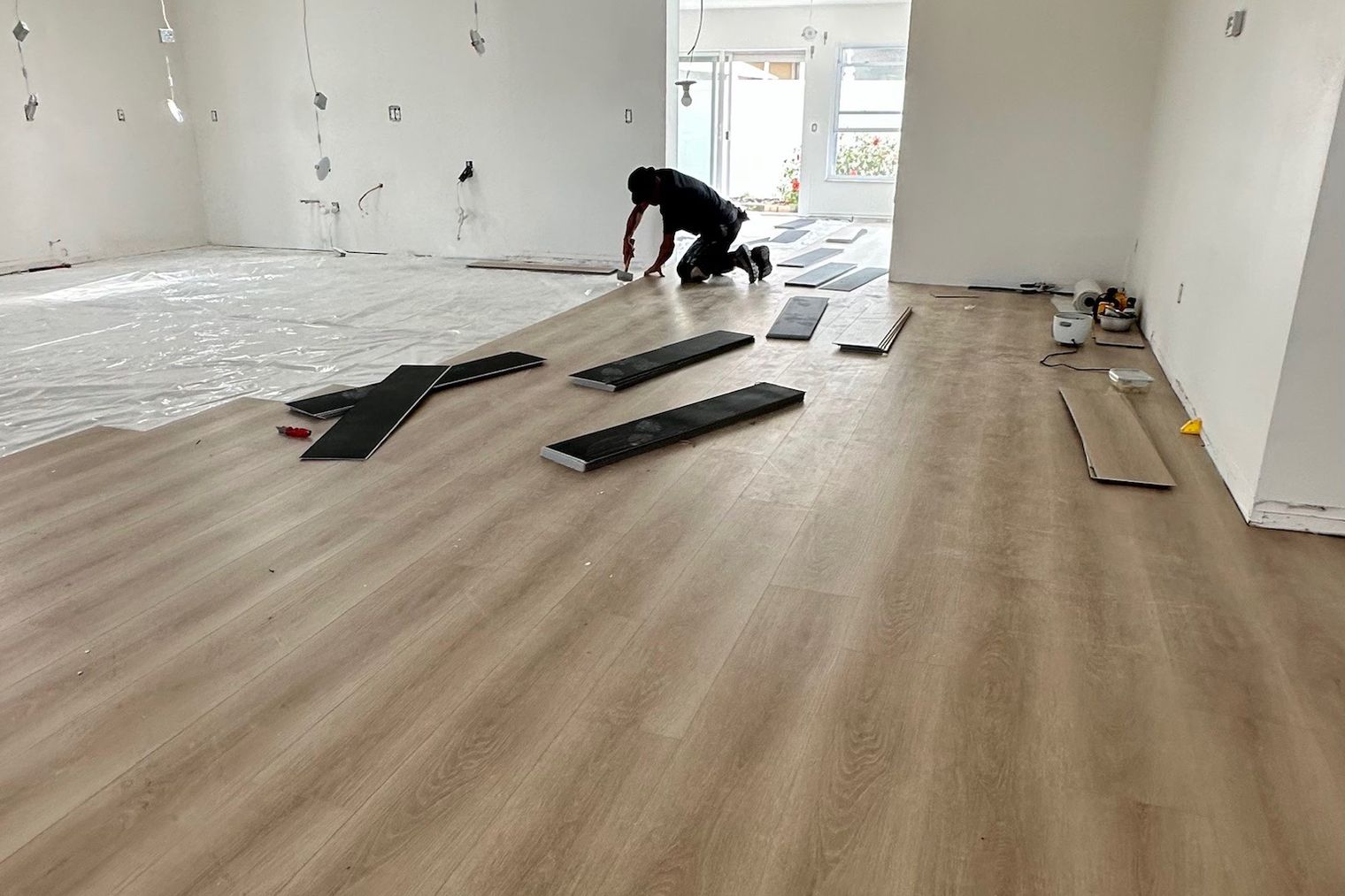
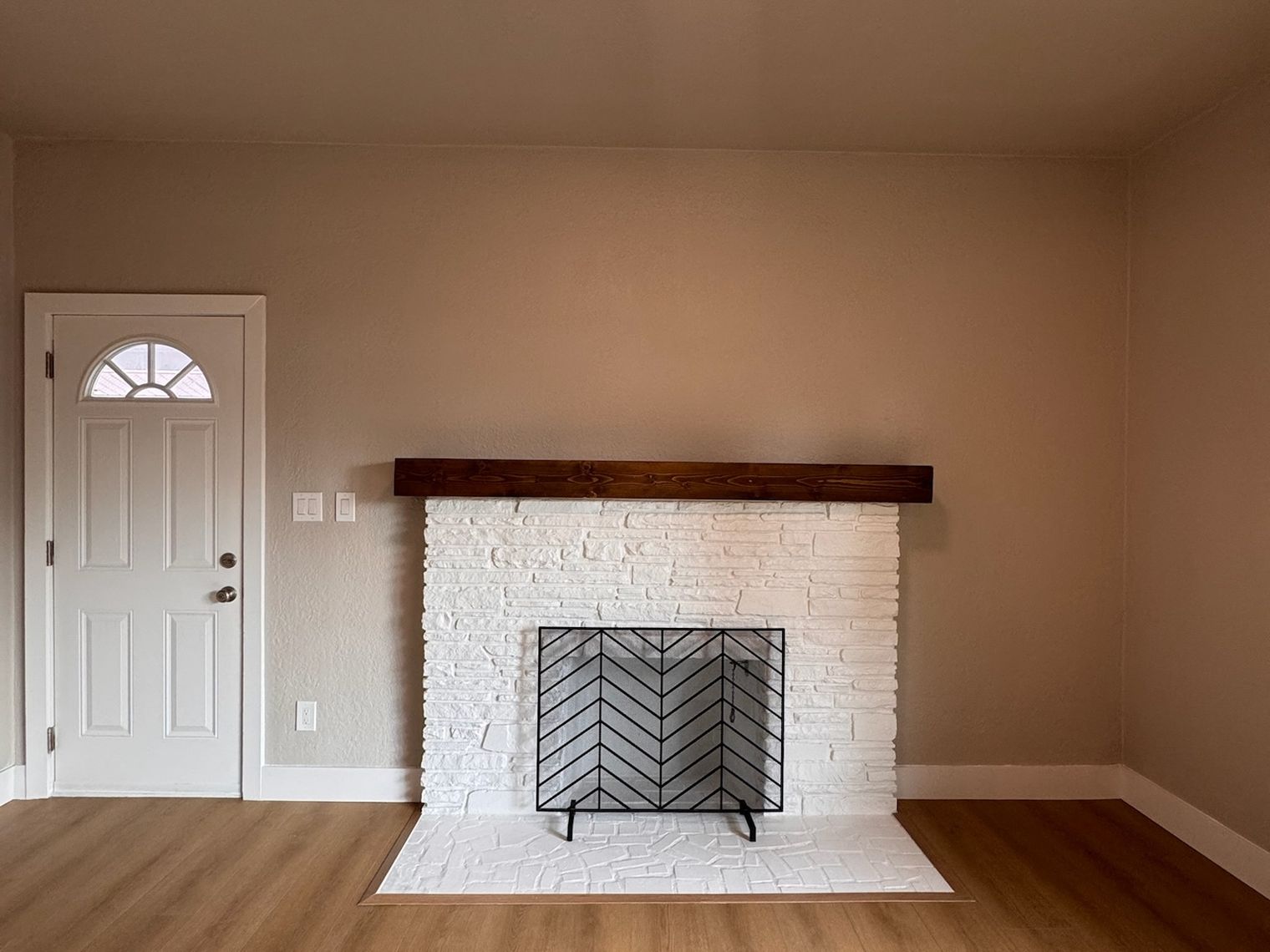
Then the luxury vinyl plank went down room by room, from the living room into the bedrooms. A border piece went around the hearth, and new baseboards went on every wall. The walls were already done, so the room only needed its edges finished.
When Flooring First Makes Sense
Paint first is our default, not a rule. Some situations flip it, and a good plan says so up front.
- Paint is a later project. If the walls are fine for now and the floor is the urgent part, put the floor in. When you paint later, the floor gets covered and the edges get taped.
- The floor can't wait. When tile is lifting off a slab and the walls can wait, the new floor goes in first and the paint follows later.
- You are living in the home. When furniture has to shuffle from room to room, the order sometimes follows the furniture. We plan it with you, room by room.
Removal is the one step we like ahead of the paint. Chipping out tile or pulling carpet and tack strips knocks the bottom of the walls around, and the old baseboards often come off with it. So our order starts with removal and prep, then repairs, then paint, then the new floor. If tile has to come up first, our post on removing old tile from a concrete slab walks through that step.
Good to know
Decide in one order, work in another. Pick the floor first, then a paint color that works with it, then paint before the floor goes in.
Paint Before or After Flooring in New Construction
On a new build, the builder is expected to have drywall taping, painting and other wet work done and dry before a wood floor goes in. A more common version of the question comes later: a newer home in a planned community like Lakewood Ranch, still in the builder's wall color, with bedroom carpet the owners want gone. Same question at a smaller scale, same answer: repairs, paint, then floor. Our page on interior painting in Lakewood Ranch covers great rooms with high ceilings and stairwells.
Where the Baseboards Fit In
Baseboards go on after the new floor, not before. They sit on the finished floor and hide the gap left at its edge. Wood flooring guidelines describe the job the same way: baseboard protects the wall from kicks and furniture, and it covers the expansion space where the floor meets the wall. Leave the old baseboards on, and that gap usually needs a second strip of trim along the bottom to hide it.
That makes the full order on a combined paint and floor job look like this:
- Old floor out, slab or subfloor prepped.
- Drywall repairs taped, coated, sanded and primed.
- Ceilings painted, then walls.
- New floor down, room by room.
- Baseboards and casings cut on site and set on the new floor.
- Caulk, trim paint and a touch-up along the walls.
The touch-up stays small because the walls were finished before the floor went in. Our page on baseboards and trim after a new floor covers how the new baseboards and casings get cut and set.
Drywall Repairs Before Any Paint
Paint shows what is under it. Nail pops, dents, old anchor holes and hairline cracks at the corners all read through a fresh coat, and they read worse in a room with big windows or sliders, where low sun rakes across the wall. So the repairs come first: taped, coated, sanded smooth and wiped clean before any color goes on.
There is a second reason to finish them early. A patch takes in paint at a different rate than the painted wall around it, so an unprimed patch can dry as a dull spot that shows at an angle. Painters call it flashing. Priming each repair evens that out. In older homes around Bradenton and Sarasota, walls often carry a long history of patches, so we walk every room with you and mark them before we price the job. Our drywall repair page shows how each one gets finished.
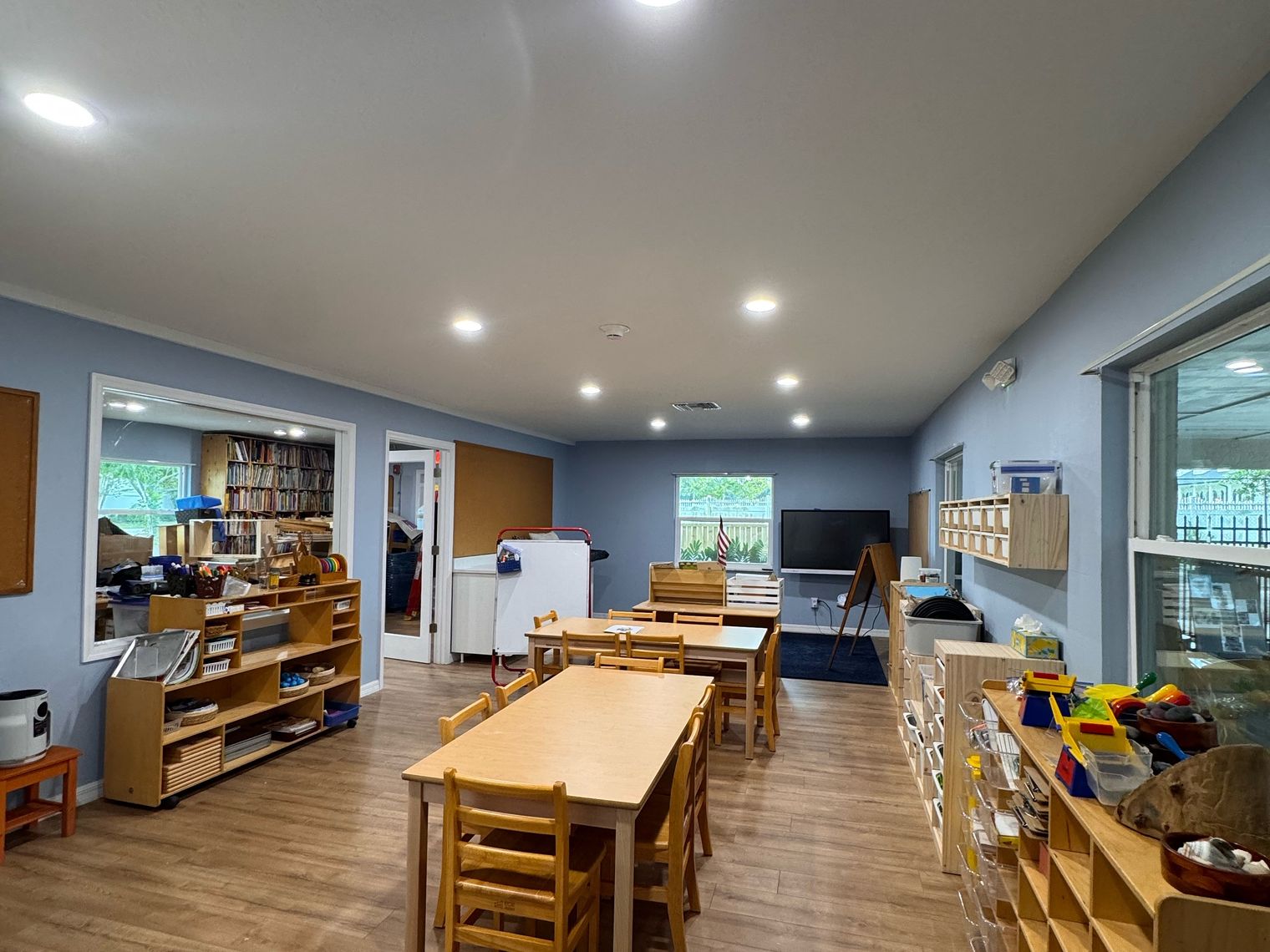
The same order works at a bigger scale. On a commercial job, an academy, the walls and ceilings got new drywall first, then fresh paint. Only after that did the plank go down, room by room.
Picking a Sheen: Best Paint Finish for Florida Humidity
Once the order is set, the next question is sheen. Florida air is humid most of the year, and nights are often the dampest part of the day, as UF/IFAS Extension notes on Florida humidity (opens in a new tab). That shapes the choice room by room.
Sheen does not fix a damp room. A working fan and the AC do that, and the EPA guide to moisture in the home (opens in a new tab) says to run the bathroom fan or open a window when you shower. What sheen decides is how well a wall takes wiping and how much it shows. The higher the shine, the easier it is to clean, and the more every patch and dent stands out. Here is the common guidance from paint makers, not a rule:
| Sheen | Where it is common | Trade-off |
|---|---|---|
| Flat | Ceilings, adult bedrooms, formal living rooms | Hides flaws best, hardest to wipe clean |
| Eggshell | Living rooms, dining rooms, bedrooms | A soft glow, resists stains better than flat |
| Satin | Hallways, family rooms, kids' rooms, kitchens, laundry rooms | Washable, shows patches more than flat |
| Semi-gloss | Trim, interior doors, kitchens and baths that get scrubbed | Easiest to scrub, shows every flaw |
Eggshell vs Satin in a Bathroom
In a bathroom with a fan that clears the mirror, satin is the usual pick for the walls. It wipes clean and holds up to steam better than flat or eggshell, because more gloss means better scrub and moisture resistance. Eggshell can work in a powder room with no shower. In a bath that stays damp, or on the walls right beside the shower or tub, semi-gloss is the usual step up, with the trade that it shows more of the wall. Whatever the sheen, the patches get primed first, since a shinier finish shows them most.
Drying Paint in Humid Weather
Humid air slows how latex paint dries, and paint is dry to the touch long before it is fully hard. Darker colors and higher-gloss paint also take longer to cure. Summer is the wet season in Sarasota, with afternoon rain and storms, so it helps to keep the AC on and the air moving while paint sets, and to keep tape and leaning boxes off fresh walls. Painting before the floor gives the walls that time while the floor work is still ahead.
Light matters too. In rooms with big windows or sliders facing the water, a satin wall can catch glare, while eggshell or flat stays calm. We help you try colors on your own walls before you choose, and our page on interior painting in Sarasota covers testing them in strong light.
Planning Paint and Floors as One Job
The order is easiest to get right when paint, floor and trim are planned together. At a free in-home walkthrough we go room by room with you, note each repair, and talk through the floor, the colors and the sheen. Then the estimate puts it all in writing, with painting as its own line next to the floor and the baseboards.
Here is what your estimate should show for a paint and floor job:
- Which rooms, walls and ceilings get paint.
- Each drywall repair, and primer on the patches.
- The sheen for each room, so the bath and the bedroom are not a guess.
- The order: removal, repairs, paint, floor, baseboards, touch-up.
- The floor itself, named on paper, with its prep.
- The full price before work starts.
For a longer checklist, see what a written flooring estimate should include. If carpet is the floor that is leaving, our post on the cost to replace carpet with LVP breaks down the floor side line by line.
Common questions
Should you paint walls before or after new flooring?
Before, whenever the job allows. Walls and ceilings are the messy part, so it helps to do them while the slab or subfloor is still bare. The new floor then goes into a finished room, the baseboards follow, and the walls get a small touch-up at the trim line. Floors first can make sense when painting is a separate project for later, or when the floor can't wait.
Do flooring installers damage freshly painted walls?
They can scuff the lowest part of a wall. Cutting planks, tapping rows tight and carrying boxes all happen close to the wall. Most of that zone ends up behind the new baseboards, and anything above it gets touched up after the trim goes on. That touch-up is far easier than cleaning a drip out of a new floor or replacing a plank.
Should I paint the ceiling before the walls and the floor?
Yes. Ceilings go first because they drip and spatter onto everything below. Then the walls, cut in cleanly at the ceiling line. With the new floor still to come, nothing below needs heavy covering. If the ceiling has cracks along the drywall seams, those get taped, sanded and primed before the paint, or they show through the new coat.
Is eggshell or satin better for a Florida bathroom?
For most bathrooms with a fan that works, satin is the common choice on the walls. It takes wiping and steam better than eggshell does. Eggshell suits a powder room without a shower. A bath that stays damp often gets semi-gloss instead. No sheen replaces ventilation, so run the fan while you shower and for a while after.
How long should paint dry before new flooring goes in?
There is no single number. Latex paint feels dry long before it is fully hard, and humid Florida air slows the drying. Darker colors and glossier finishes take longer to cure. What matters is that the walls are dry, the room has aired out and nothing will lean against fresh paint while the floor goes in. We build that gap into the order of the work and talk it through with you before anything starts.
Can painting and new flooring go on the same estimate?
Yes. When both are on your list, one walkthrough covers both, and the estimate lists painting, drywall repairs, the floor and the baseboards as separate lines. You can see what each part costs, change one part without losing the others, and know the order of the work before anything starts.
Free estimate
Paint and Floors, in the Right Order
Show us the rooms you want changed. At a free in-home estimate we note each repair, plan the paint and the floor in order, and put the full price in writing before work starts.