Finish work
How Often to Paint a Stucco Home in Florida: Read the Walls First
There is no set number of years. Sun, rain, salt air and the prep done last time decide when stucco needs paint. Here are the signs to look for, the season that works, what sets the price and how HOA colors fit in.
How Often Does a Stucco Home Need Paint in Florida?
How often should you paint a stucco home in Florida? Not on a fixed number of years. Read the walls instead. Paint on a west wall that takes the full afternoon sun, or a coat that went on over chalk and dirt, gives out much sooner than paint on a shaded wall that was cleaned, sanded and repaired before its last coat.
Painting guides online quote ranges of years, and those ranges lump together homes that have little in common. A shaded inland home and a home with open water behind it can be painted the same season and look nothing alike a few summers later. So let the calendar tell you when to look, and let the walls tell you when to paint. One slow walk around the home each year, after the rainy season, is a good habit.
That walk is also where a full exterior repaint for stucco homes starts with us: we go around the home with you, look closely at every side, and put the price and the scope in writing before any work starts.
Good to know
Rub your palm across the sunniest wall. If it comes away white or tinted with your paint color, the coat is chalking, and that wall is asking for attention.
Signs Your Stucco Is Ready for a Repaint
Walk all the way around the home on a bright day, and give each side a minute. These are the signs that matter:
- Chalky walls. As paint ages in the sun, its binder slowly breaks down into a powder that rubs off on your hand. A little chalk is normal aging. Heavy chalk means the coat is wearing thin.
- Streaks and stains. Rain carries chalk and dirt down the wall and leaves streaks, often below windows and along the bottom edge, where water splashes back up. Shaded walls that stay damp can pick up dark stains too.
- Cracks and patches showing through. Hairline cracks and old repairs show up as thin lines and blotches under faded paint, most clearly when low sun hits the wall from the side.
- Faded walls on the sunny side. Compare the west or south wall with a shaded one. When they no longer read as the same color, the sunny side has lost its coat.
- Peeling or bubbling. Paint lifting off the stucco is done on that spot, and every loose flake has to come off before anything new goes on.
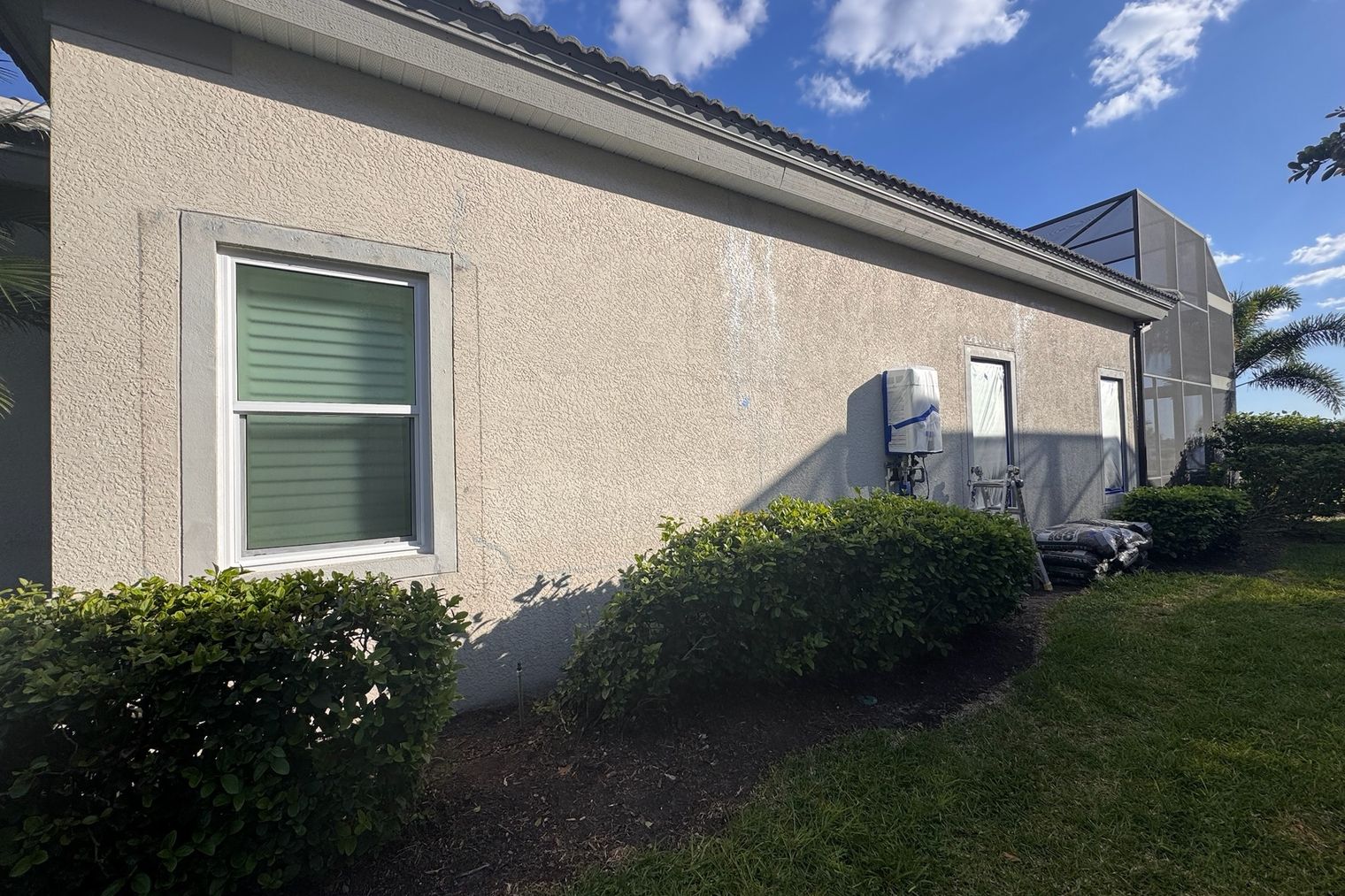
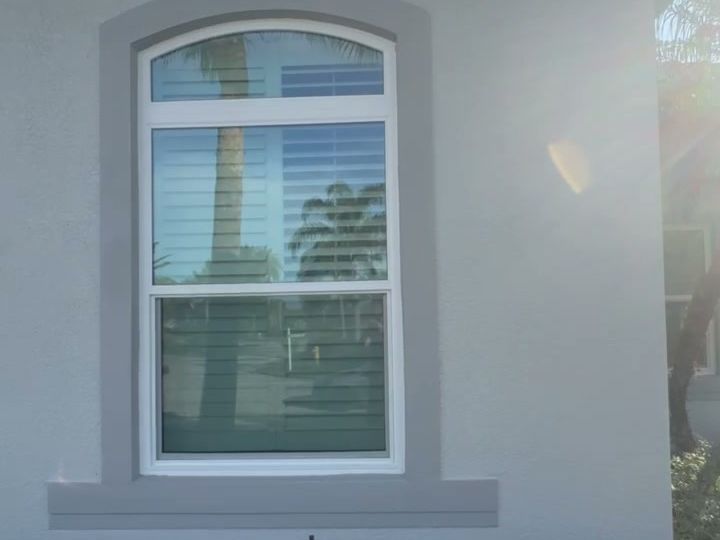
You do not need to see all five. One chalky, faded wall is reason enough to look at the whole home, since every side has been aging from the same last coat. The side wall at the top of this page, photographed before its repaint, shows two of the signs at once: pale streaks down the stucco and patched spots that no longer match the wall around them.
Sun, Rain and Salt Air: What Wears Exterior Paint Down
Sun
A National Park Service guide to exterior paint problems explains chalking as the slow breakdown of the resin in the paint film, and ties how much a coat chalks to two things: how the paint is made and how much ultraviolet light reaches it. That is why the walls facing south and west usually go first. The same guide notes that darker colors take on more heat than light ones, which counts on a sunny wall.
Rain and humidity
Then comes the water. The National Weather Service office for the bay area sets the rainy season for Southwest Florida (opens in a new tab) from mid-May to mid-October, starting when showers and thunderstorms arrive almost every day. Rain splashes soil onto the lower walls, and humid nights keep shaded walls damp. The park service guide to stucco traces most stucco damage to water getting in, and open cracks are the way in. Moisture behind a coat is also a common reason paint bubbles and lets go.
Salt air near the water
Close to the coast, the breeze carries salt. Federal coastal building guidance lists exposure to salt air and moisture among the things that decide how long outside materials hold up, and salt left on a wall is one more film between the stucco and the new coat. Homes on Longboat Key, with the Gulf on one side and the bay on the other, see more of it than homes farther inland: see exterior painting on Longboat Key. Homes near the Manatee River in Bradenton, where we are based, sit close to open water too.
Prep Is Most of the Job: Cleaning, Sanding and Repairing Stucco
A repaint holds only as well as the surface under it. New paint laid over chalk, dirt or salt grips that film, not the stucco. The park service paint guide points out that spots the rain never rinses, like walls tucked under deep eaves, collect salts from the air, and a new coat over them can peel if nobody washes them off first.
So the order of the work stays the same from one home to the next:
- Clean every side. The walls get washed from top to bottom, shaded corners and the spots under the eaves included, then left to dry.
- Sand. Chalky and rough areas get sanded so the new coat has a sound surface to hold, and loose or peeling paint comes off.
- Repair the stucco. Cracks and damaged spots get filled and worked to the texture around them, so they don't read as a line or a blotch later.
- Paint wall by wall. The color goes on one side at a time and covers the old color fully, with clean lines at the windows.
- Fascia and trim, then clean-up. Both are part of a full repaint, and the clean-up comes last.
One detail matters more than it looks. A National Park Service guide to stucco repair says paint or a thin coat can seal a true hairline crack, while wider cracks need a proper repair. It also warns that caulk is the wrong fill for hairline cracks: it weathers differently from stucco and collects dirt, so those spots can stand out on the wall after painting.
A real job: one side wall, before and after
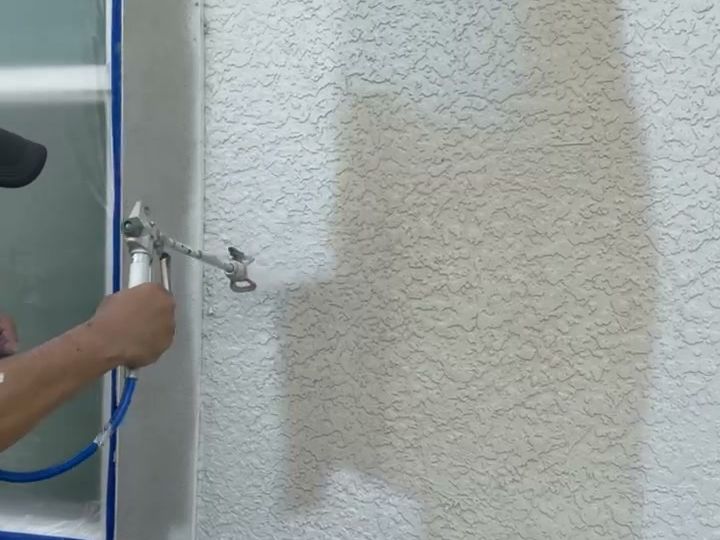
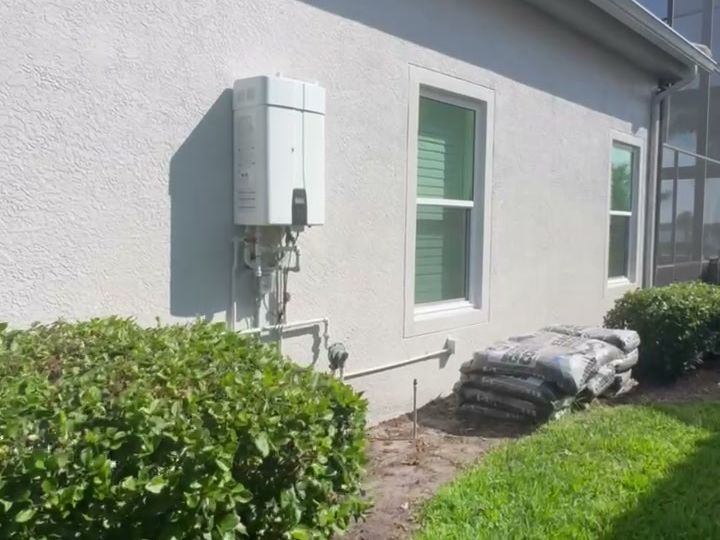
On one stucco home, the side wall at the top of this page had pale streaks and patched spots. The stucco around the windows got sanded first, and the patched spots were repaired. Then the windows were masked off in plastic and tape, and the new coat went on with a sprayer.
The same wall came out an even light gray, and the arched windows on that home got crisp new lines around them. Nothing fancy: clean, sand, repair, then paint.
When to Paint a Home Exterior in Florida: The Best Time of Year
Paint wants a dry wall, a dry forecast and a surface that is not baking in direct sun while the coat goes on. The drier months from late fall into spring make that easiest here. The tourism office for Sarasota describes winters as cooler and drier and springs with little rain, while summer is the wet season, with afternoon rain and thunderstorms.
Summer work is still possible. It means starting each side early, watching the sky and letting the walls dry out after a storm before any paint touches them. The park service paint guide also says paint should not go on in direct sunlight: the top of the coat can dry too soon, trap what is under it and blister. On a hot day, that means working around the home with the shade.
If you spend summers up north, the walkthrough can happen while you are here, with the colors and the scope settled in writing before you leave. Sarasota homeowners near downtown and on the keys can read more on exterior painting for Sarasota stucco homes.
Good to know
Look at a color outside, on a sunny wall and a shaded one, morning and afternoon. Strong sun can make a shade read lighter than it did on the chip.
What Sets the Cost to Paint a Stucco Home in Florida
A price per square foot tells you little here, because two homes with the same floor plan can need very different prep. These are the things that move the number:
| What we look at | Why it changes the price |
|---|---|
| Size and height | More wall means more paint and more setup. Upper walls need ladders or a lift. |
| Condition of the stucco | Cracks, old patches and heavy chalk add cleaning, sanding and repair before paint. |
| Sun and water | Walls facing the afternoon sun or open water usually need the most prep. |
| Color change | Going from dark to light, or the reverse, can take more paint to cover the old color fully. |
| Fascia and trim | Part of every full repaint. A second trim color means more careful lines at each window. |
| Room to work | Shrubs pressed against the walls and tight side yards take more setup. |
The prep, the repairs, the walls, the fascia and the trim each get their own line on your written estimate, with the full price, before any work starts. It is the same idea as what a written flooring estimate should include: if a line you expect is missing, ask about it before you sign.
If the inside needs attention too, like fresh paint on interior walls and ceilings or drywall cracks patched and smoothed, those can sit on the same estimate as separate lines, so you see each price on its own.
HOA Paint Color Approval and City Review
Before anyone buys paint, find out who has a say in the color. In a lot of communities around here, the answer is not only you.
In Lakewood Ranch, each village has its own covenants and rules, and most villages have an HOA that enforces design standards for the outside of the home. Ask your association for its color rules and its application before you settle on a shade. Our page on exterior painting in Lakewood Ranch has more for homes in the villages.
In Venice, the city adds its own layer in its historic districts. In the Historic Venice district, a new color on a single-family home has to come from the colors approved for the district's historic style. In the Venetian Theme district, the color rules leave single-family homes out. If your home is in the older part of town, ask the city's planning staff before you pick a shade, and see our page on exterior painting in Venice.
Under Florida's HOA law on architectural control (opens in a new tab), an association's say over how a home looks comes from its declaration and the guidelines that declaration authorizes. So the written rules are the ones that count. Get a copy, and we set the start date around the approval.
What a Full Repaint Includes: Walls, Fascia and Trim
A full repaint covers every stucco wall of the home plus the fascia and the trim. Before anything starts, you make a few choices:
- The wall color, seen outside on your own walls, not only on a chip indoors.
- The trim color: the same as the walls, a shade darker like the bands in the photo below, or an accent.
- Which walls and areas are in the scope, each one listed on the estimate.
- Your HOA or city approval, when your community asks for one, before a start date is set.
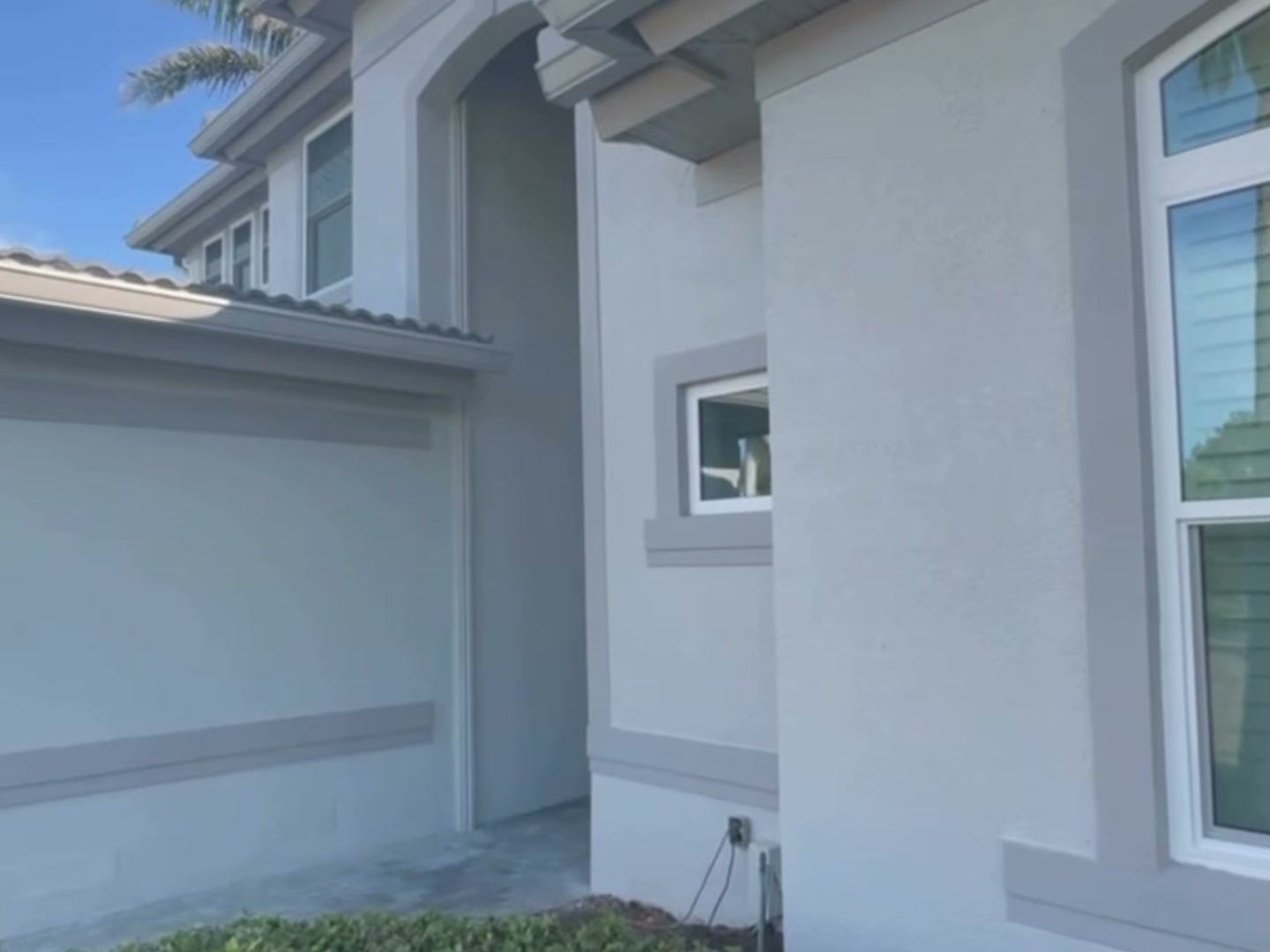
We write down the prep, the repairs, the paint and the full price. As a family-owned company based in Bradenton, we look at stucco homes across Manatee, Sarasota and southern Hillsborough counties, and the full list of areas we serve shows where.
Common questions
How long does exterior paint last on a stucco home in Florida?
It varies wall by wall. Paint on a shaded side that was cleaned, sanded and repaired before it went on holds up much longer than paint on a west wall facing open water, or a coat laid over chalk. Rather than trusting a number of years, check the sunniest wall once a year for chalk, fading, streaks and cracks showing through.
Do you need to repair stucco before painting?
Yes, if it has cracks, loose spots or old patches. Paint can seal a true hairline crack, but a wider crack needs a proper repair first, or rain gets in behind the new coat and it bubbles and peels. The repair is worked to the texture around it and sanded, so it blends in under the new color instead of showing as a line.
Can you paint a stucco exterior a different color?
Yes. Stucco takes a new color well once it is clean, sound and dry. Going from a dark color to a light one can take more paint to cover the old color fully, which is written on the estimate. If you live in an HOA community or a historic district, check the color rules before you choose.
How much does it cost to paint a stucco home in Florida?
The size and height of the home, the condition of the stucco, how much sun and salt air the walls take, any color change, and the fascia and trim all move the price. We look at every side in person at a free in-home estimate, then write each line and the full price down before work starts.
What happens if you wait too long to repaint stucco?
Thin, chalky paint stops shedding water well, and small cracks start letting rain into the stucco. Water getting in is behind most stucco damage, and cracks tend to grow once it does. The longer a tired coat stays up, the more cleaning, sanding and repair the next repaint needs before the new color goes on.
Does my HOA need to approve a repaint in the same color?
It depends on your association's declaration and guidelines. Some handle a same-color repaint differently from a color change, others want an application for any exterior paint. Ask your association how it treats both before you schedule, and keep the answer in writing.
Free estimate
See What Your Stucco Needs Before You Repaint
Walk around your home with us at a free in-home estimate. We look at every wall, help you settle the colors and put the prep, the repairs and the full price in writing before work starts.