Finish work
How to Fix Ceiling Cracks Along Drywall Seams, and Why They Come Back
Most ceiling cracks follow a drywall seam or the corner where the ceiling meets a wall. We cover what causes them in a Florida home, why a thin patch often opens again, and the order of work that hides them under paint.
How to Fix Ceiling Cracks Along Drywall Seams: The Repair in Brief
To fix a ceiling crack along a drywall seam, open the crack and cut out any loose tape, bed new tape in joint compound, then cover it with thin, wide coats and sand between them until the seam disappears. Prime the repair, then paint the whole ceiling, not just the spot. That is the order we follow in our drywall repair and finishing work: taped where needed, coated, sanded smooth, then painted.
The order matters more than the product. Each coat dries all the way before the next, and the last one is spread wide so no ridge shows in window light.
One check comes first. A hairline line that follows a seam or a corner is usually a finishing problem. A crack that is wide, runs on a slant across the panels, or sits in a ceiling that sags or bows is something else, and it should be looked at before anyone patches it.
Why Ceiling Cracks Show Up Along Drywall Seams
A drywall ceiling is a set of stiff panels joined edge to edge by paper tape and compound. When anything above them moves, the joint is where the line shows. The corner where the ceiling meets a wall works the same way, with one strip of tape between two surfaces that move on their own.
One common reason is the wood the ceiling hangs from. Wood takes on moisture when the air is humid and gives it back when the air dries, and it swells and shrinks as it does, as the Oregon State University Extension guide on wood and moisture (opens in a new tab) explains. The panels are screwed or nailed to that wood, so a small seasonal shift pulls at every joint.
That swing is part of life on this coast. The rainy season here is warm and humid, with frequent showers and thunderstorms, as UF/IFAS Extension in Sarasota County (opens in a new tab) describes it. Then a long dry season follows, usually from November into May, and the air turns drier. A ceiling that went up in one season lives through the other every year.
Another common reason is the compound itself. Drywall industry guidance notes that humid weather slows the drying of joint compound, that each coat should dry thoroughly before the next, and that poor drying conditions can lead to finishing problems. Tape bedded with too little compound under it can also lose its grip and blister or crack later.
Seam Cracks, Corner Cracks and Nail Pops
Where a crack sits tells you a lot about it. Before the walkthrough, turn the lights on, look up in each room and note what you see.
| What you see | Where it runs | One common reason | How we handle it |
|---|---|---|---|
| A straight hairline crack | Along a seam between two panels | Seasonal movement in the wood, or tape that was never bedded well | Loose tape cut out, new tape bedded, coated, sanded, painted |
| A crack in the corner | Where the ceiling meets a wall, often an inside wall | The ceiling and the wall below it move by different amounts | Corner opened, retaped, coated and sanded, then painted |
| Nail pops | Small round bumps, often in a line across the ceiling | The wood dried and shrank away from the back of the panel | Loose panel fastened tight, heads covered, coated and sanded |
| A raised or bubbled line | A blister that follows a seam | Too little compound under the tape, so it lost its bond | Loose tape cut out, rebedded and coated smooth |
Corner Cracks Over Inside Walls
A corner crack often runs along the top of an inside wall. Building research on wood shrinkage describes how the wood above a ceiling, the trusses in particular, can rise and settle by different amounts than the inside walls under it, cracking the joint between ceiling and wall. The tape in that corner gets pulled one way, then the other, and it is usually the first line to show.
Nail Pops on a Ceiling
Nail pops have a plain cause. As the wood behind the ceiling dries, it shrinks away from the back of the panel, and the nail does not shrink with it. The panel ends up loose on the fastener, and the head shows through the coat as a small round bump. Wood that went in before it had dried out is the most likely to do this.
Why a Simple Patch Often Opens Again
Most cracks that come back were covered, not fixed. A dab of filler or a bead of caulk fills the line, but nothing bridges it. The next seasonal shift pulls the two sides apart again, often right through the new paint, and the crack looks exactly as it did.
How to Fix Ceiling Cracks That Keep Coming Back
A crack that keeps returning needs tape across it, bedded in compound, with wider coats over that so the tape is buried and the edges are feathered out. Tape gives the repair something to hold the two sides together. Compound alone has nothing to hold.
Building research recommends floating the corners of a new ceiling, with no fasteners close to inside walls, so the panels can flex. On an existing ceiling, the honest repair is a well-bedded tape joint, wide coats and fresh paint. A corner that moves every season can still show a fine line later, and we say so at the walkthrough.
Good to know
Make a light pencil tick at each end of a crack and note the date. If the line grows past the ticks, tell us at the walkthrough: a crack that is still moving gets planned differently.
Drywall Ceiling Repair, Step by Step: Tape, Coat, Sand, Paint
This is the order we work in on a ceiling, whether it is one crack in a hallway or every seam in a room.
- Protect the room. Furniture moves out or gets covered, and so does the floor, since sanding dust settles everywhere.
- Open the crack. Loose tape and crumbling compound come out. If the panel moves when pressed beside the crack, it is fastened tight first, so the new work sits on a solid base.
- Tape where needed. New tape goes into a bed of joint compound and is pressed flat, with no air trapped behind it.
- Coat in layers. Each coat goes on wider than the last and dries all the way before the next.
- Sand smooth. The edges are feathered until you cannot feel where the repair stops.
- Prime and paint. Primer evens out the new compound and the old paper, then the whole ceiling is painted, corner to corner.
Good to know
Paper or mesh tape? Paper bedded in compound makes a stiff joint and folds cleanly into a corner. Mesh stretches more, so on a seam it needs a setting-type compound over it to hold.
Fix Ceiling Cracks Before Painting the Room
If a room is getting new paint, the crack repair comes first and the full ceiling gets painted after. Paint over an open crack only sits in the line for a while. When the ceiling moves again, the line shows through the new color.
Light matters here. The finish guide that drywall and paint groups publish together calls strong side light from windows critical lighting, and asks for a higher level of finish where it hits. In a room with sliders or a wall of glass, daylight skims across the ceiling and shows any ridge a patch leaves. That is why we feather each coat wide and paint the whole ceiling, not a square around the repair.
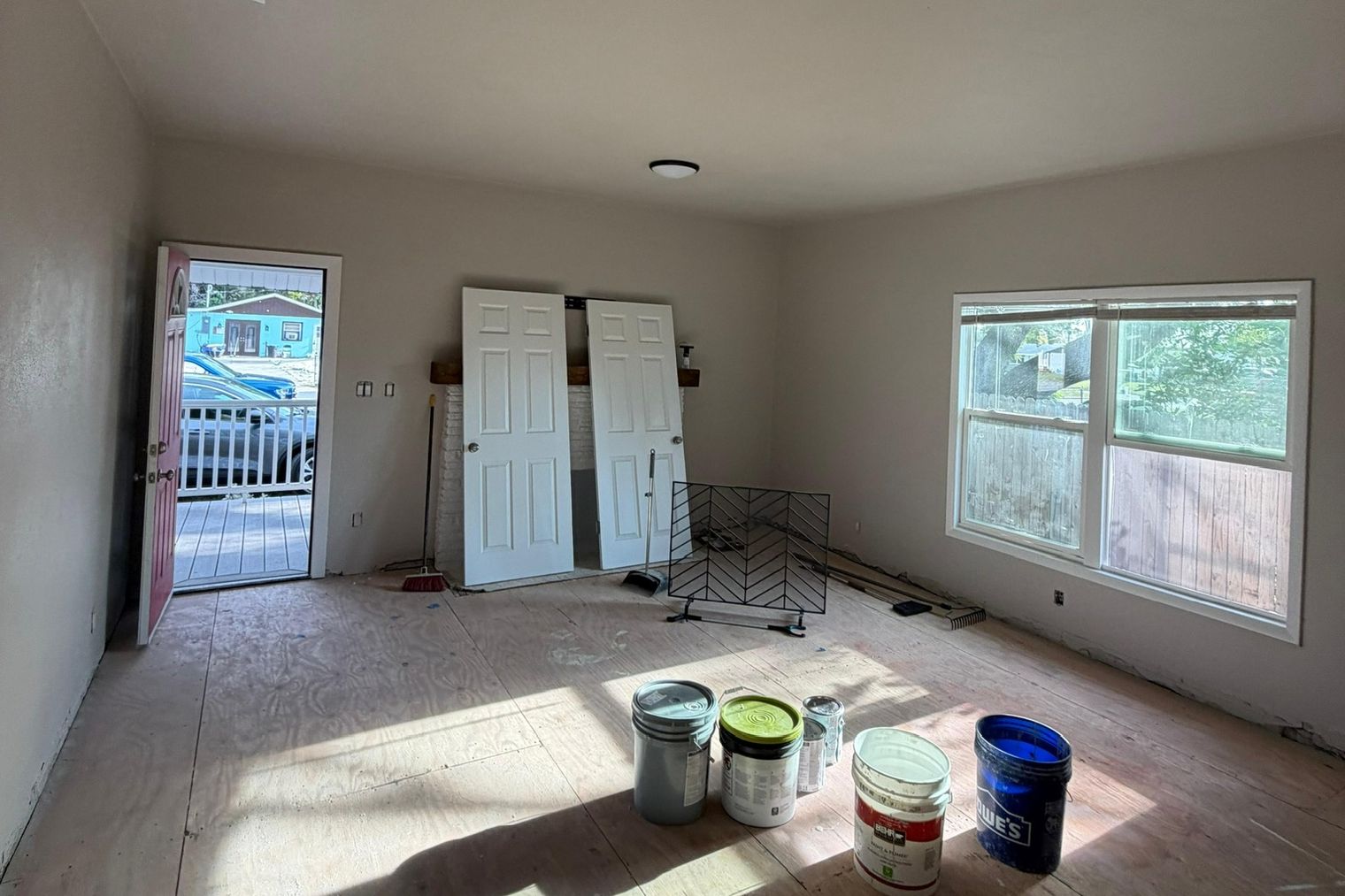
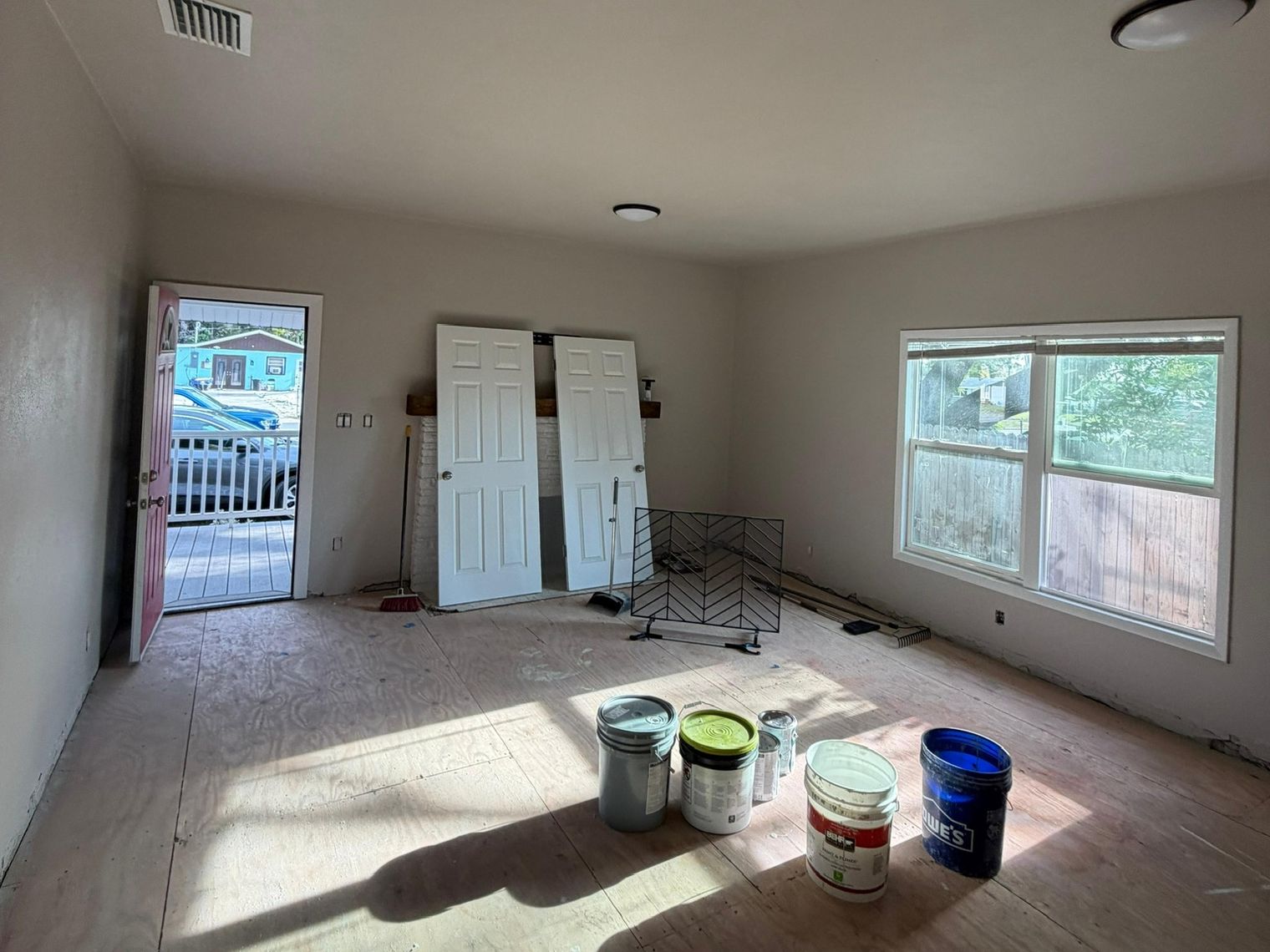
It is also why drywall repair and interior painting for walls and ceilings sit well on one estimate: one setup, one round of protection, one finish. On one bungalow, the walls and ceiling were painted while the living room was still down to bare subfloor, and the plank floor went in only after the paint was done.
Good to know
Picking a ceiling finish? A flat paint hides small flaws better than a sheen, which is why gloss finishes call for a higher level of drywall finish under them.
Ceiling Cracks in Gulf Coast Homes: What Changes Here
Newer homes in Sarasota can show nail pops and fine seam lines as the new wood above the ceiling dries out. Older homes tend to show a different history: a ceiling patched more than once, with layers of filler that come off before new tape goes on. Either way, ceiling crack repair for Sarasota homes starts with looking at what is already on the ceiling.
Sun City Center is a 55-and-over community where many homes are single-story, and some are attached villas run by an association. In a single-story home every ceiling sits right under the attic, so the corners along inside walls are the ones to watch. Our page on drywall repair in Sun City Center covers the other repairs those homes tend to need.
Venice has many 55-and-over communities too. If you spend part of the year away, note when a crack first showed up and whether it changed while the home sat closed. That helps tell a seam that moves with the seasons from one that opened once. See drywall repair in Venice for how we look at those homes.
What Sets the Cost of Ceiling Crack Repair
Ceiling crack repair cost depends less on the crack than on everything around it. These are the things that move the price:
- How many cracks, and how long they run.
- Where they sit. A corner over an inside wall takes more care than a seam mid-ceiling.
- Ceiling height. A tall or vaulted ceiling needs more setup than a standard one.
- Texture. A smooth ceiling is the simplest to blend. A textured one changes the plan, and we talk it through at the walkthrough.
- Paint. A touched-up square tends to show, so repainting the whole ceiling is usually written in.
- The room itself. An empty room is the simplest to set up. A furnished one needs the furniture moved or covered first.
On our estimate, each crack is listed room by room, the ceiling paint is its own line, and the price is in writing before any work starts. The same habits that make a written flooring estimate easy to compare apply to a ceiling: every line named, nothing left as a lump sum.
Drywall, Paint and a New Floor in One Plan
When a room is being redone, the order that works is ceiling repairs, then paint, then the new floor and baseboards, so sanding dust and paint drips land on the old floor, not the new one. We cover that order in why we paint before the new floor and why baseboards go on last.
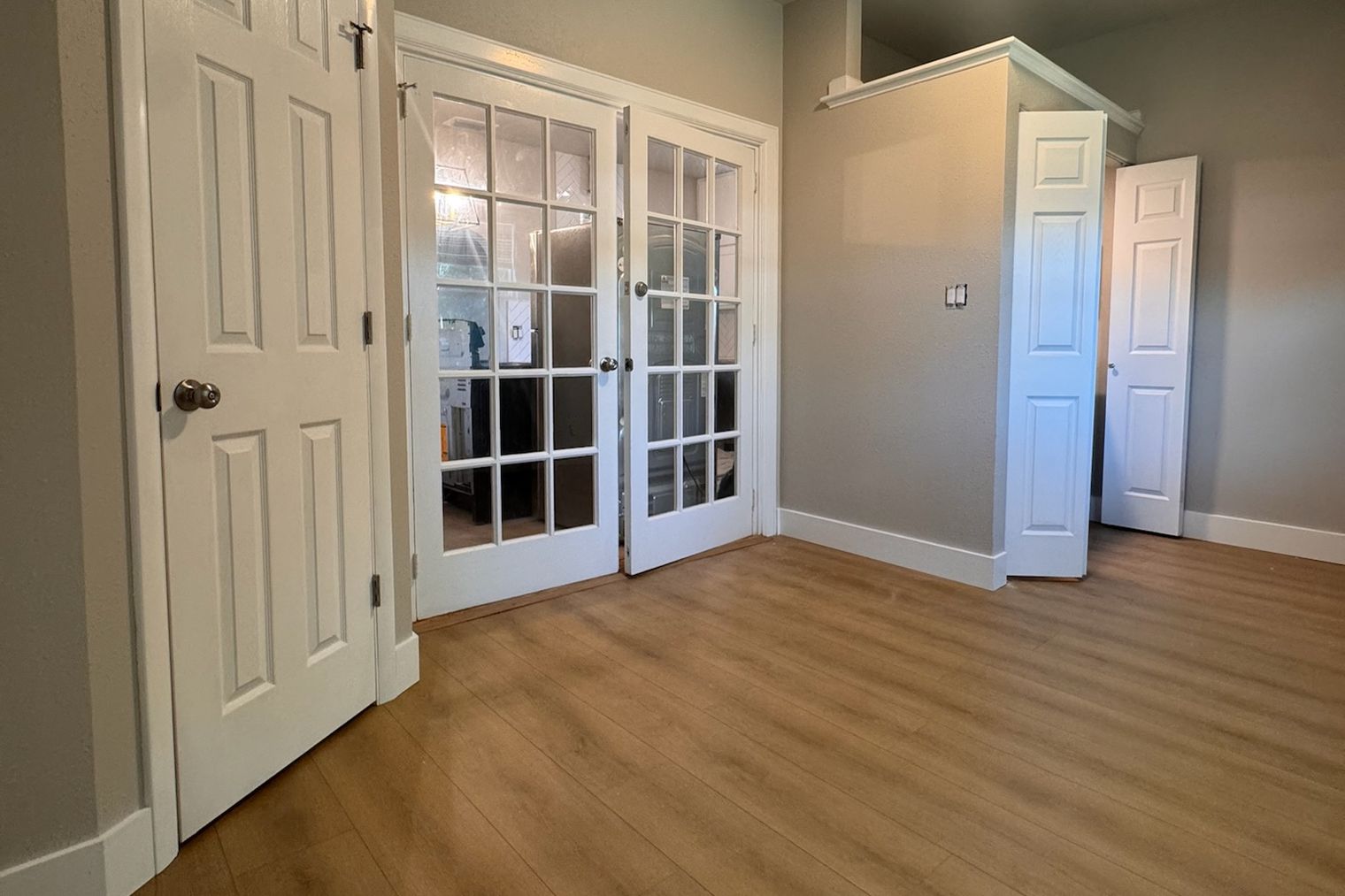
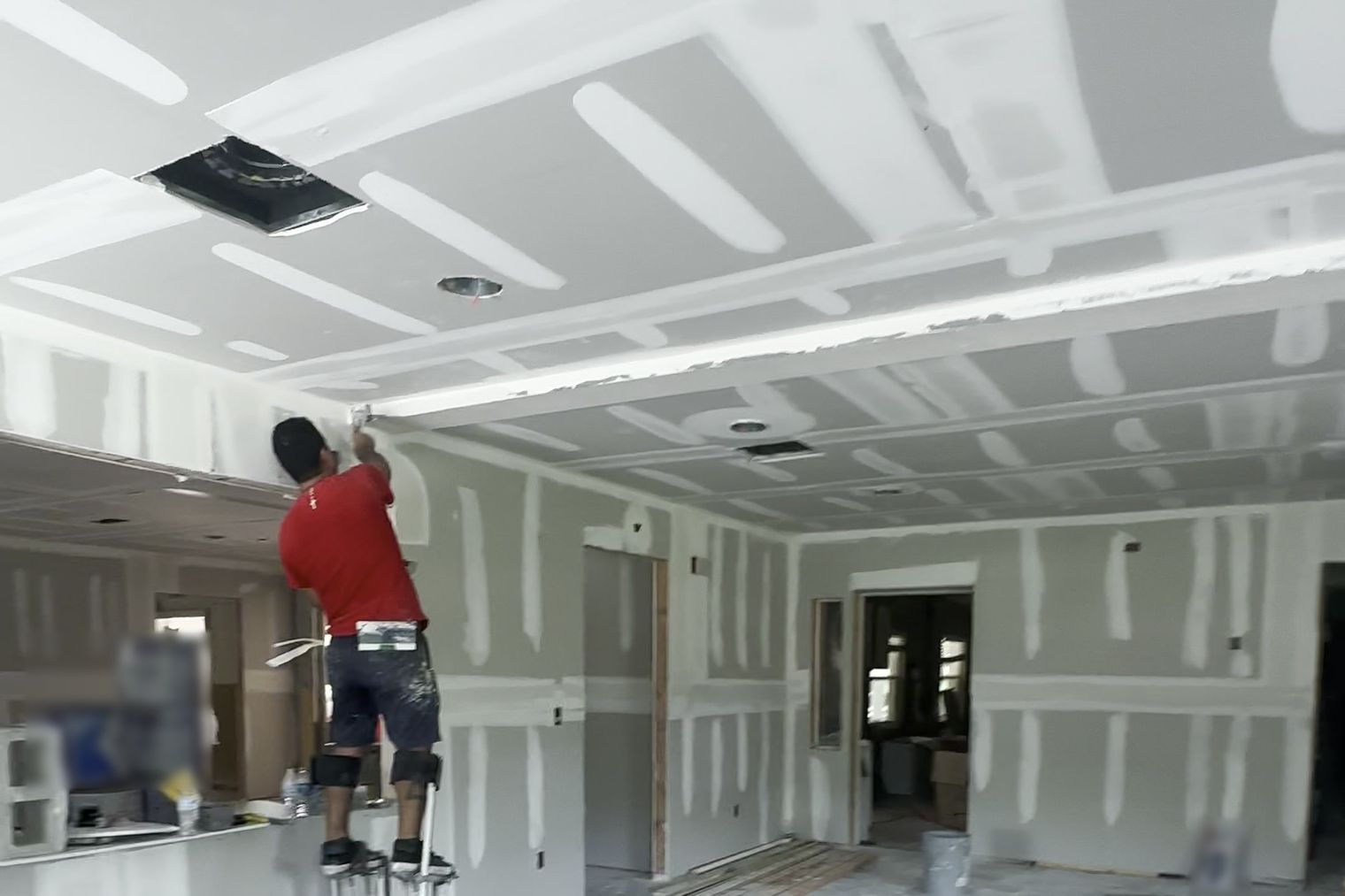
That was the order on an academy, a commercial job where the ceilings were new drywall. A finisher on stilts carried compound along the taped seams, the walls and ceilings were painted, and only then did the plank floor go down, room by room. The long room below shows where it ended: a smooth ceiling, blue-gray walls, white baseboards and a wood-look plank floor.
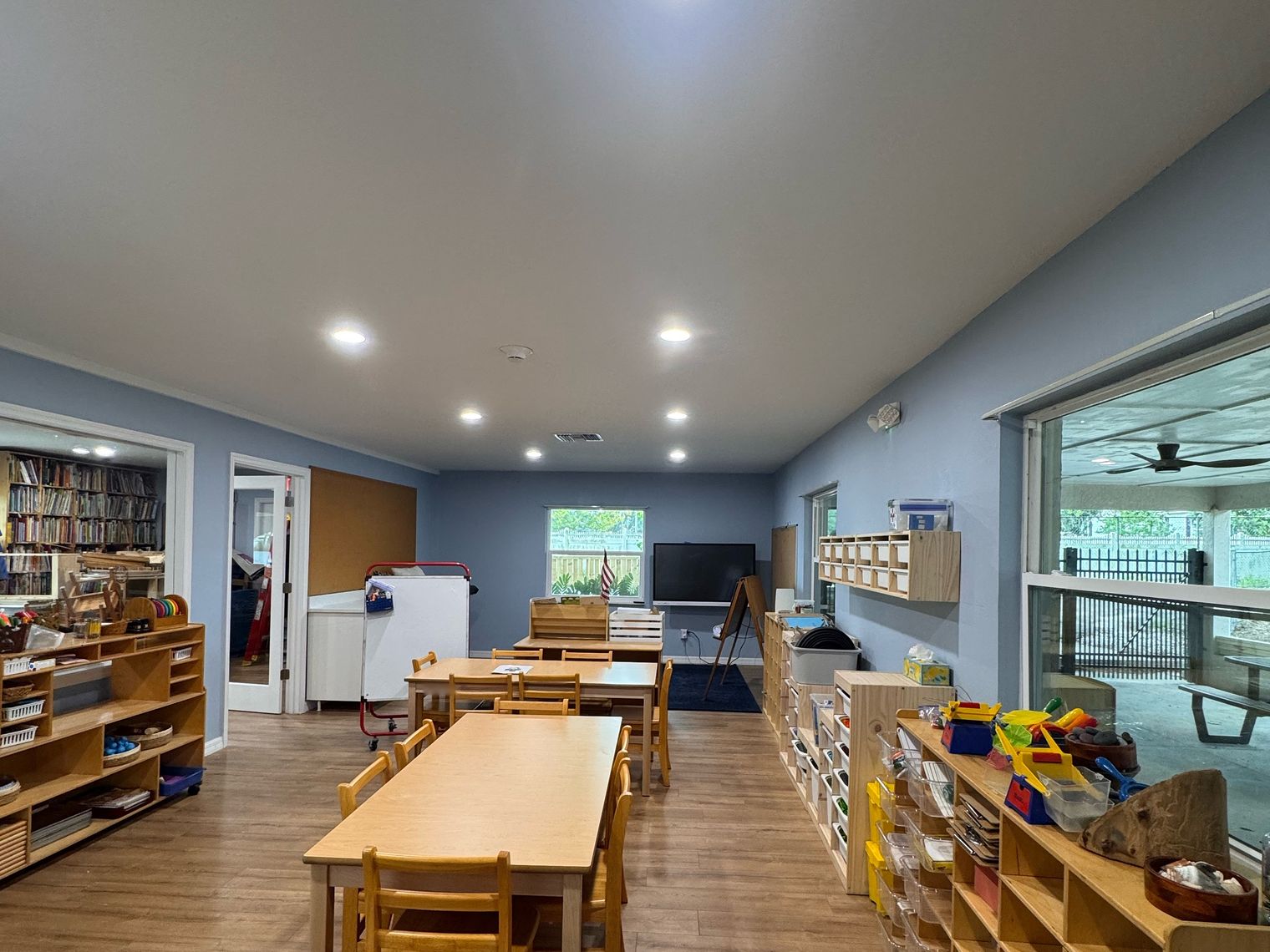
In a home, the same plan might cover a living room: the ceiling seams retaped, the walls and ceiling painted, then luxury vinyl plank floors run through the room with new baseboards along every wall.
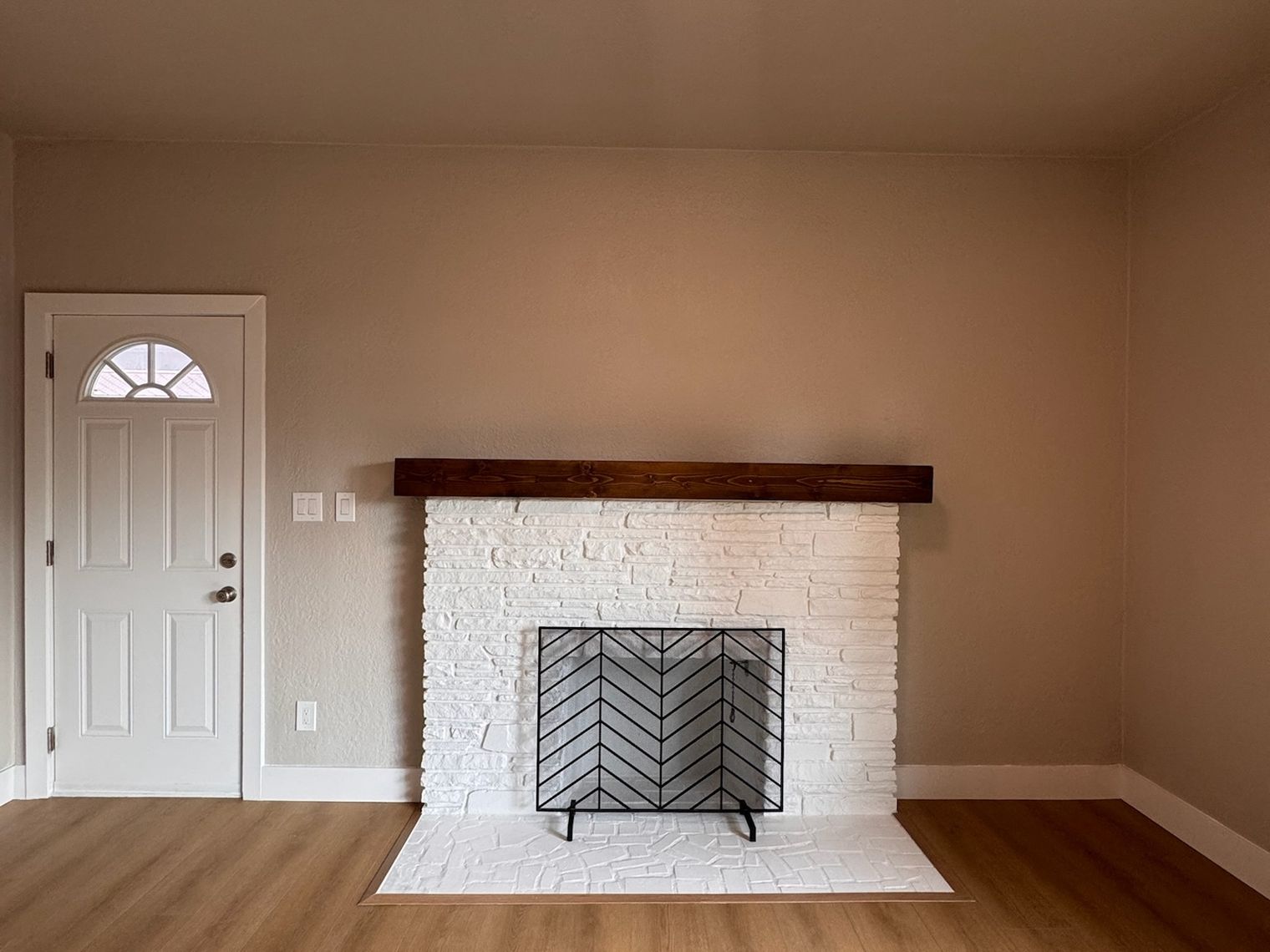
Planning it as one job means one walkthrough and one written estimate. We are a family-owned company based in Bradenton, and we look at the ceiling, the walls and the floor with you, room by room, before anything is priced.
Common questions
Why does my ceiling crack along the drywall seams?
The seam is the weakest line in a drywall ceiling, held only by tape and compound. One common reason it cracks is that the wood above the ceiling swells and shrinks as the air gets more or less humid. Another is tape that was never bedded well, or coats put on before the one under them dried. A straight hairline along a seam is usually a finishing problem we can tape, coat, sand and paint.
Are hairline cracks in a ceiling normal?
Fine lines along seams and at corners are common in drywall ceilings, especially as new wood dries in a home's first seasons or as the humidity swings. A crack that is wide, runs on a slant across the panels, or sits in a ceiling that sags or bows is a different matter and should be checked before anyone patches it.
How much does it cost to fix a crack in the ceiling?
It depends on how many cracks there are, where they run, how high the ceiling is, whether it is smooth or textured, and whether the whole ceiling gets painted after, which it usually should. A single seam in a hallway is a small job. Every seam in a tall great room takes more setup. At a free in-home estimate we look at each crack with you and put the price in writing before work starts.
Why do ceiling cracks come back after they are repaired?
Usually because the first repair only filled the line. Filler or caulk with no tape across the crack has nothing holding the two sides together, so the next seasonal shift reopens it. Coats put on before the one under them dried can also shrink and show the seam again. Tape bedded in compound, wide coats and paint over the whole ceiling give the repair its best chance, though no repair stops the wood above from moving.
Can I just paint over a ceiling crack?
Paint alone does not bridge the crack. It fills the line for a while, then the next seasonal shift opens it again and the crack shows through the new color. Fix it first: tape where needed, coat, sand and prime, then paint the whole ceiling so the repair does not read as a patch.
Can I fix a ceiling crack myself?
A short crack on a ceiling of normal height is a fair do-it-yourself job if you are steady on a ladder and patient with drying. The hard parts are working overhead, sanding without leaving ridges and blending the paint. Long seams, corners that keep reopening and tall ceilings are where a crew with stilts and the right setup earns its place on the estimate.
Free estimate
Have Your Ceiling Cracks Looked At
Bring your pencil marks and notes on each crack. At a free in-home estimate we look at every line with you, then put the repair, the ceiling paint and the price in writing before work starts.