Finish work
Baseboards Before or After Flooring: Why the Trim Goes On Last
With a hard floor, the trim comes last. That order decides what happens to the old baseboards when vinyl plank goes in, when quarter round is enough, and how the edges get cut around corners, hearths and steps.
Baseboards Before or After New Flooring?
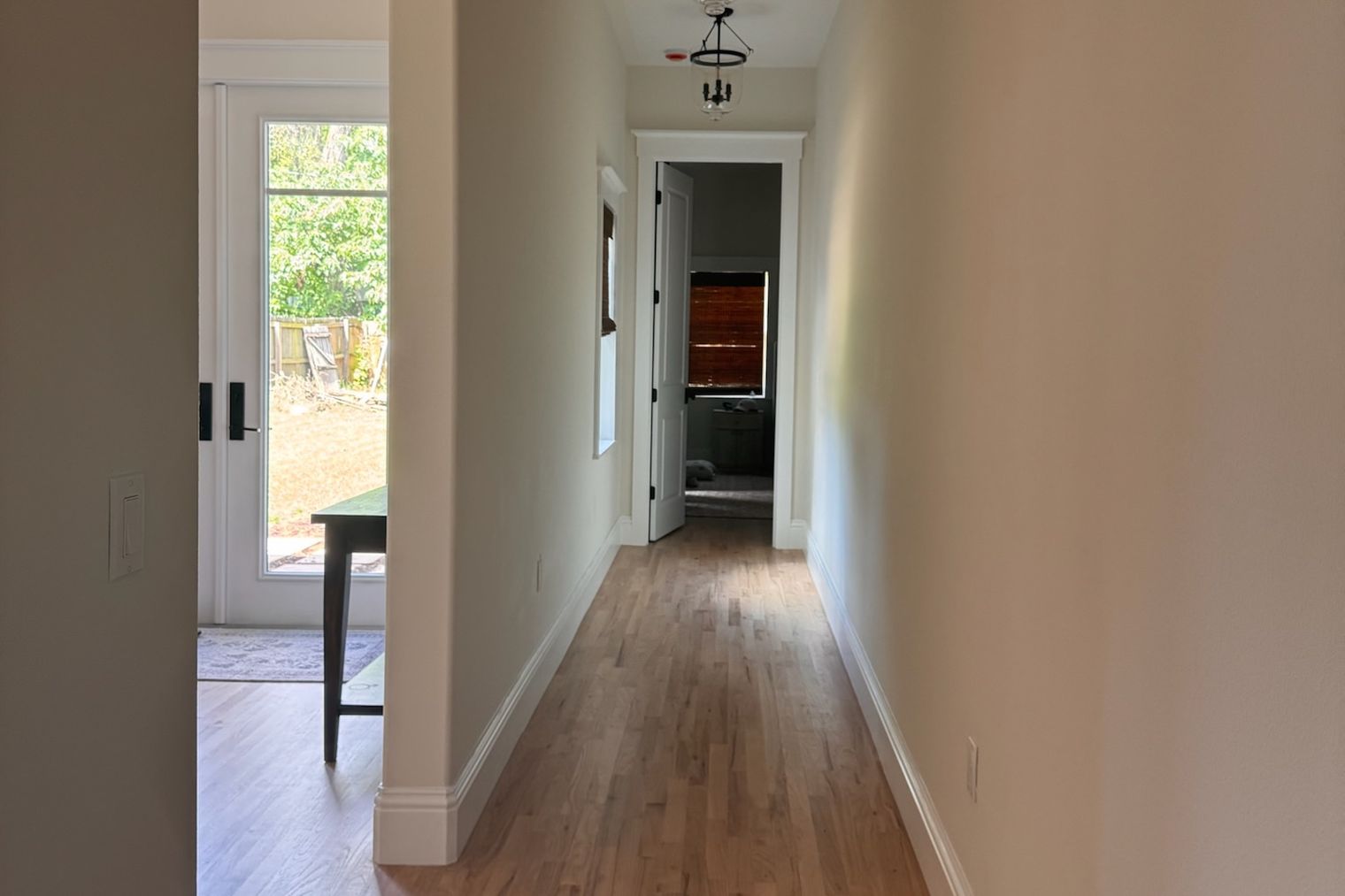
Should you put baseboards before or after flooring? After, for any hard floor: vinyl plank, laminate, hardwood or tile. The floor goes down first. Then each baseboard rests on the finished surface and hides the edge at the wall. Carpet is the one exception. In a carpeted room, the trim usually goes up first, and the carpet gets tucked under it.
The reason is the edge itself. A floating plank floor has to move a little as the air changes, so the planks stop short of every wall. Trim set before the floor would hang above that space at a guessed height: too high and a dark gap shows under it, too low and the planks cannot slide under its edge. Set after, the baseboard comes down to the planks and covers the space. It gets nailed into the wall, never through the floor or pressed hard onto it, so the planks keep their freedom to shift.
That is the order behind our baseboard and trim installation: the floor first, then the trim, measured and cut in the room where it goes. The order protects the new trim, too. Nothing gets dragged or knocked against fresh baseboards while the planks are going down.
Good to know
Look at the bottom of your baseboards today. A dark line, a gap or a strip of old caulk along the floor means that edge was set to the old floor, and it needs a plan before the new one goes in.
Do You Have to Remove Baseboards to Install LVP?
No, not always. Vinyl plank can go in with the old baseboards left on the wall. The planks stop a small distance from the trim, and a thin strip called quarter round or shoe molding gets nailed to the face of each baseboard to hide the space. It works, and it is the smaller cost. It also adds a second line at the foot of every wall, and that ledge collects dust.
Taking the old baseboards off gives a cleaner edge. The planks run closer to the wall, the baseboards go back on top of them, and the room ends with one line where wall meets floor. The catch is the old trim. Baseboards that were caulked and painted in place for years can split or splinter as they come off, and a piece that breaks has to be replaced anyway.
Rooms that had carpet are their own case. Baseboards in a carpeted room were usually set before the carpet, with room left under them for the carpet edge. Once the carpet and pad come out, the old trim can sit above the floor with a strip of bare wall showing below it, and that can be more than quarter round hides neatly. Our post on the cost to replace carpet with LVP in Bradenton covers the rest of that job.
Old tile often runs under the edge of the baseboards, so the trim usually comes off before the tile can be broken up. Our page on vinyl plank floors lays out each step of the plank job, prep included.
Quarter Round or New Baseboards?
Quarter round is a strip of molding shaped like a quarter of a circle. Shoe molding does the same job with a slimmer profile. Both cover the space at the foot of a baseboard. Neither one fixes old trim that is chipped, water-stained or thick with layers of paint.
| Question | Quarter round on old trim | New baseboards after the floor |
|---|---|---|
| What goes on | A small curved strip nailed to the face of the old baseboard | A new baseboard that rests on the new floor |
| Look at the wall | Two lines at the foot of the wall | One line |
| The old trim | Stays, with its dents and paint drips | Comes off, along with its old caulk |
| Height and style | Stay as they are, and a higher floor shows less of them | You pick the profile and the height |
| Cost | The smaller line on the estimate | The larger line, with more cutting |
| Fits best when | The old trim is sound and the floor change is small | The old trim is worn, or every room gets a new floor |
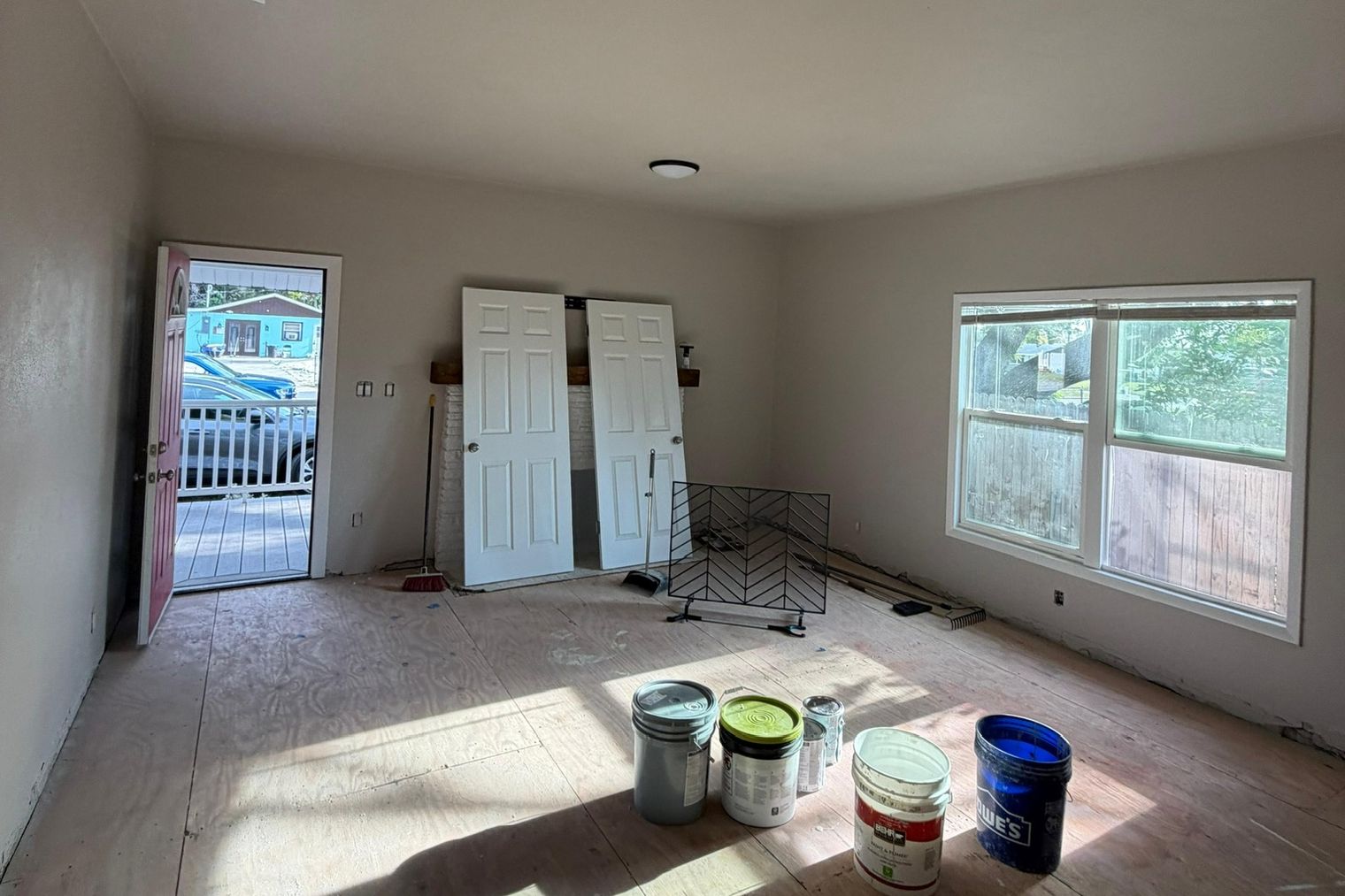
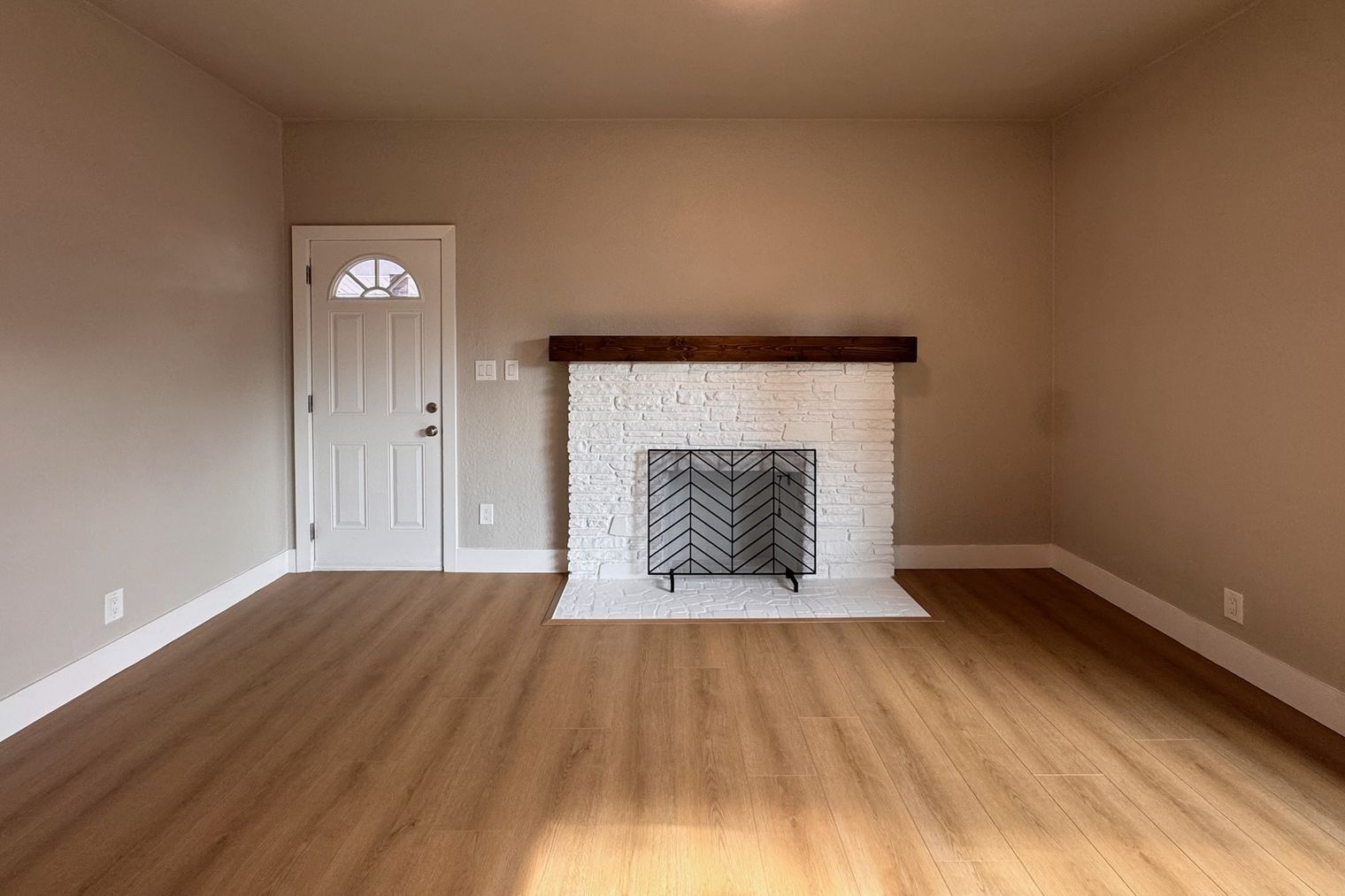
On one bungalow, the old floor came out all the way to the joists, and a new subfloor went in, flat and tight. Plank ran through every room. Then new baseboards went on every wall, and the trim was cut to wrap the fireplace. When every room gets a new floor, matching new trim is what makes the rooms read as finished together.
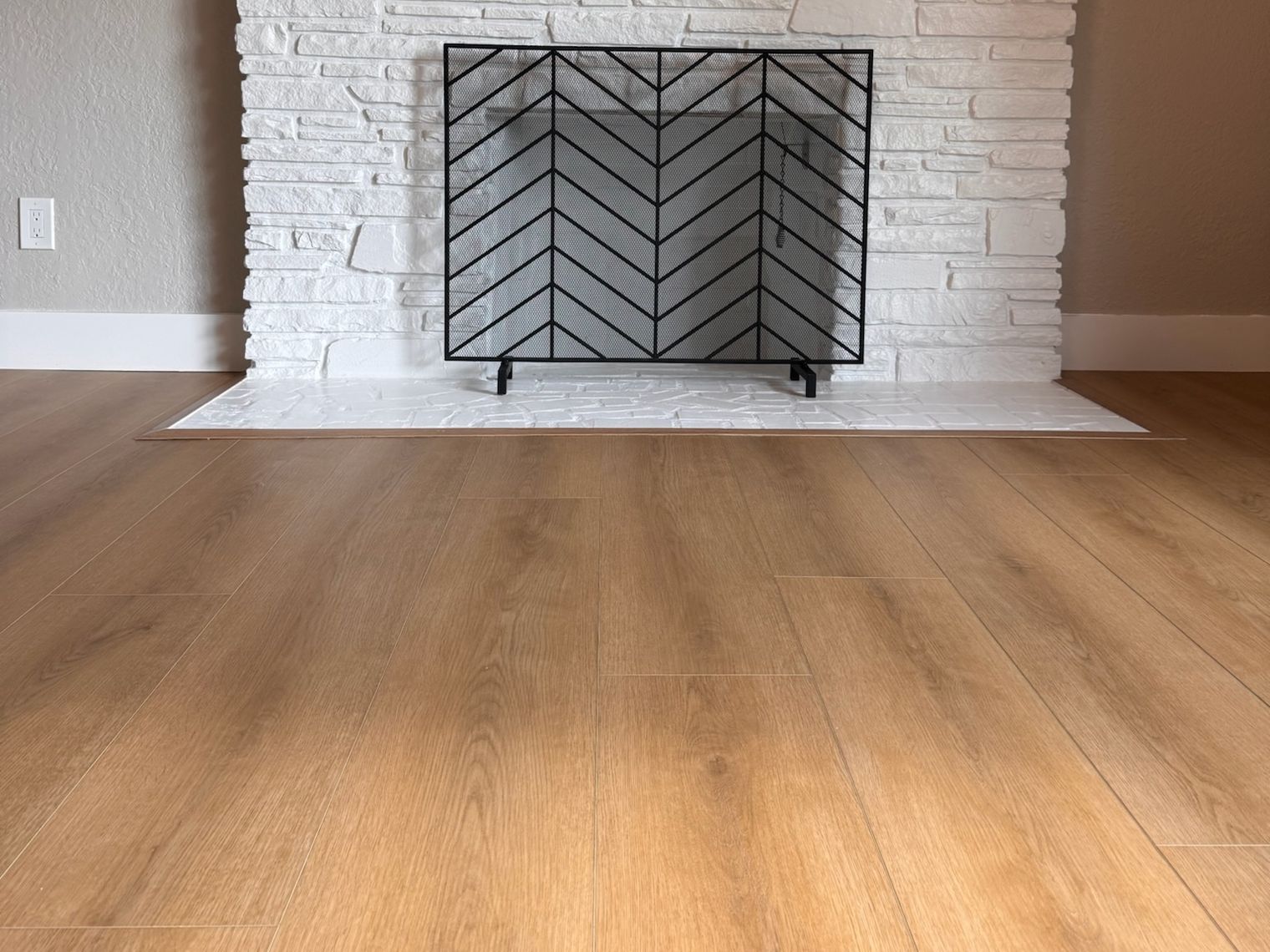
If you plan to replace baseboards with new floors anyway, doing both in one job means each piece is cut once, to the finished height of the floor it sits on.
Cut on Site: Corners, Hearths and Steps
Baseboards are cut in the room, piece by piece, against the wall they will cover. Few walls are dead straight or perfectly square, so a corner cut to a textbook angle can open up once it meets a real wall. Cutting on site lets each joint be fitted and checked before it gets nailed.
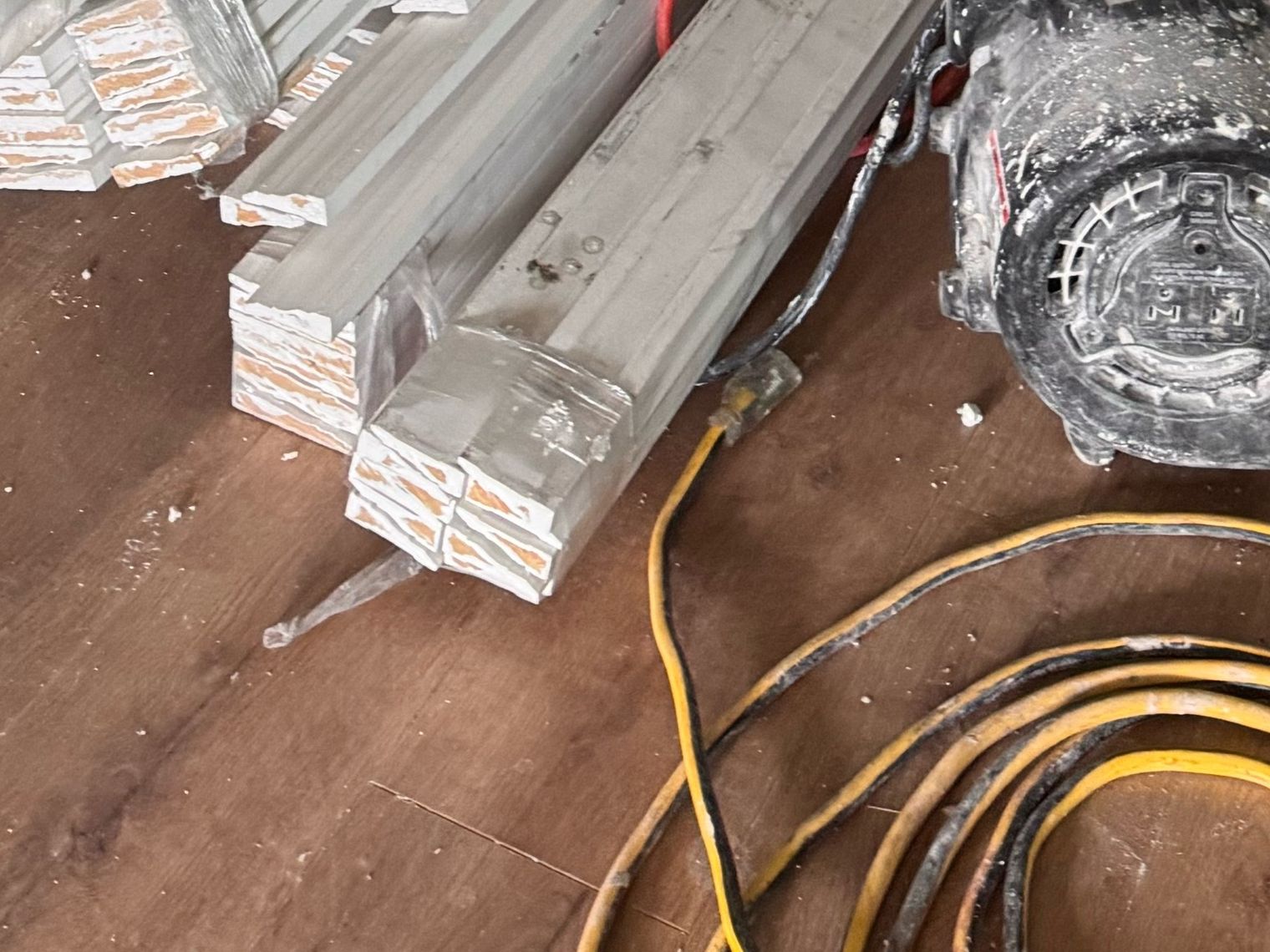
At the hearth
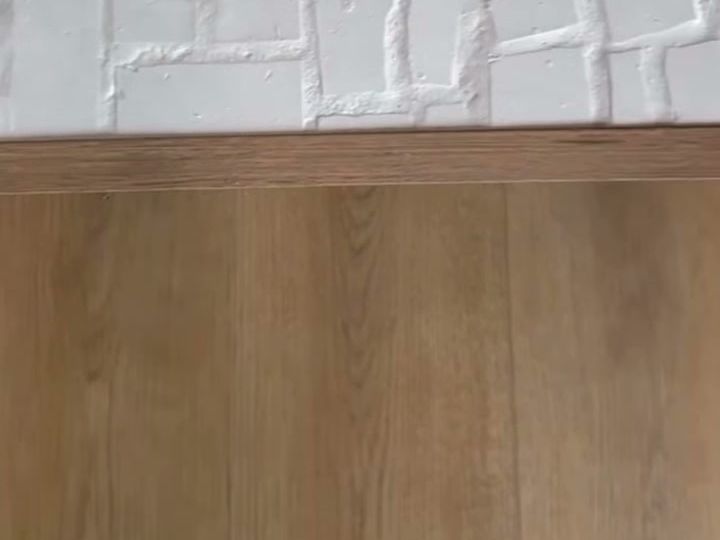
A fireplace hearth is one place where a floor job can look unfinished. The plank stops at the stone or brick, and that edge needs a finishing piece so the cut ends of the planks never show. The baseboards then run up to each side of the hearth and stop clean against it.
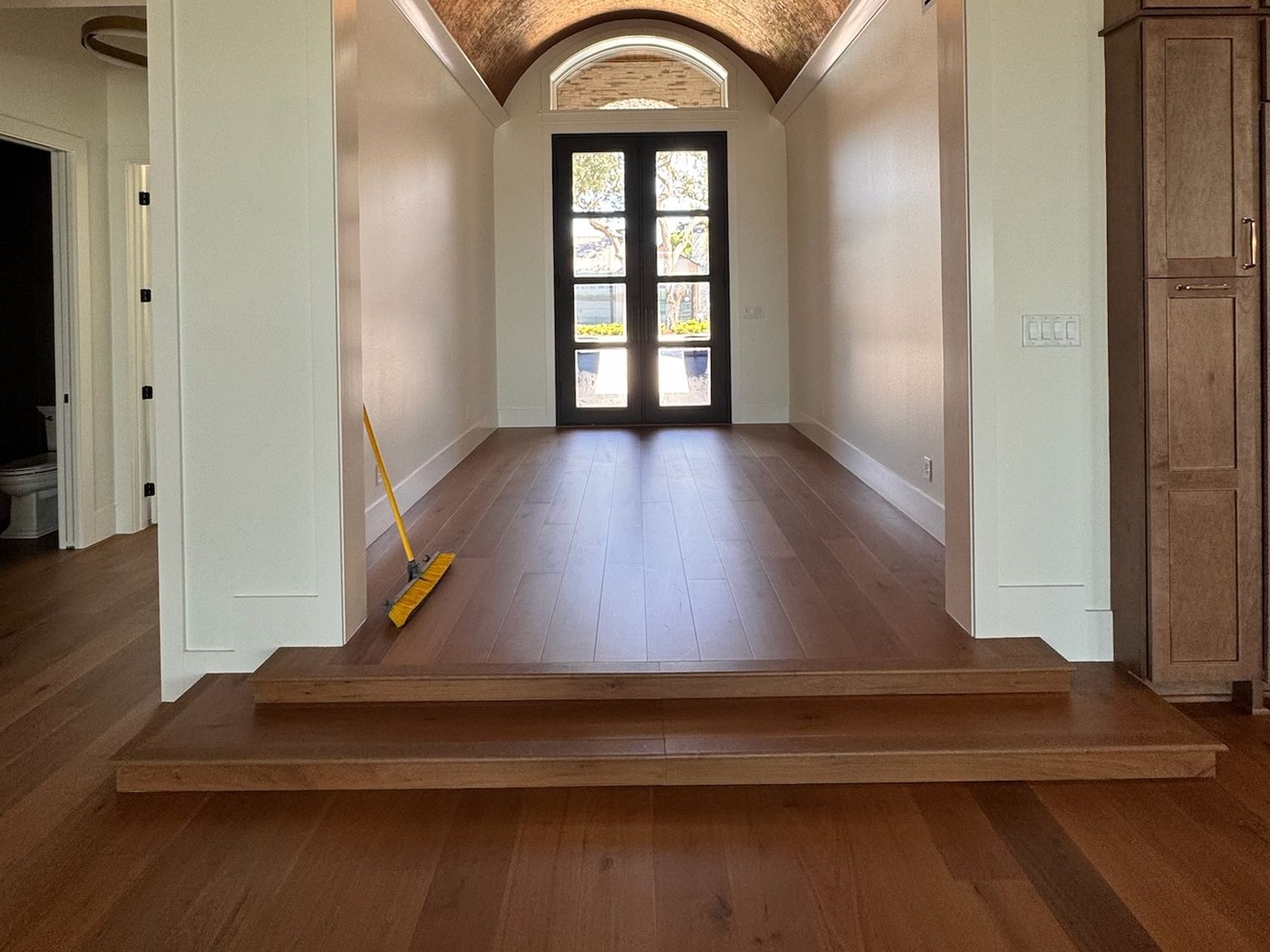
At a step
A step between two levels needs a nosing, the rounded edge across the front of the step. On one lake home, every room started as bare concrete, and wide hardwood planks were glued down board by board. The foyer step was wrapped in the same hardwood, with a rounded nosing on its edge, so the step reads as part of the floor instead of a patch.
At interior door openings
Where the new floor runs through an interior door opening, the bottom of the casing is trimmed so the planks slide under it instead of butting into it. When the casings are new too, they get lined up with the new baseboards. If new interior doors are on your list, our page on interior door installation covers the jambs and casings.
Baseboards Around a Herringbone Floor
Herringbone is hard on trim. The pattern runs at an angle to every wall, so each piece along the edge ends in a diagonal cut, and the baseboard is the line that borders all of those cuts. If a corner joint is open, the zigzag points straight at it.
In one home with four different floors, a small closet got herringbone vinyl plank. Its walls turn at several angles. The white baseboard follows every one of those turns with its own joint, so the trim outlines the pattern like a picture frame.
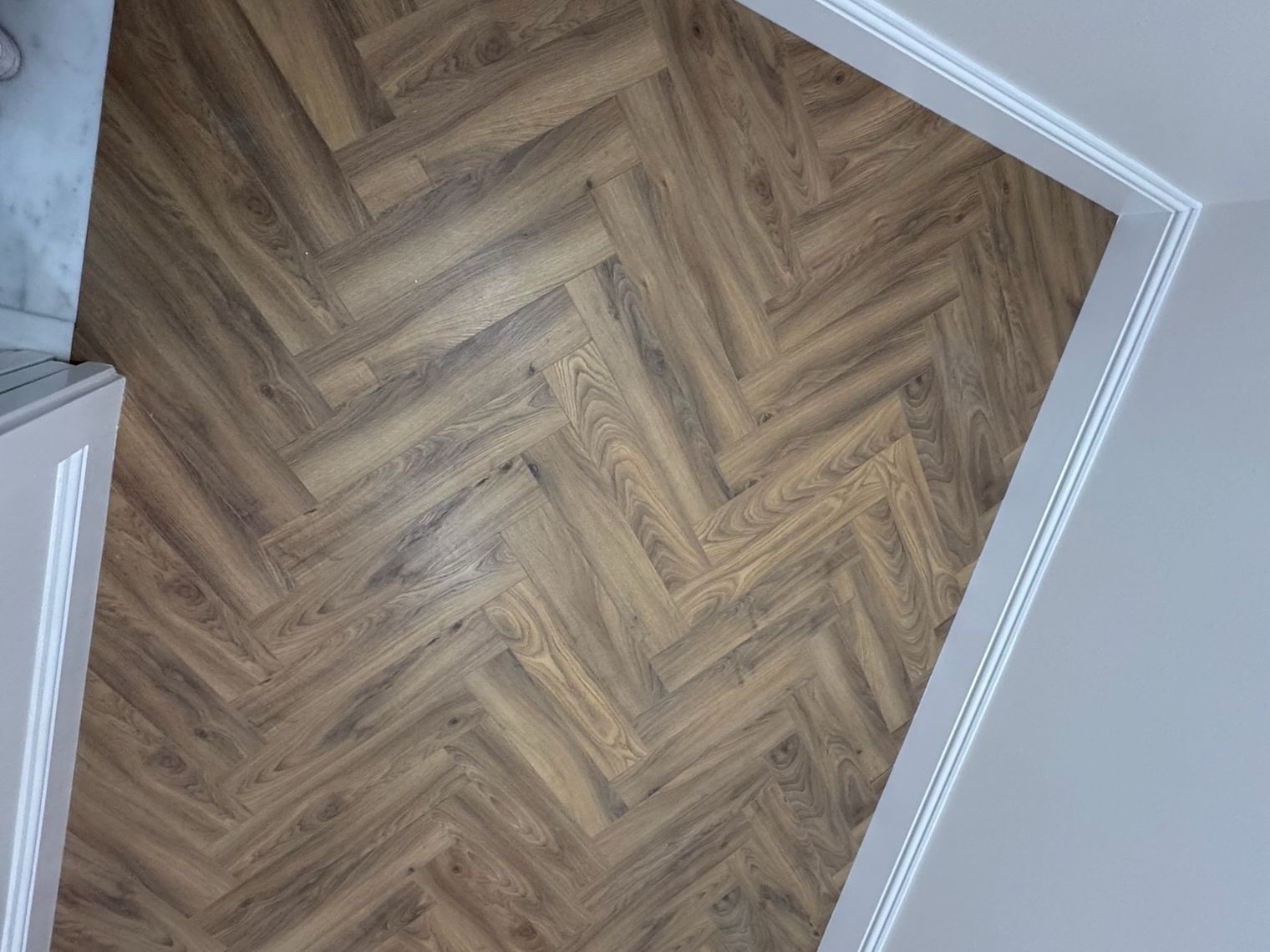
On a pattern floor, decide on the trim before the floor goes in: which walls get new baseboards, what color they will be against the floor, and where the pattern meets the next room. Our post on what drives herringbone flooring cost in Sarasota covers the floor side of that choice.
Paint Baseboards Before or After Installing the Flooring?
Walls are easiest to paint before the new floor goes in, as our post on painting walls before or after new flooring explains. Baseboards are a different question, and the usual answer is both. New baseboards can take primer and a first coat while they lie flat. Once they are nailed up, the nail holes get filled, the top edge gets caulked to the wall, and a final coat goes on with the new floor covered.
The bottom edge depends on the floor. Tile barely moves, so a bead of caulk where the baseboard meets it is fine. On a floating floor, leave that joint open or cover it with shoe molding: caulk there ties the trim to the planks and fights the space they need to move.
If you are keeping the old baseboards, plan on fresh paint for them, since a new floor makes every scuff along the bottom easier to see. The trim color is one of the choices you make with us at the walkthrough, and our interior painting page explains where paint fits in the order of a floor job.
Trim in a Florida Home: Humidity, Water and Empty Summers
Wood trim moves with the air. It takes on moisture and swells when the air is humid, then dries and shrinks when the air is dry, and paint slows that down without stopping it. Purdue Extension on wood movement (opens in a new tab) notes that indoor wood in southern coastal states like Florida reaches a higher moisture level at some point in the year than it does up north. So the trim stock should sit in the cooled rooms before the first cut.
If the home sits closed for part of the year, keep the air conditioner working while you are away. UF/IFAS guidance on closing a seasonal home (opens in a new tab) notes that running the air conditioner from time to time pulls moisture out of the home, and steady air is easier on both the trim and a new floor.
Water is the other test. Baseboards come in solid wood and in MDF, a fiberboard. Wood that gets wet mostly returns to shape as it dries, while fiberboard tends to stay swollen. In a laundry, a bath, or along the sliders where wet feet and beach sand come in, ask about the trim material before you pick a profile.
When old baseboards come off, the bottom of the wall is in plain view, often for the first time since the trim went up. UF/IFAS lists baseboards among the wood trim termites can damage (opens in a new tab), and damage is better found now than after new trim covers it.
Homes around here differ, too. In a newer Lakewood Ranch home, the baseboards are often still the ones the builder put in, and a floor change is the natural moment to choose a taller profile; our page on baseboards and trim in Lakewood Ranch covers those homes. In an older bungalow near downtown Sarasota, original trim that is still sound can be worth keeping, with quarter round over the new floor's edge. See our trim work for Sarasota homes.
What Sets the Cost to Replace Baseboards
Baseboards are often priced by the linear foot of wall they cover, so the length of each run comes first. From there, a short list moves the number:
- Length of wall in each room, measured at the walkthrough.
- Corners: a room with many inside and outside corners, like an angled closet, takes more cuts than a plain rectangle.
- Material and profile: MDF or wood, and the height and shape you pick.
- What comes off first: old baseboards taken down and cleared out, or kept and finished with quarter round.
- The odd spots: a finishing piece at each hearth, a nosing on each step, casings at each interior door opening.
- Paint: trim that arrives primed only, or trim primed, caulked and painted as part of the scope.
- The wall behind: patches where old trim pulled the paper off the drywall.
On our estimates, trim is its own line next to the floor, with the rooms, the profile and the finish written out and the price set before work starts. If you are comparing bids, our checklist of what a flooring estimate should include shows where trim tends to go missing. We are a family-owned company based in Bradenton, and we plan the floor and the baseboards together for homes in Manatee County, Sarasota County and southern Hillsborough County.
Common questions
Does flooring go under baseboards?
With a hard floor, the baseboard sits over the floor's outer edge, so in that sense the floor runs under it. The planks or tiles stop a small distance from the wall, and the baseboard covers that space. On a floating floor, the trim is nailed into the wall and never pins the planks, so the floor can still shift a little under it as the seasons change.
Can you install LVP without removing baseboards?
Yes. The planks stop short of the old baseboards, and quarter round or shoe molding covers the space. It is the lower-cost path, and it works when the old trim is in good shape and sits at a height that suits the new floor. If the baseboards are dented, water-stained or were set high for carpet, new baseboards after the floor usually give a better result.
Is quarter round needed with new baseboards?
Usually not. New baseboards set after the floor rest on it and hide the gap without help. Quarter round earns its place when the old baseboards stay, when a floor dips along a wall and leaves an uneven gap under the trim, or when you simply like the look of the extra line at the bottom.
How much does it cost to replace baseboards in a whole home?
It depends on the total length of wall, the number of corners, the profile and material you pick, what has to come off first and whether paint is part of the job. Interior door openings, hearths and steps each add their own pieces. We measure every room at a free in-home estimate and write the trim as its own line, priced before any work starts.
Should baseboards be caulked to the floor?
Not where they meet a floating floor. Vinyl plank and laminate shift a little with the seasons, and a bead along the bottom of the trim glues the two together, so the joint pulls and the caulk splits. Tile hardly moves, so a thin bead there is fine. The top edge, against the wall, gets caulked either way.
Do baseboards go on before or after tile?
After. The tile is set first, and the baseboards sit on the finished tile and hide the cut edge at the wall. In a bathroom or laundry where water reaches the floor, think about the trim material too, since fiberboard that soaks up water swells and does not shrink back the way solid wood does.
Free estimate
New Floors Coming? Plan the Trim Now
Walk us past the old trim, room by room. At a free in-home estimate we measure every wall, help you choose new baseboards or quarter round, and put the trim and its price in writing before work starts.